
Long before “When a Stranger Calls” flickered onto any screen, the terror was already alive in stories told in the dark, between bites of popcorn and glances over shoulders. The Babysitter and the Man Upstairs wasn’t just an urban legend; it was a psychological boogeyman draped in teenage innocence and suburban dread.
The setup was deceptively simple, a young babysitter receives a series of disturbing phone calls while the children sleep upstairs. The voice on the line taunts her, grows more invasive, until she finally involves the police, only to discover the nightmare twist, the calls are coming from inside the house.
It’s a story that struck nerves for a reason. Behind the jump scares was a deeply coded anxiety, a cultural warning shot. The legend distilled everything parents feared in the 1960s and ‘70s: teenage girls left in charge, the fragile illusion of domestic safety, and the terrifying idea that evil doesn’t knock… it’s already inside.
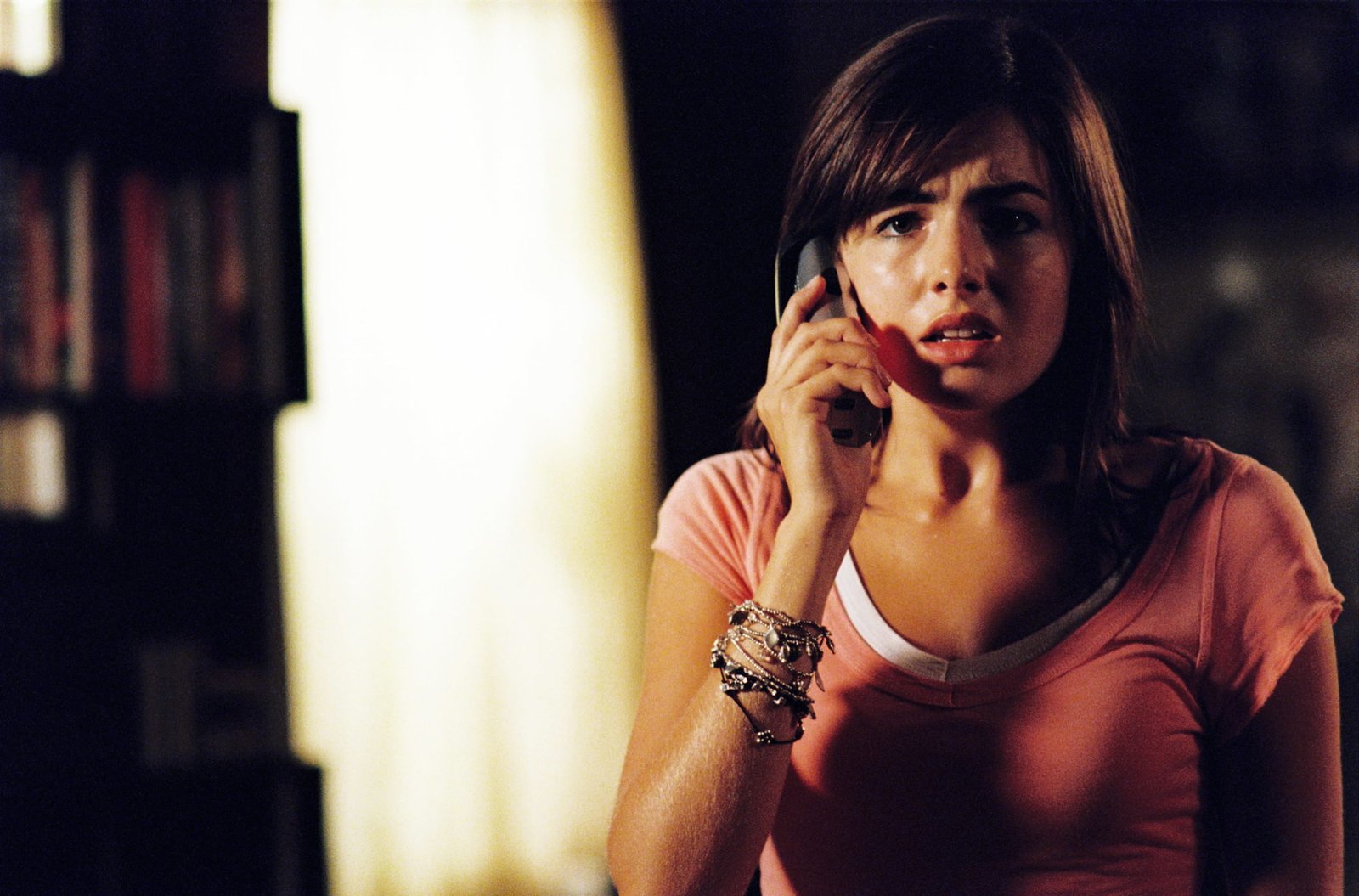
This wasn’t just a tale to scare kids, it was a fable dressed in horror. A modern cautionary tale designed to reinforce vigilance, morality, and the gut-deep instinct to lock every door, even in a world that seemed safe. Before Hollywood ever pointed a camera at it, The Babysitter and the Man Upstairs had already gone viral the old-fashioned way, mouth to ear, flashlight to face, breath held tight.
It didn’t need blood to be terrifying. Just a dial tone… and a voice that wouldn’t stop calling. Fred Walton’s “When a Stranger Calls” (1979) didn’t just adapt an urban legend, it weaponized it. The film opens with what is arguably one of the most masterfully executed prologues in horror history.
It doesn’t waste time with exposition or backstory. Instead, it drops us directly into the nightmare, a teenage babysitter, played by the hauntingly fragile Carol Kane, alone in a stranger’s home, stalked by a voice on the other end of a ringing phone. No slashing.
No gore. Just silence, static, and a voice that escalates from eerie to invasive with every call. Then comes the gut punch, the twist everyone knows even if they’ve never seen the
film: the calls are coming from inside the house. It’s minimalist horror at its finest. A masterclass in suspense. Walton doesn’t need blood to make you squirm, just a phone line, a dimly lit house, and a girl with no idea how close danger really is.
That opening twenty minutes is so potent, so perfectly distilled from its urban legend source, that it often overshadows the entire rest of the film. What follows, a slower, more procedural thriller following the killer years later, feels almost like an afterthought, haunted by the brilliance of its own beginning.
But here’s the trick: by giving cinematic form to a whispered myth, Walton gave the babysitter legend its most iconic face, and its most terrifying voice. When a Stranger Calls didn’t just bring the legend to screen. It crystallized it in pop culture, rewinding and replaying the primal fear that maybe, just maybe, you’re not alone.
After its iconic opening act, “When a Stranger Calls” does something bold, divisive, even. It pivots. Fred Walton leaves behind the babysitter’s haunted gaze and stretches the narrative into a brooding exploration of obsession, trauma, and pursuit. The film shifts from urban legend into something darker and more human, a cat-and-mouse thriller drenched in shadows. A killer has escaped. A detective is haunted.
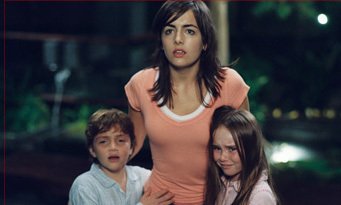
And a new kind of horror begins, not in the form of a jump scare, but in the slow, relentless stalking of lives unraveling. Charles Durning’s performance as the weary, guilt-ridden detective is pure Hitchcockian gravitas. Think Vertigo with a badge and a vendetta. He’s not chasing a monster, he’s chasing failure, chasing memory, chasing the thing that slipped through his fingers seven years earlier.
That’s what elevates this act of the film: it’s not just about what the killer did, but what it left behind. Gone is the suburban babysitter cliché. In its place, a noir-soaked cityscape where the killer moves like a shadow, and the trauma of the past bleeds into the present. The terror isn’t confined to a single house or night anymore, it’s stretched across years, embedded in the psyche.
Some purists argue this tonal shift dilutes the raw simplicity of the urban legend. But others, those who savor dread like a fine poison, see it as evolution. The film matures past its mythic origins, transforming its one-night terror into something stickier and more existential. Here, the killer isn’t just in the house.
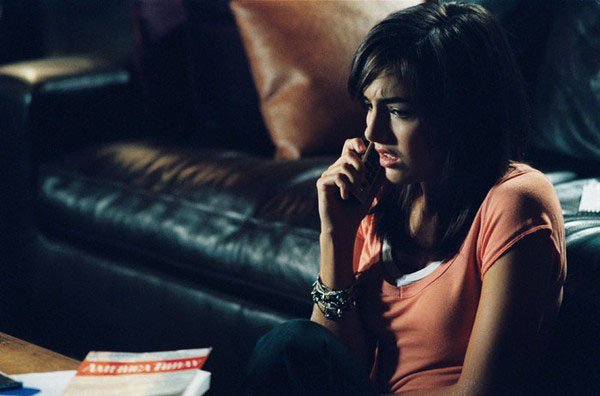
He’s in your head. And he’s not leaving. While Halloween (1978) is often crowned the godfather of the slasher boom, “When a Stranger Calls” carved out a quieter, but no less brutal, legacy. It didn’t invent the body count. It didn’t need a masked killer wielding a butcher knife. What it did establish was something more intimate, more insidious: the domestic invasion by voice alone. This was horror stripped of spectacle. A phone. A house. A girl. And a voice that knew her name.
Fred Walton’s film hardwired a new kind of terror into the genre’s, the kind that doesn’t chase you through the woods but corners you in your own living room. The idea that the stalker wasn’t out there, but already in here, watching, waiting… listening. It turned technology into a weapon and made every ringing phone a loaded gun. And from that single dial tone, a subgenre was born.
You don’t get Scream (1996) without this. Ghostface’s iconic opening call with Drew Barrymore is a direct descendant, stylized, self-aware, but pulsing with the same primal dread.
Urban Legend (1998) doesn’t exist without the groundwork laid here, nor do the countless films, TV episodes, and parodies that echo the chilling refrain: “The call is coming from inside the house.” Walton’s adaptation didn’t just bring an urban myth to life. It codified it. Formalized it. Made it repeatable, remixable, eternal. Every time a girl clutches a cordless phone and asks Who is this?
You’re watching the shadow of “When a Stranger Calls” move through the frame. It’s the horror of proximity. The terror of familiarity turned hostile. And the start of a whole new language for fear. Technology evolves, but terror? That stays the same. Yes, today we swipe, tap, and FaceTime. The rotary ring has faded into nostalgia, but the dread it carried?
Still here. Still humming beneath every unknown number. In “When a Stranger Calls”, the phone was a conduit for fear: an everyday object turned instrument of psychological warfare.
And even in a world of iPhones and encrypted texts, the fear remains, contact from the outside… that was always inside. Fred Walton’s film exists in a rare liminal space. It’s a time capsule of rotary paranoia, corded phones, landlines, and slow police response, but also a forefather of the postmodern horror to come. It bridges the primal and the meta, the whispered myth and the scripted scream. It didn’t just adapt an urban legend; it embedded it into the bloodstream of horror cinema.
Every time Ghostface dials a number, he’s not just toying with his next victim. He’s dialing back, straight to 1979. Back to Walton. Back to the babysitter who never hung up. When a Stranger Calls is more than a film. It’s an echo. A recursive nightmare. Proof that a single whispered story, passed from lip to lip in the dark, can spiral outward, into genre, into trope, into cultural immortality.
And maybe, just maybe… it’s still on the line. V. A Legend, A Film, A Genre, The Bloody Feedback Loop Here’s the twist ending no one talks about. “When a Stranger Calls” didn’t just adapt an urban legend. It became one. The film is the story now. Kids don’t whisper “there’s a killer in the house” like it’s folklore, they recall it as cinema. The myth has gone full circle.
What was once told in hushed tones at slumber parties now echoes through surround sound and streaming platforms. Art imitated myth. Then myth became art. And somewhere in the bleeding space between the two… a genre was born. The original tale gave birth to the film. The film gave birth to a subgenre.
The subgenre redefined horror. And decades later, we’re still answering the phone, knowing damn well what might be on the other end. So, when some wide-eyed Gen Z ghoul says, “What’s your favorite scary movie?”, yes, they’re quoting Scream. But really… they’re quoting Scream quoting “When a Stranger Calls” quoting a whispered story older than any of us. A killer nesting inside a killer nesting inside a call. That’s not just meta. That’s mythology.


