Vocalist Olivia Van Goor is an award-winning jazz vocalist that proudly carries that title and applies it to everything she does. Whether she’s fronting a small combo, singing with a big band, conducting voice lessons, supporting opera, collaborating with other songwriters, or recording, this young vocal dynamo keeps a vital and vibrant presence on the Detroit and Midwestern music scene.
Van Goor was a two-time 2025 winner at the Michigan Music Awards for “Best Jazz Album” and “Best Jazz Single/Performance.” She also has a series of independent recordings out, with 2025’s holiday collection/full-length album “Waiting for Santa” being her latest venture. She also has two EP releases, “When the Shadows Fall” (2021) and “Don’t Be Mad at Me” (2023.) Both EPs feature Van Goor’s original tunes as well as classic standards rooted in early jazz, swing, blues, and bebop traditions.
“I Thought About You” sung by Olivia Van Goor
EH: Who are some of your favorite singers and what do you like about them?
OVG: “One of the first singers that really spoke to me wasn’t a jazz singer at all. When I was in high school my dad turned me on to The Dave Matthews Band. And I think his voice was the first voice that I heard that I thought was telling stories and just felt more intimate. Now, looking back, I see where jazz musicians and jazz singers are like the fastest way to get to that feel of, specifically, storytelling. And I think that translates to most of my favorite singers today. And, while I still listen to The Dave Matthews Band, and I literally saw them last summer because it makes me happy, it brings me back to nostalgic feelings and good memories. It was about just liking music before I got too serious about it. But, as far as jazz singers go, I just did a show about Anita O’Day, and I love her. I also love Sarah Vaughn, Ella Fitzgerald, Billie Holiday, Mel Torme, and Betty Carter. But the list goes on and on. There’s no one person that I’m trying to sound like. But I listen to a lot of their phrasing.”
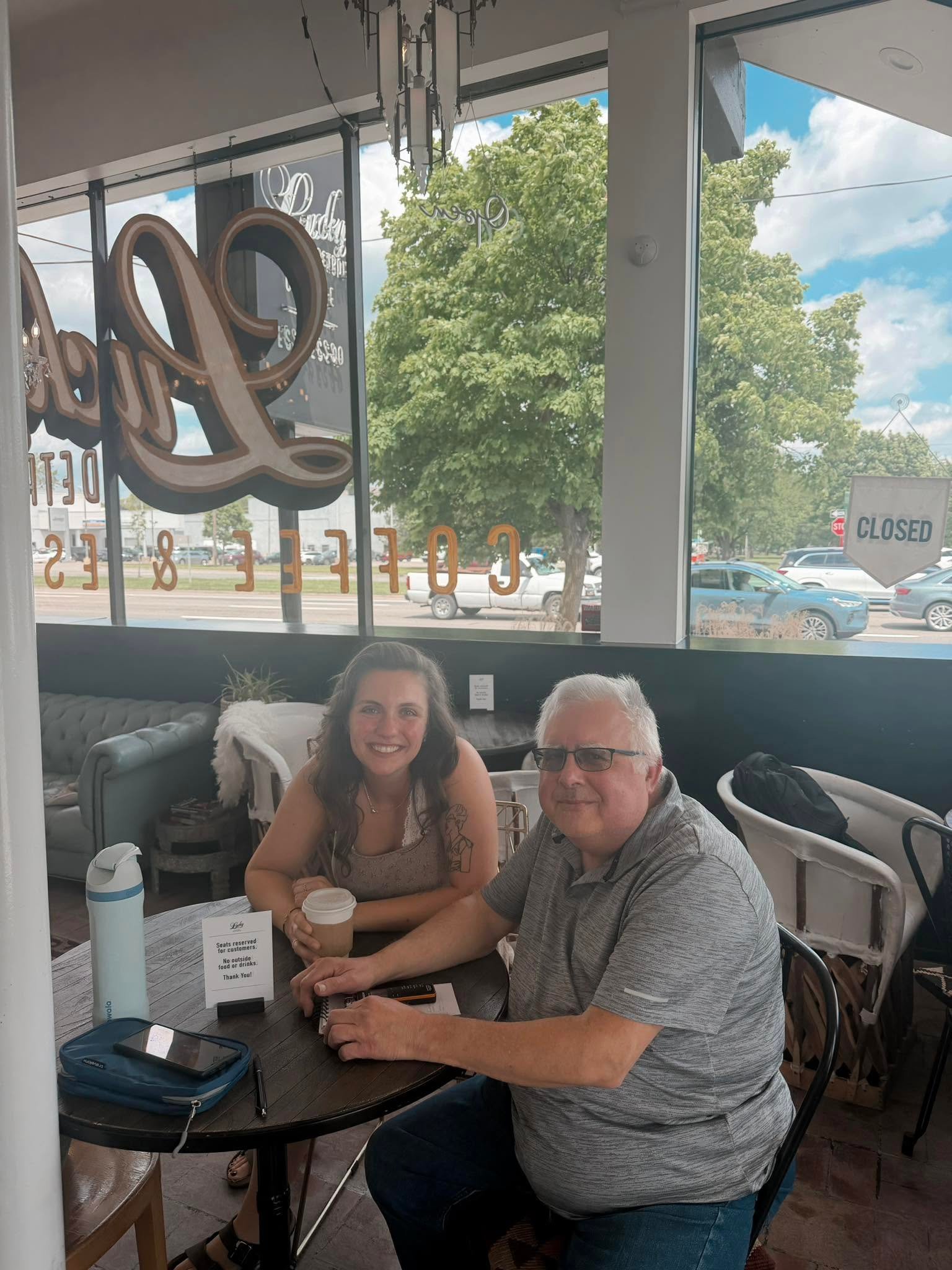
Olivia Van Goor being interviewed by Eric Harabadian
EH: How have things changed regarding how you view good singing techniques now, than from when you were younger and starting out?
OVG: “I think I was clouded by the tendency for a lot of singers from all genres to focus on the acrobatics of singing and showing off. I remember being in high school and having some friends in musical theater and I was like wow, they really care about hitting the highest note and that must be good, and you must be the best singer because you can hold a note the highest and longest. But I started to move away from that.”
EH: I was looking at some of the videos on your website and really liked your interpretation of Cannonball Adderley’s “Mercy, Mercy, Mercy” taken from the Blue Llama in Ann Arbor. Was that your own lyrics that you wrote for it?
“Close to You” sung by Olivia Van Goor
OVG: “Yeah. I like doing that. It’s very much in the jazz tradition of writing lyrics to standards and instrumental songs. And I started really getting into John Hendricks of Lambert, Hendricks and Ross. He was based in Toledo, so there are a number of people I’ve worked with who actually worked with and learned from him. But I got really into him because my brain started to process musical ideas more when there were lyrics to it at first. Most people are just used to hearing songs that way. And I’ve found that it’s also a really good avenue to get my students into learning different types of melodies because they feel it’s more digestible when there are words. And then I show them that a lot of jazz songs didn’t even start out with words. And they’re like wow, that’s crazy!”
EH: What do you look for in a singer or a song you want to cover?
OVG: “Sometimes I like a song and I can’t tell if I like the song or someone’s version of it. There are some songs that are just bare bones strong that, no matter how you do it, it’s a strong song. And then there are some that don’t have as much sparkle unless it’s done a certain type of way. So it’s got to have that sparkle factor that gets me excited to sing. About a year and a half ago I really was feeling burnt out and I realized it was because I felt like I was just learning and regurgitating songs and just becoming a jukebox. I got so deep into it that I didn’t even know what songs were my favorites because it just got so overwhelming. But I don’t know sometimes what comes first. Is it the recording that I hear and I think, oh that’s a cool song, and then I like it? But one fun exercise that a friend told me about is you pull out a real book and you flip through it and find a song that you haven’t heard. Just learn it without hearing a recording of it, and then see if you like it. That’s some really good training. I usually have to hear something, and then I’ll try and read through it a little bit. You can then see if you really like it, you know, as a bare bones tune—the construction of it. And even then, sometimes it’s not just the song, but it’s like a different arrangement.”
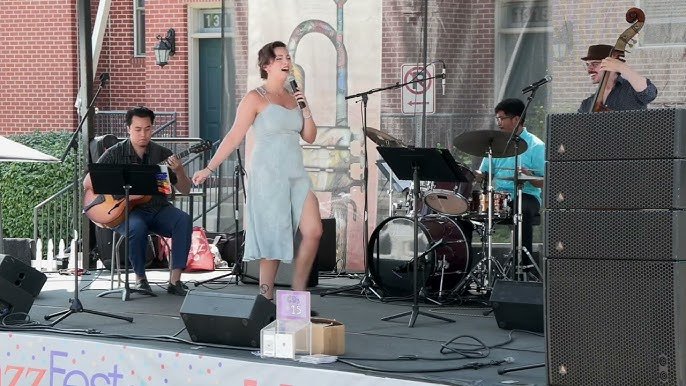
EH: Because you perform a lot of covers do you get people making a lot of requests at gigs?
OVG: “It depends on the gig. To be honest, I try to do more shows, like at the Blue Llama in Ann Arbor, where it’s my show. There is so much energy involved in picking the material that requests from the audience wouldn’t really be appropriate. Now if it’s at a restaurant or a background kind of gig where I’m doing four hours of material, then request away!”
EH: You said you’ve lived in the Detroit area about five years. What is it about the Detroit music scene that appeals to you?
“We’ve Got a World That Swings” sung by Olivia Van Goor
OVG: “Because I grew up in a bubble I didn’t have much of an idea what it meant to be a professional musician. I knew that people played music, and I was honestly under the impression that you were either busking on a street corner or auditioning for ‘American Idol.’ I didn’t understand the ins and outs of the scene….any scene! But I grew up in the Northeast Ohio area between Akron and Cleveland. I grew up there from ages five to twenty and then I went to college in Columbus. I ended up studying a little bit of music stuff when I was there. It seemed like signs from the universe were getting me to explore more about music. But I don’t know, I just didn’t believe enough in my abilities. I had to mature a little bit with asking for knowledge from teachers. But when I was a junior in college my parents moved to Milford, Michigan and so I started hanging around the metro Detroit area. And there was a huge open mic scene there. I also played guitar so I would go to these open mics and started to gain some traction there. And then I started doing some gigs with just me and my guitar for tips and stuff. And then I was inspired one day to check out any Detroit jazz workshops on Google. And Detroit Summer Jazz Week popped up. I was home for the summer so I went and met some people that I still work with to this day. They took me under their wing and said you can do this! You just need to put a book of tunes together. And, to be honest, once I got going I was surprised how much I did know about singing, reading music and transposing charts. I grew up playing classical piano so I had a good musical background. I started learning more standards that summer and went to jam sessions where I made a bunch of new friends. And a lot of these people started getting their own little gigs, namely someone that is still in my life today. He’s a bass player named Trevor Lamb and he was still at Wayne State at the time. He would ask me to sit in at gigs he would set up. I did that a whole summer and Trevor is still a big creator of spaces around Detroit. He hosts a jam session in Melvindale at a place called Parts and Labor. That’s been going on about four years now.”
“No Moon At All” sung by Olivia Van Goor
EH: So the main appeal with the Detroit music scene has been the people?
OVG: “Yes! I found this goldmine of people that wanted to help me and are interested in creating a community and that I can be a part of it. So, I was like, I’m not going to leave at all. It’s world class musicians that are so accessible. And I think, compared to a place like New York, you have people who are world class. They are amazing musicians that are great at their instrument, great teachers, but they also live here too. So they also kind of have normal lives. They are more accessible from a physical perspective. They’re not flying out to Japan every other week and touring and are actually like anybody else in Michigan. Now there’s always gonna be competition and that competitive spirit, but there’s no Holy Grail thing here that everyone is clawing for. There’s so much success to be had. The pie is like way bigger. It’s not like everyone has to gig with Wynton Marsalis or like a Broadway scene here or something.”
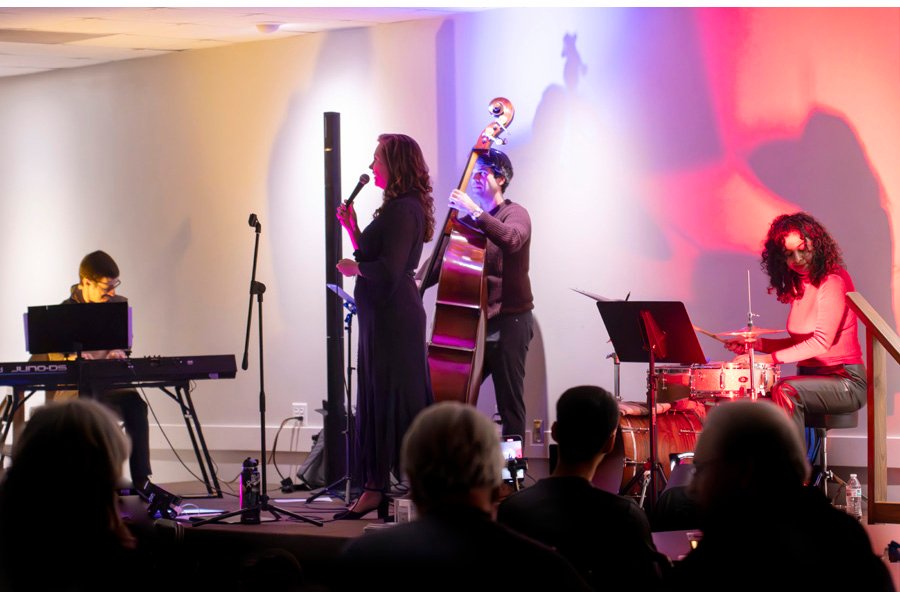
EH: What are some of the challenges of your profession?
OVG: “Everything that is amazing is also a challenge. There are specific logistical challenges and then there’s like emotional and psychological challenges. But the funny thing is I don’t think I find the same things to be challenging that other people do. I feel really grateful that I have as equally a creative mind and a theoretical business mind. I often get a lot of praise for my business mindset, and it’s funny because I did study economics in college. But it’s not that applicable to what I do in music. I think it’s just the kind of brain that I have, where some people are 100% creative. It’s like they’re in outer space, but they’re making amazing music. And then there are people who are so black and white and wouldn’t even know what to do with a paint brush and couldn’t paint a circle or whatever. I like to be right in the middle and a bit of a balance of both. I think the hardest thing for me at this point of my career is the whiplash of going from a gig that is a real show to a gig that’s more like a background gig. And I’ve freed myself from a lot of the gigs that have been really like wallpaper, or the manager is not nice or you’re playing a restaurant or something. But I still struggle a little bit with how to present myself. I feel like I often have my artist mindset and then I have my gig worker mindset. But it’s interesting because sometimes it clashes where the gig worker wants to get as many gigs as possible. And sometimes those gigs can lead to opportunities where you can be more of an artist on the gig.”
“Nature Boy” sung by Olivia Van Goor
EH: “What is your process as far as warming up in the studio or to do a gig?
OVG: “I actually have a hot take that if you worry too much about all of the warm-ups and the teas and the steaming and the this and the that, you’re going to work yourself up so much that your voice is gonna feel so tight. Every voice is different. I like to do exercises that just move air and wake everything up. But it’s funny, I don’t really teach a lot of vocal technique with students. My philosophy is that singers come to me to become better musicians. So I want to help them use what they already have. We’re going to use our voice. And if something comes up that’s relevant, I’ll talk about your head voice or this breathing exercise. I’ve done all classical lessons before when I was an undergrad. So, I know about that stuff. It’s just not my main thing. And to be honest, I find more often than not, if you create a singer that’s more well-rounded musically, and they can understand music and their musicianship is better, then they are a more confident singer anyways. And it leaves less space for fear and doubt, and then all of the things that they’re trying to work on become easier because the voice is best and most flexible when you’re relaxed. If a vocalist doesn’t know how to count in, or count in four at all, or doesn’t know any of those things, then we start there. If they can’t feel an eight-bar phrase go by, we start there. So, you take them where they’re at. I try and help musicians become better communicators.”
“I’d Really Like to Know” sung by Olivia Van Goor
EH: What’s the best advice, personally or professionally, that you’ve ever gotten?
OVG: “I was at this vocal camp and there was this vocal teacher named April Tini. April is still very much a present member of the music scene and a leader in a lot of stuff. I don’t remember the exact wordage, but, essentially, no one cares right now as much as you do. I didn’t really have any gigs and my thought process at the time was you have to wait until someone pushes you or tells you to do something. You have to wait until this opportunity comes and that there’s a gatekeeper. But when you go to things, you go to jam sessions and start trying to get a gig somewhere, it was just so empowering! And her words just helped me break through and make some things happen. Also, in this process, you start to make other people care about what you do. You can create a career that makes other people care. And today I’m pretty happy because there are at least a few dozen people out there that I can say, if I stopped today and said I’m quitting music, they would be pretty sad. Because there are people who have come to my shows and look forward to new music I have coming out. And that was not the case, obviously, when I started out.”
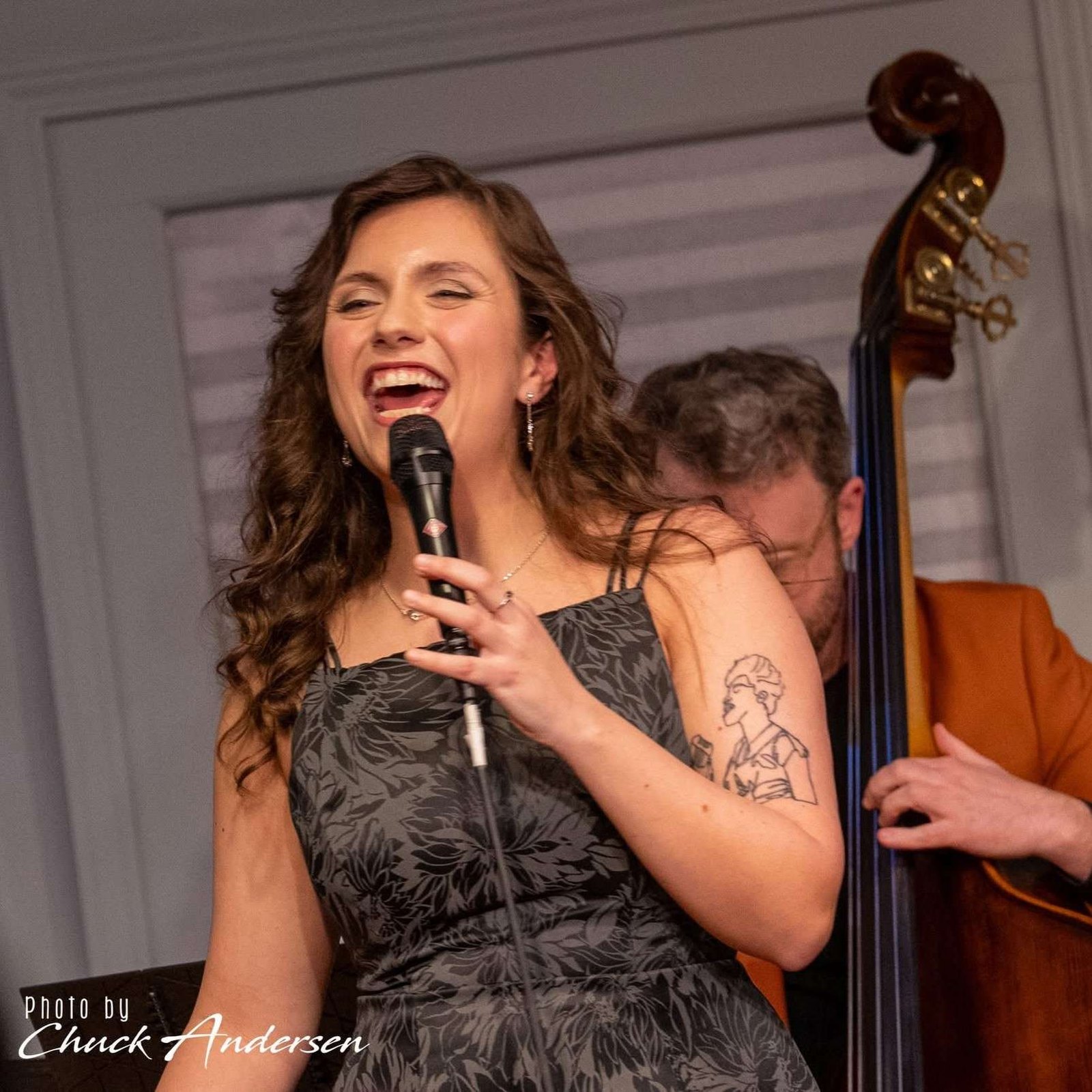
There are a number of gigs and special events on the horizon in the coming months throughout 2026 and beyond. To keep up with all things in her musical universe just go to www.oliviavangoor.com .