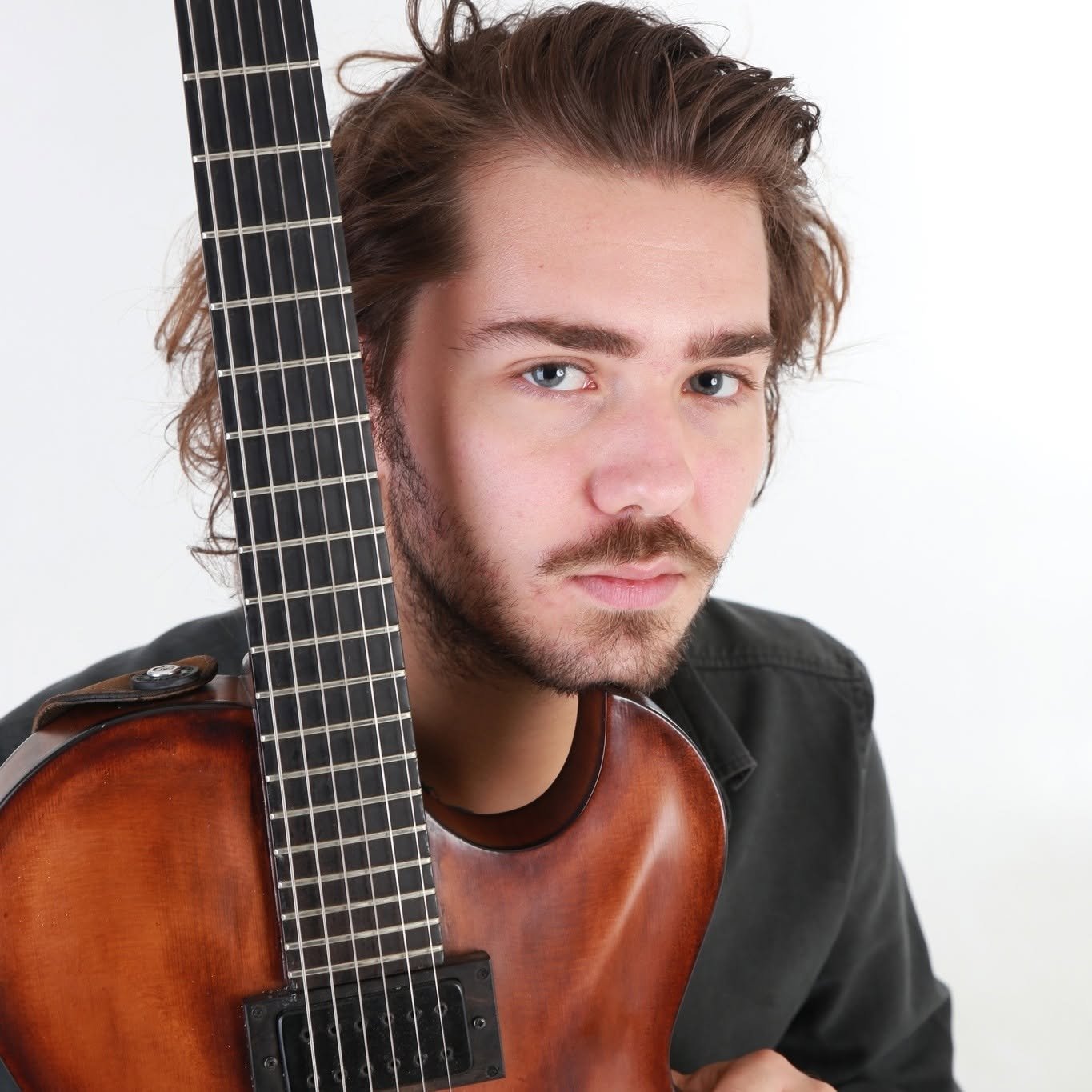
Edoardo Liberati is a guitarist and composer that has worked in various musical mediums and assemblages for several years now, but has found that the intimacy and economy of the trio format is what suits him best. On his third recording “Fading Corners” (WoW Records) he further demonstrates his ability to blend modern harmonic sensibilities with a classic small combo structure in order to create subtle, yet vibrant and bold musical statements. The use of time and space in Liberati’s rhythmic and lead choices gently draws the listener in and envelopes one in a warm and inviting manner.
Aoide Magazine had the pleasure of recently sitting down with this young world class artist for a chat about his new album “Fading Corners” and a discussion of his artistic philosophy and process.
EH: Where did you grow up and what is your background?
EL: “I live in Rome, Italy. I grew up there. But in my early twenties I moved to the Netherlands. I lived there almost five years and did my Bachelors studies there in the city of Rotterdam. Unfortunately, when I moved back to Rome in 2020-2021 it was the start of Covid. But Rome is where I settled and the place where I work, compose and teach as a musician. I make records and play concerts as a full-time musician, but a big part of my job is teaching children and adults at all levels.”
EH: You have a main band which you call the Synthetics Trio. What is the concept behind the name?
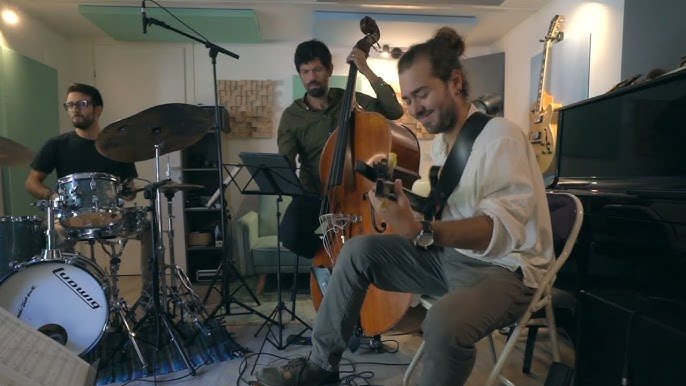
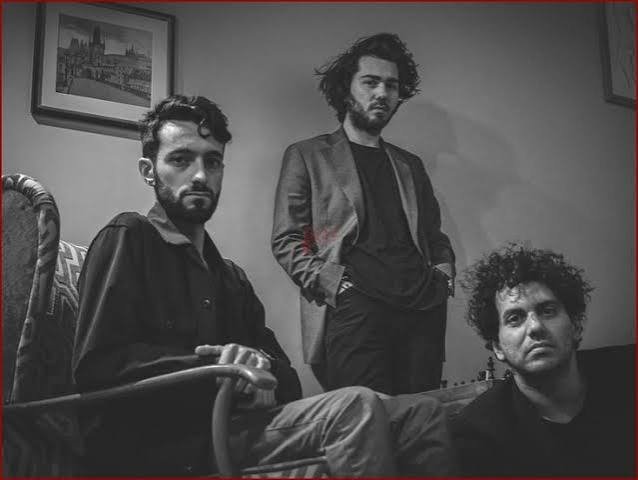
EL: “That’s a good question. ‘Synthetics’ refers to a song by Kurt Rosenwinkel. I think it’s on one of his first records. It’s a great tune and I wanted to name my band after one of his songs. I thought ‘Synthetics’ was the most appropriate name because it represents a way of playing and also a way of thinking about jazz. It’s kind of a manifesto to me so I decided to call my trio by this name. This current trio has been with me for quite some time. It’s Riccardo Gola on bass and Riccardo Marchese on drums.”
EH: Who and what are some of your artistic influences?
EL: “A lot of rock bands like Pink Floyd were some of my first influences. It was a lot of classic rock. And then moving to jazz I started listening to Miles Davis, Herbie Hancock, Pat Metheny and John Scofield. Later I got into Gilad Hekselman, Lage Lund and Brad Mehldau.”
EH: Your latest album is called “Fading Corners” and you have two other records. What can you tell me about your catalog?
EL: “My very first record as a leader was called ‘Everyday Life.’ That came out in 2022, and then in 2024 I published a record called ‘Turning Point.’ “
EH: How has your music evolved over time?
EL: “On my first record I wanted to write a certain number of songs and on each song there would be a different lineup. So, basically there is a song in solo, duo, trio, quartet, up until nonet. So, it’s a very different record from these other two that are trio albums. From 2022 to 2026 I tried to compose in a different way. I guess I consider myself to be a little more mature in my composing than from four years ago. I’m trying to approach composition in a different way where I’m writing less, deciding less and always giving more and more space to improvisation, which is not a very easy thing to do. I would say I was writing and reading 80% and improvising 20% before. I’m drastically trying to change this and add more improvisation. My goal is to have maybe one or two pages of songs that a certain musician can play right away. So I also look for simplicity and for things working very quickly. I don’t want to leave the beauty out of composing, but that’s kind of my goal these days.”
EH: What are some of the pros and cons of being a contemporary musician today?
EL: “Well, we live in an era that is really different from the past. I mean, I wasn’t born in the ‘70s or ‘80s but, since I know a lot about the music of these eras, I can at least imagine that music was going a lot better then ,than right now. I don’t want to sound too dramatic, but everything changed, you know? So now everything is easy and approachable within ten seconds. Basically, now, we’re all zapping around listening to 30 seconds of a track here and then 20 seconds of a reel on Instagram. There is way too much information thrown at us and attention spans are short. As a jazz musician it is really hard to cope with these changes because you won’t make a living on Spotify with your records, for sure. And only the top level people are really making money off streaming. I am able to sell quite a few CDs, but that still is difficult because they’re expensive to make.”
EH: Where do you tend to perform and who is your audience?
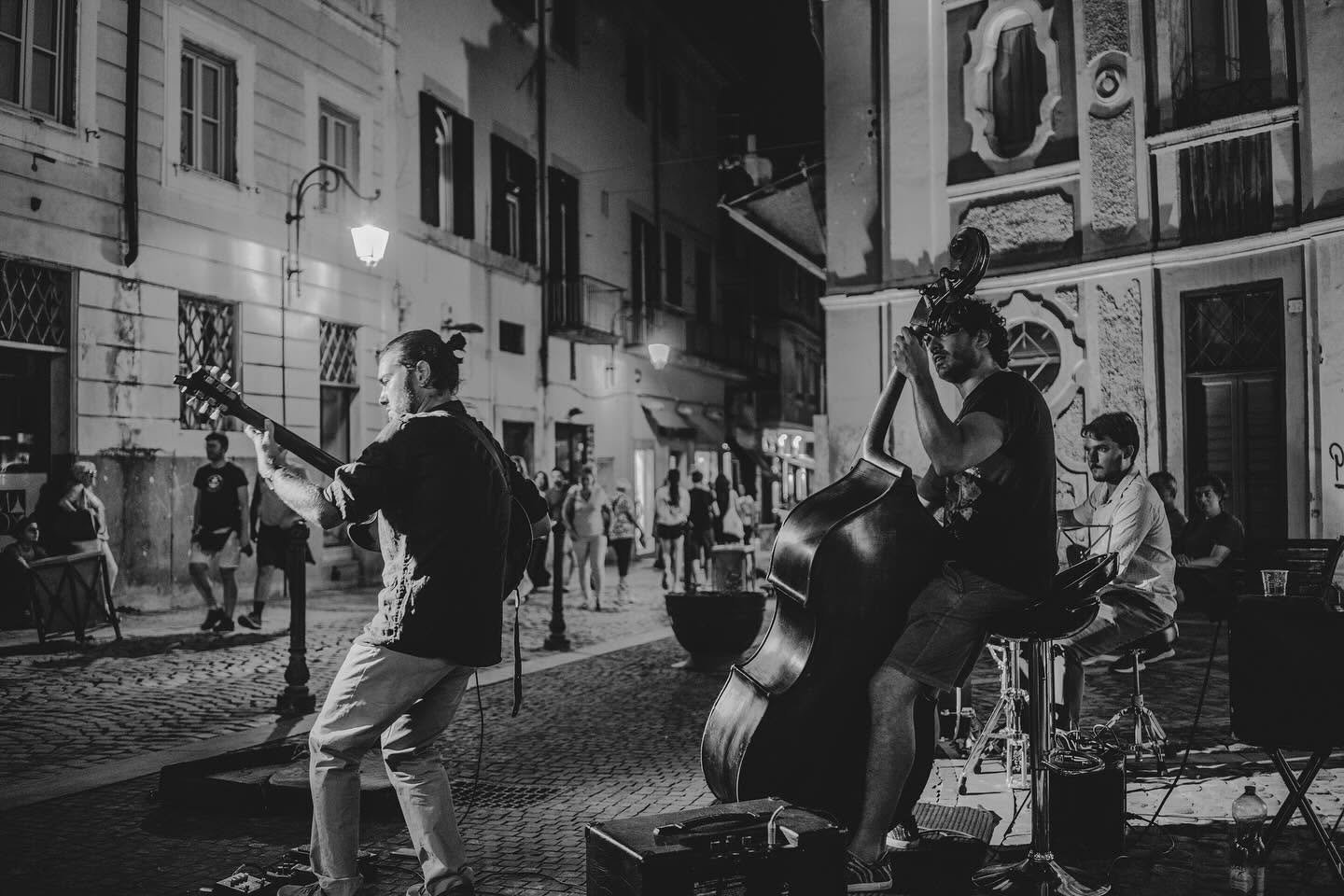
EL: “It’s very broad. I’ve played quite a few concerts in Italy. Mostly the audience always changes, so I always play for new and different people. A month ago I played in Spain with another project. In the past I played a lot in Croatia and Slovenia. I’ve also played in the Netherlands, Belgium and France. I’d love to play in the United States, but travel is so expensive right now. But, never say never!”
EH: Tell me about your writing and creative process? How do you work with your trio?
EL: “It all starts with the composition. And composition is always strange and a real mystery to me. When you have inspiration you can write. I’ve written songs in, like, a half hour or 45 minutes. Sometimes it’s harder, but I usually can write songs pretty quickly. Inspiration for songs comes from different things and manifests itself in strange ways. But I bring lead sheets to my fellow musicians and then we start to work on it and play around with it. We try it over and over and then, of course, we play it live because there is no better training than playing live in front of an audience.”
EH: Although the majority of the material on your albums is original, you tend to include one pop or rock cover on your albums. With the previous album “Turning Point” it was “Californication” from Red Hot Chili Peppers. And on your new album “Fading Corners” you cut a version of Elvis Presley’s “Love Me Tender.” How do you decide what covers make an album?
EL: “That’s a good question. It comes from inspiration. Like with the song ‘Californication,’ I liked the way the Red Hot Chili Peppers begin the tune with this brushed ballad feel. I was immediately hit by that. I listened to the whole tune and thought it would be great with the trio. And I made an arrangement, just changing the harmony a little bit. But the melody stayed basically the same as the original singer Anthony Kiedis sang it. And with ‘Love me Tender’ it was the same kind of thing. I heard the song and thought it would be great to play it free. So I made a lead sheet for it, transcribing the harmony and melody. And then, except for the melody, we worked out how we wanted to do it as a trio.”
EH: On your latest album you do a tune that’s acoustic and then another song you might use a bit of distortion and blend it with a cleaner sound. Is that by design?
EL: “Yeah, absolutely! That’s something I really believe in. When I listen to a record I always want to be hit by something where every tune has to tell a different story. So, diversity is something I’m always looking for consciously, and sometimes unconsciously. Sometimes I’ll take my classical or acoustic guitar and it fits a song really well. And then again maybe my Stratocaster, with a little distortion, suggests a new idea. But, yes, diversity in music appeals to me.”
EH: What kinds of guitars and amp gear do you have?
EL: “I have four guitars total. I have an Ibanez from ’86. It’s kind of a prototype of the George Benson signature guitar. My main guitar is the Gibson 335. Every time you pick it up it tells a story. And then I have a Mexican Fender Stratocaster and an acoustic Taylor GS Mini. I also have an iron string guitar which is nice. I also use a Polytone amp called a Mini Brute from the ‘80s. And I use some pedals too.”
EH: So, what career moves are on the horizon?
EL: “I want to promote this new album ‘Fading Corners’ and do some fall and summer festivals. I’d also like to make more records. I’m thinking more and more of doing a solo project nowadays, like what Pat Metheny has done. Have you heard his album ‘Quiet Night?’ He plays a lot of solo baritone guitar on it. It’s very cinematic, not a jazz record at all. It’s very atmospheric and ambient.”
EH: So you’d like to move in that direction?
EL: “I would love to, but I’m sure that I would need a lot of time and a lot of peace, inner peace and focus, to write tunes in this style.”
EH: What’s the best advice you’ve ever gotten as a musician or on a personal level?
EL: “That’s a very good question. It’s hard to remember one, but I had some experiences that maybe changed me, especially teachers, I would say. Like the first teacher I had in Rome is an Italian player named Umberto Fiorentino. He’s a great, great player and still one of my favorite players worldwide. He taught me the inner need and hunger to study and progress as a musician. I can also quote a master class I had with Gilad Hekselman. He was really not happy about my playing and was really straightforward about what he said. But that’s something that touched me a lot, and I’ll always remember how bad I felt about his comments. I took things on a personal level and it wasn’t personal at all. He was just expressing what he thought to help me get better and make me stronger. And he definitely did that. There were workshops with other cats too like Maria Schneider, Jonathan Kreisberg and Peter Bernstein as well.”
EH: Well, thanks very much, Edoardo, for your time and, again, all the best with the new album and I truly enjoy the way you tell your stories on the guitar. You and your trio have your own sound.
EL: “Thanks very much! For me, it’s the most important thing as a musician to always tell a story. It’s not easy and not always doable, but at least you have to have a goal that you want to tell something rather than just shredding notes, or maybe imitating someone else.”
For more information on this innovative young guitarist just go to www.edoardoliberati.com .