Every now and then a novel comes along that is so poignant and filled with razor sharp insights that its prose makes you question the way you live your life. The Corrections by Jonathan Franzen is such a novel. Initially published in 2002, the psychological tour de force quickly became a New York Times bestseller. More recently (2021), the book was reprinted to accommodate a new generation of fans. Not to go completely gonzo and insert myself into the story, but reading this novel shored up my courage to say “yes!” to more in life and to be consciously less selfish. These are but two of the many inner agonies of each character, most of which ring true in all our lives, some of which will provoke self-examination and even recrimination, all of which seem quite familiar from the faces of your own friends and family. For that reason, The Corrections is one of those novels that hits close to home and lingers in your consciousness long after you’ve shelved the book.
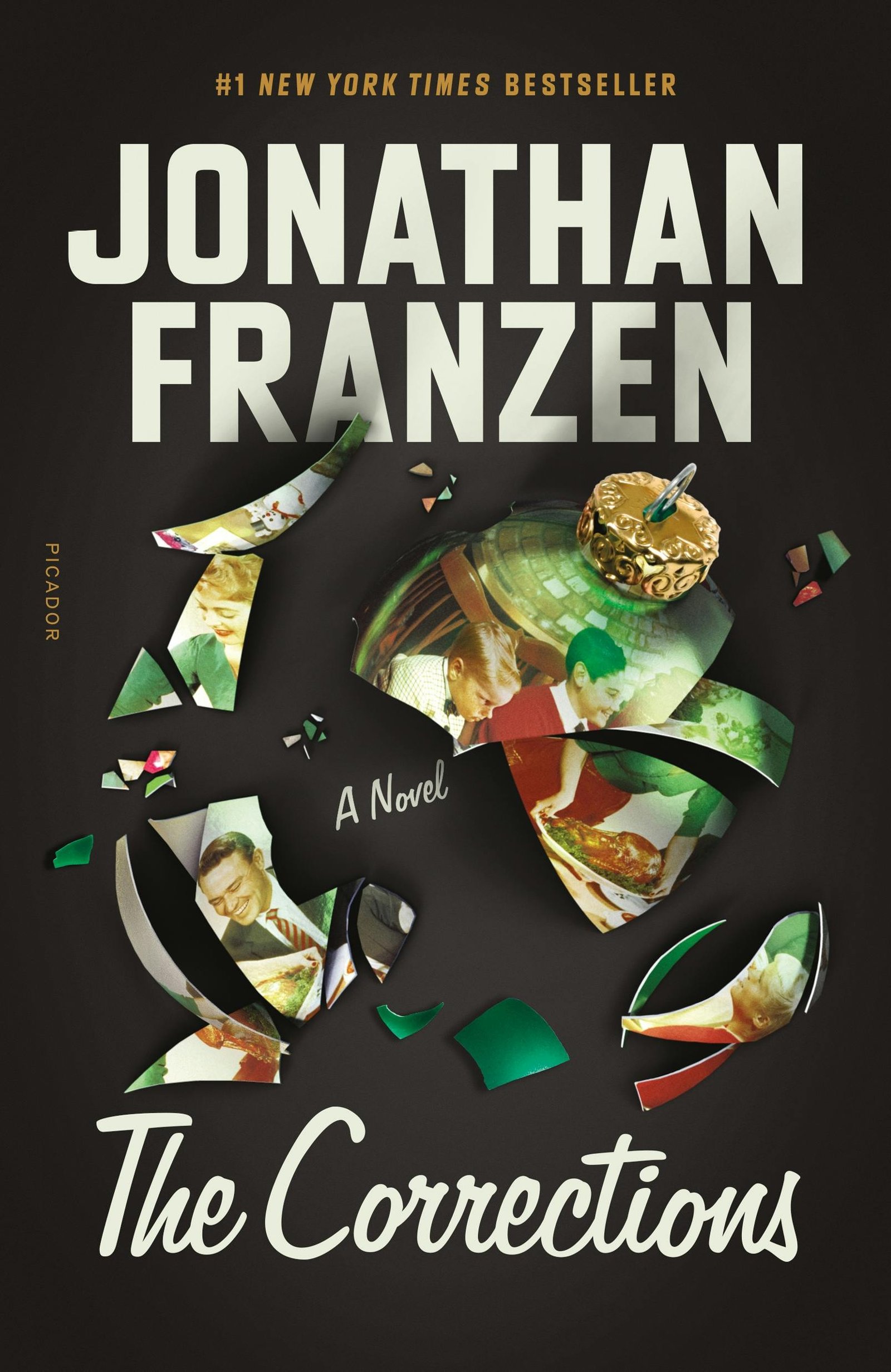
Meet the Lambert family. The paterfamilias, Alfred, survives by the sheer will of his wife, Enid, and his body’s stubborn resistance to give up and die already. He’s as ornery as he is curmudgeonly, needlessly passive aggressive, a man who speaks as little as humanly possible. After retirement, he buys himself a blue geezer recliner and pretends to sleep in it all day to avoid the unflappable ministrations of his obsessive-compulsive wife. Enid, a mass-attending Catholic woman of the Stepford Wives school, lives in a future where everything is as it should be: her husband is financially successful and isn’t afraid to show affection in public; her children are success stories, famous in their chosen fields, but all of whom put family first. Alfred and Enid live together in the large house (that needs work to be considered senior-friendly) haunted by memories, where they raised their children and lived their unassuming, moral, midwestern lives as best they could, not so much chasing the American dream as fulfilling its promise.
The three Lambert children should redefine dysfunction for the next update of the DSMIV. The eldest, Gary, drinks to escape the reality that, like Enid, his own family is dysfunctional, torn apart by his uncontrollable alcoholism and insistence upon living the picture-perfect Hallmark existence. Chip, the youngest Lambert, is immature, erudite, selfish, and in denial of reality beyond his easy street lifestyle as an amoral college English professor. The ever-addled middle child, Denise, doesn’t deserve the bad rep she gets. Her parent’s perfect child on the surface, her personal life revolves around sleeping with married men and wallowing in guilt. (Also, she starts a relationship with both her boss and his wife – neither of them aware of the other’s infidelity. If it wasn’t so tragic, it would be comic.) The Lambert children each elected, separately, to move to the east coast to pursue their careers while their parent’s situation at home deteriorated. Whether embracing them or abhorring them, the decisions they made with their lives are a direct reflection of how they were raised by Alfred and Enid.

The Corrections sets up the Lamberts in the present day – careening toward the impending perfect Christmas, then turns back in time to review the life and dubious accomplishments of each child. We learn that the Lamberts cannot live without each other’s validation. We meet Alfred, the paterfamilias who has undiagnosed Parkinson’s disease and behaves accordingly. The mother, Enid has created a fantasy where all of her children and grandchildren come to visit for Christmas and attend The Nutcracker as well as an ever-growing list of events while behaving perfectly and applauding her every idea. Gary lives so deep in the bottle he doesn’t realize the roots of his depression, let alone its depth, and the extent to which it affects his family. Until she becomes a celebrity chef appearing on television and starting her own restaurant, Denise is as lost in her life as everyone else. Nevertheless, she’s unable to enjoy her success. Instead, she starts smoking, sleeping with married men and women (not at the same time), and feeling profoundly guilty about everything in her life. None of the siblings know how to be happy – each has a different idea of success – and all of them have massive Enid issues.
The family matriarch has malleable morals and a cognitive dissonance regarding her children and husband. Enid incessantly nags Alfred to the point where his only escape was pretending to be asleep. She second guesses decisions he made at work before he retired that were currently affecting their financial situation. She loves and feels affection for Alfred, but he pushes her away whenever she approaches him. That leaves her time to fantasize that Gary had grown up to be a doctor, rather than a successful investment banker with a wife and three kids. She pictures Denise married to a nice man and popping out grandchildren for her – Enid doesn’t want her to wait too long! Finally, in Chip she wants to have a success story to share with her friends. When he takes a job working for a small New York magazine, Enid tells everyone he’s working for the Wall Street Journal. At this point in her life, reality has been a severe disappointment for Enid.

In the here and now, Alfred is alternately lucid and off in a different world. He thinks of his wife as his servant and discounts her every idea and attempt to help, even if its practical. She learns to pretend to ignore him as she’s come to despise the role of caregiver. What’s more, she has plenty of problems with the way Alfred and her children have decided to live their lives – in sinly fashion. The Lambert’s family home is falling apart and unfit for septuagenarians. Their financial situation is somewhat of a mystery. They’re neither rich, nor poor, strictly middle class. But, as Enid cannot help reminding everyone, they could have been rich if Alfred had bought stock in his company before it went public. Her friends’ husbands all bought stock and became quite wealthy. Despite her large house and the freedom to raise children and not work, Enid acts rich but feels impoverished. When she gets on Alfred’s case about the stock issue, he tells her that he considers what they did to be insider trading. And that’s morally wrong, according to him, even if it’s not illegal.
Alfred cannot help but be the elephant in every room he enters. He begins deteriorating at the beginning of the novel and, it’s not giving anything away to tell you by the end, he can’t tell his left from his right. The deeper he descends into himself, the more Alfred’s Parkinson’s disease presents itself to his family. His memory is a thing of the past. He has urinary neuropathy. And he’s deeply, deeply depressed.

Concern about Alfred’s health reaches a fever pitch at Enid’s Christmas party. Gary’s family chooses to stay home in Philadelphia but send him anyway. Denise shows up but isn’t exactly present. And Chip, well Chip is on his way home from Lithuania where he worked to fleece the capitalists back in America. Everyone in the Lambert family walks an emotional tightrope and all are deeply, deeply depressed. One gets the sense this is the result of both nature and nurture. Once everyone is finally present and together, the parents and siblings fall back into old roles and customs. Enid is insanely demanding. She wields guilt like a switchblade at anyone who won’t accommodate her Christmas dream. When Chip finally arrives, the family is ready to talk about Alfred’s health and his need for round-the-clock care. Even at the lowest point in their lives, each character knows this family is all they have. Can they come together to care for the paterfamilias? Can anyone satisfy Enid’s craving for perfection? Or Denise’s lust for married people? Or Gary’s alcohol cravings? Can they stop arguing long enough to make the necessary course corrections in life? And how does any of this help poor Alfred?

Franzen is a master of emotional calculus. He understands the pressures on the nuclear family better than any psychologist – amateur, armchair, or otherwise. Each character is carefully crafted to be a caricature of someone you know in real life. Who? That’s up to you to decide if your Mom is like Enid or your little brother has a Chip on his shoulder. Regardless, I couldn’t help but see parts of myself in every character. In fact, most people have the personality traits of the characters in The Corrections to a certain degree. That’s why so much of the dialogue rings true.
Finally, I would be remiss in leaving out the fact that this novel is hilarious. Most of the jokes are situation dependent or self-referential, but they’re so frequent they almost overshadow the tragedy of the Lambert family. The word tragi-comic gets thrown around a lot by hipsters, but referring to The Corrections it makes sense: this is why we can be rooting for a character one moment and feel morally superior the next. We can easily place ourselves in the shoes of the antagonists because they’re not real antagonists. Just other characters. The reader will decide who are the heroes and who are the villains and one thing is for sure – both will capture your imagination from the first page of this novel.
Everyone has the idea of what their perfect life would be like – if only we had made certain decisions differently, life could be fresh, sparkling, new, and exciting. But life, being life, has other plans for us. Sometimes they’re good – like getting a new job or making a sound investment. Others, they’re bad – like going on the lam in Lithuania or coming down with dementia. No matter what life throws at us, we have the power to choose how we react. That’s all we control. And most of us don’t get it right the first time. We require – ahem – course corrections. Hopefully, we’re able to someday understand that life doesn’t need to be perfect. Sometimes not bad is good enough.