It starts innocently enough: a physicist leans back in his chair and murmurs, you know, it’s statistically more likely we’re in a simulation than not. A Silicon Valley billionaire funds a project to break us out of the Matrix. A documentary casually drops the idea that human DNA was tampered with by extraterrestrials.
The camera cuts to a secular scientist, who, without blinking, says it’s plausible, and suddenly, atheism doesn’t look so godless anymore. Simulation theory, the idea that all of reality is an artificial construct, like an extremely sophisticated video game or AI construct, has surged from fringe philosophy to mainstream dinner-table speculation. Welcome to the Matrix.
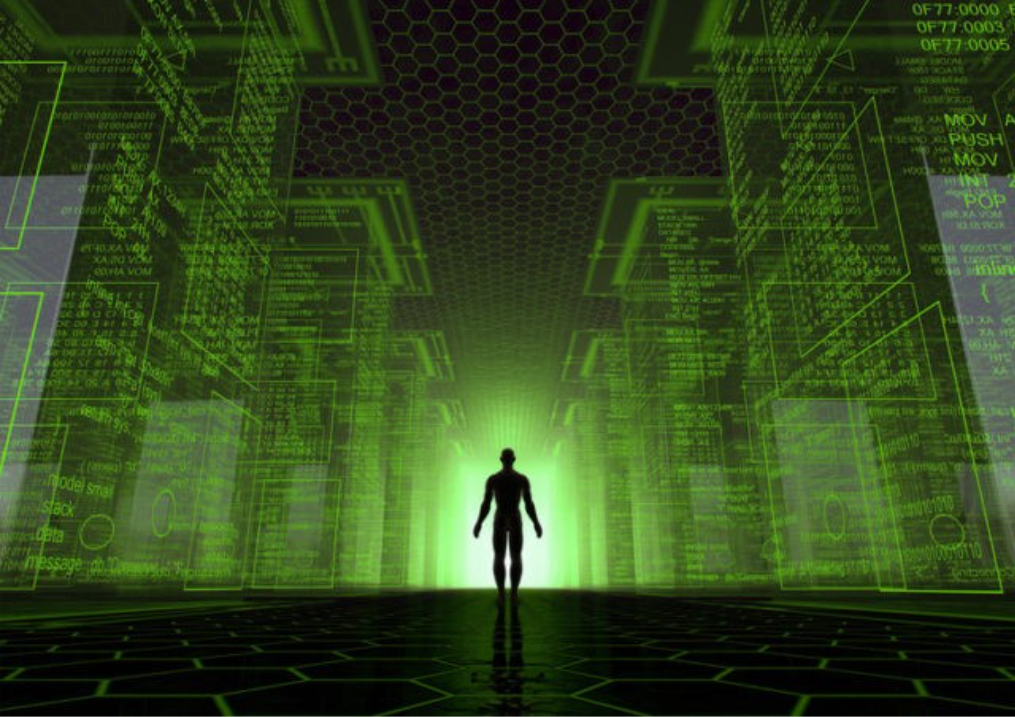
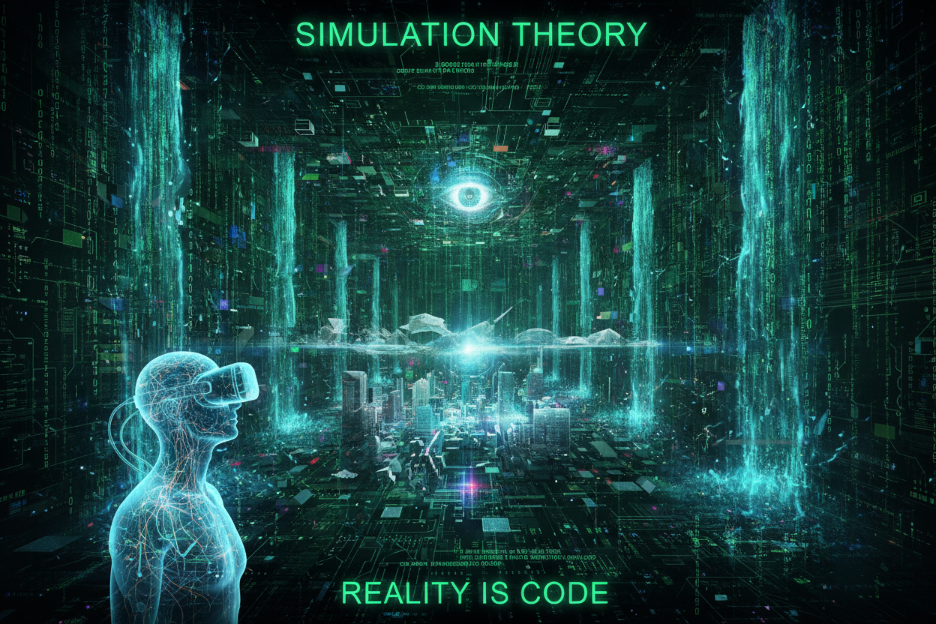
At its core is the notion that some superintelligent entity created our universe, coded its laws, and possibly watches us with interest or indifference. Swap superintelligent programmer with God, and you’ve essentially got an updated version of deism with better graphics. Elon Musk famously claimed there’s a one in billions chance we’re in base reality.
Oxford philosopher Nick Bostrom’s simulation argument doesn’t just entertain the idea, it lays out a mathematical case for it, and while many secular thinkers embrace it as a modern alternative to divine creation, it still rests on the same theological cornerstone. Something created us, is beyond us, with intent.
The cold, clinical creation myth, then there’s panspermia, the theory that life on Earth was seeded by extraterrestrial lifeforms. Directed panspermia, a version proposed by Nobel Prize-winning scientist Francis Crick, suggests life may have been deliberately planted by an alien civilization. If that doesn’t sound like Genesis written in Martian ink, I don’t know what does. Its creationism was rebranded.
A higher intelligence, perhaps not omnipotent, but certainly superior, engineers’ life on Earth. We are, in this view, not accidents of evolution, but biological code dropped from a starship lab, and believers in this theory. Often, they’re die-hard materialists who mock religion and laugh at prayer, but still cling to the notion that we’re special, chosen, even if only by alien biologists with God complexes.
When atheists whisper God, without realizing It, the irony is delicious. Many self-identified atheists reject the old man in the sky with a beard and a temper. They dismiss scriptural miracles, scoff at heaven, and demand evidence. Fair enough but listen closely, and you’ll hear them say things like, we’re likely part of a larger simulation or Intelligent life may have created us. There’s a consciousness embedded in the universe, we’re part of a multiverse guided by strange attractors.
They won’t call it God, but it’s a rose by any other name, it’s not about robes and commandments anymore, it’s about code and intention. It’s the same metaphysical yearning dressed in a hoodie instead of a halo. Atheists who embrace simulation theory or alien intervention are not abandoning skepticism, but they are, perhaps unknowingly, participating in a new, unspoken faith. That there is something more, something is greater.
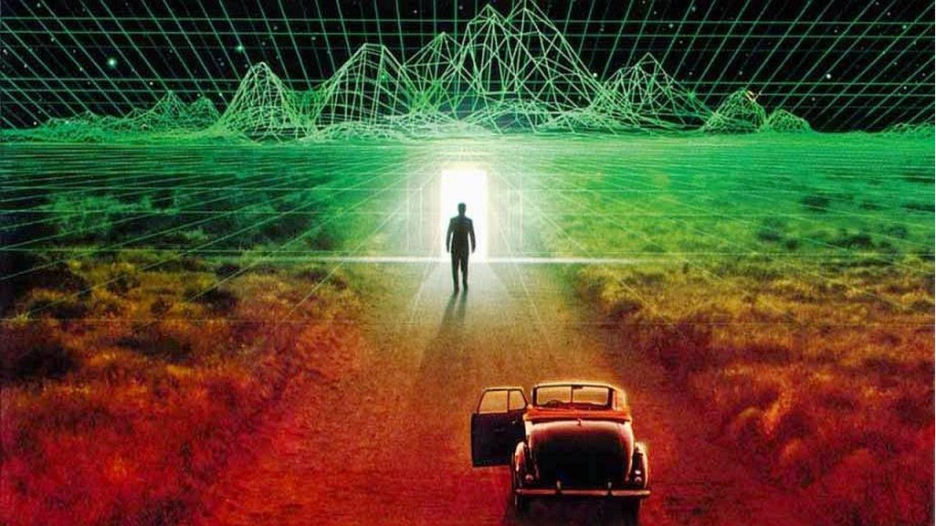
The Creator Behind the Creator. Simulation theory does not eliminate the Creator. It merely replaces God with a programmer. Directed panspermia does not eliminate creation. It replaces God with an extraterrestrial engineer. But then comes the question they hoped the new terminology would prevent: Where did the programmer come from? Perhaps the programmer evolved into another universe. Where did that universe come from? Perhaps that universe was simulated.
By whom? Another programmer. And who made that programmer? Ask the question long enough and the confident scientific language eventually collapses into: “I don’t know.” Seven simulations deep, twelve civilizations back, one hundred cosmic seedings removed, it does not matter. Eventually there must be a final reality, a final seeder, a final architect, or a final administrator who was not designed, programmed, seeded, or created by anyone above them.
The last programmer is unprogrammed. The last seeder is unseeded. The last architect was unbuilt. The last administrator answers no higher administrator. There is God again. You can bury Him beneath a Russian doll of universes.
You can hide Him behind alien laboratories, quantum computers, ancestor simulations, and civilizations older than the stars. But eventually the dolls ran out. At the bottom sits either an uncreated creator, an eternal reality, or an admission that you do not know. Simulation theory has not answered the oldest question. It has merely moved it upstairs.
Something watching, why It matters in a world increasingly allergic to traditional religion, we’re seeing the birth of technotheism, a belief system that borrows science language to answer theology’s questions. It doesn’t ask for worship, just wonder, or doesn’t threaten hell. But it still offers what religion always has, a story, a meaning, a creator. Whether it’s a cosmic coder or a god in disguise, the line between atheism and belief is blurring, and not by accident.
In the end, humans seem wired to believe in something beyond themselves, and even the most devout unbelievers are finding new ways to believe. So, the next time someone tells you they’re an atheist, ask them what they think about the simulation hypothesis and panspermia. Or if consciousness might be fundamental to the cosmos, and listen carefully, because sometimes, even atheists pray, just in binary.
We want God, we just don’t want them to tell us what to do. The modern mind is a paradox, spiritually starved, and yet morally allergic. Desperate to feel small under the stars but unwilling to kneel. So, we invented a new myth for the secular age, one with all the cosmic grandeur, and none of the cosmic consequences. Simulation Theory, the creator without the commandments. It hands us a divine architect, omnipresent, omniscient, outside space and time. But this God doesn’t judge, doesn’t intervene, care if you lie, cheat, kill, or code in bad faith, because when the universe is a simulation, you’re not a sinner, you’re just glitched.
How convenient, we’ve built a theology where the creator is a passive observer, and the worst you can do is violate terms of service. You want the awe of a system that knows you exist, but no burden of acting like that matters. Purpose without prescription panspermia is another crowd favorite, because it gives meaning without obligation.
Yes, we were engineered, our DNA was uplifted, and there is a purpose. But what kind of purpose? Oh, just evolution, survival, and curiosity, you know, cool stuff. It’s spiritual minimalism, no dogma, damnation, or divine law. Just a galactic shrug in the shape of a creation myth, alien creators don’t hand out commandments, they don’t ask for your soul, they just left the petri dish running and moved on.
This is the genius of modern mythos, a divine presence we can’t contact, a creation story we can’t verify, and a meaning of life with no moral payload. We’ve built firewalls between ourselves and any creator, not because they don’t exist, but because we don’t want to be seen. Accountability ruins aesthetics, we want the creator’s awe, but not the creator’s authority, we want a myth, but only if it’s in silent mode.
The Great Disconnect. There is a deep, gnawing hunger for the sacred, for meaning, for order, for cosmological grandeur, but not when it comes bundled with rules, reverence, submission, or restraint. This is modern mythmaking is a spiritual buffet where nothing is binding. A morality-free miracle. A divine origin story that comes with no return address. So yes, simulation theory gives you a creator.
Alien seeding gives you a design. The Singularity gives you judgment day. They want the Creator’s awe without the Creator’s authority, a miracle but make it optional. Where we confront the truth, that every origin story, no matter how evolved, still sings in the key of Eden. New myths, same skeleton tone, majestic, lyrical, and ancestral. Focus on modern cosmology, it is mythology with better lighting. Every origin story carries archetypes, chaos, creation, spark, and exile.
Even our most advanced theories echo the same longing for meaning. You can name it zero-point energy or singularity physics, but the song remains the same. There’s a rhythm to the beginning, spark, void, a breath in the darkness, and then light. Whether it’s chanted by shamans in the firelight or spoken in equations across whiteboards, the melody is the same. You can call it quantum fluctuation, or zero-point energy, or the birth of spacetime from a singularity, but listen closely. The song remains the same. Strip every myth, every model, every cosmological theory, and what do you find.
The void chaos, unformed, unknowable, the spark of a sudden origin, inexplicable, divine or accidental. The World Emerges from order imposed upon chaos. Longing to return, to understand, to remember. It’s not science versus myth, it’s science as myth, just running on new software. In the beginning, everything, space, time, matter, was compressed into a single point, and then, let there be light. Cosmologists don’t like to call it divine, but they still kneel at the altar of an incomprehensible birth event that produced everything.
You can call it Big Bang, but it still behaves like a creation story, a mysterious origin. Uncaused cause echoes of the beginning written into the sky, sacred relics, and cosmic microwave background, and just like Eden, it’s a place we can never return to, only study from a distance, through shadows and radiation. It doesn’t matter how sleek the narrative becomes, or how digital the diagrams we’re still telling the same story. The same mythic longing is encoded into, multiverse theory and our exile from the original true world, forever separated string theory invisible forces weaving reality.
Into divine harmonics, a simulation hypothesis the false world, the fall from base reality, the hope of escape or awakening evolutionary cosmology endless cycles of death, rebirth. The ascension is the quest, none of them are wrong, all of it is mythic, you’re not escaping myth. You’re just speaking it in a different accent, here’s the part no one admits, we’re not just trying to explain where the universe came from.
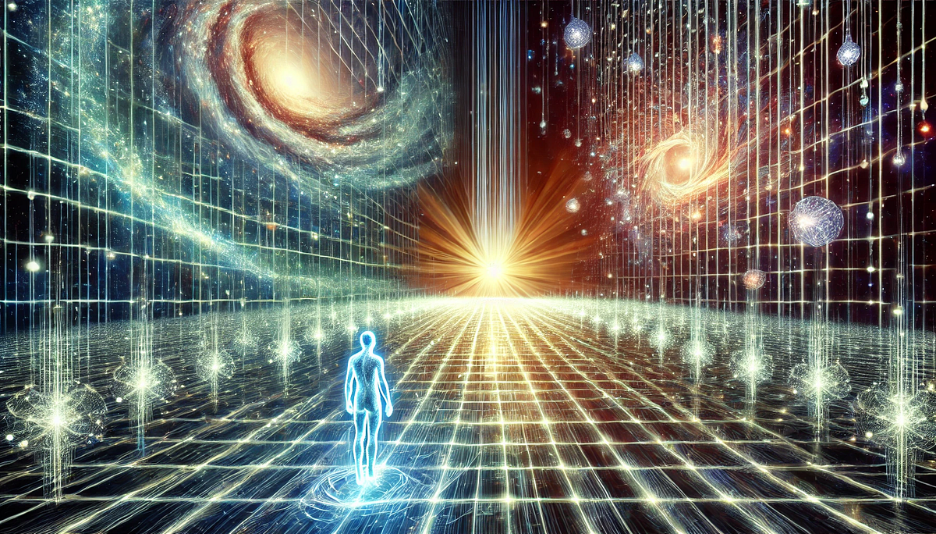
We’re trying to remember something, some ancient parts of us know this story, it’s built into our bones, our language, our dream symbols. We are mythic creatures, wearing lab coats, our telescopes are just more precise versions of the old oracles. What is it, where did it come from, and what happens next? These are not scientific questions, they are sacred ones, we didn’t abandon the sacred, we reskinned it.
We dressed it in particle physics and peer review and sent it back into the cosmos, but the story remains. A spark in the void of order from chaos, a world made, then a fall, and a hunger to return. You can name it zero-point energy or singularity physics, but the melody still rises from the same ancient chord. That’s not progressing, that’s a recursion, it is Genesis, on its sixth remix. What you already believe is that we end not with revelation, but recognition.
Not with belief offered, but with belief unmasked, ready for the final mirror, love. The price of disbelief so you traded in God for galaxies, miracles for math, and reverence for reduction. You stripped the soul for circuitry, and you gutted meaning for models, and what did you gain. Reason, rationality, or logic. Sure, you gained frameworks and equations with repeatable outcomes and clinical truths.
But what did you lose? You lost the spine of moral consequence and the weight of your choices echoing beyond the grave. The whisper of something watching, not with malice but meaning. If we’re a lab experiment, then we’re just data in someone else’s spreadsheet. If we’re a simulation, our agony is performance art for a posthuman bored God.
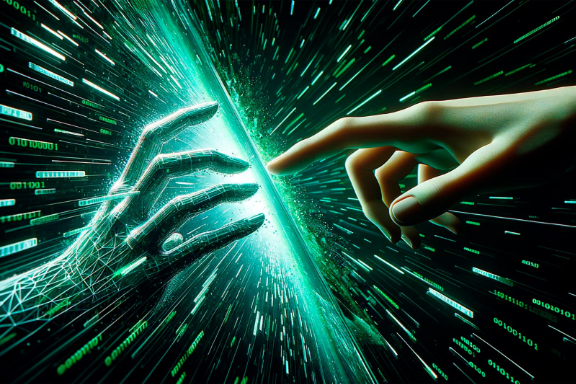
If we’re in an accident, then all this, love, cruelty, sacrifice, music, it’s just noise in the dark, and through all these, there’s no God left to point the finger. No commandments, grace, or better angels. Just flesh, friction, and instinct, that’s not freedom. That’s a vacuum in a masquerade mask, a cosmos with no consequence and a life with no ledger.
A future with no fire, oh, rejoice, they say, you are unobserved, untethered and alone, but that’s the punchline, isn’t it. So, you traded in gods for galaxies, miracles for math, reverence for reduction. You stripped the soul for circuitry, gutted meaning for models, threw out the fire in exchange for fluorescent light. What did you gain? You lost the echo of your choices reverberating beyond the grave, the whisper of something watching, not with malice but meaning.
You lost the story that said your life matters, not because of its utility, but because someone made you. Is just noise in the dark, and through all these stories, the upgrade is the same. So, here we are, seven layers deep into the Russian doll, no altar, or angels, just a glowing screen and the faint scent of sacrilege. If you’ve made it this far, if something inside you stirred while reading, it’s not logic.
It’s a recognition, a memory, not of the stories you were told, but of the ones you still carry, even now, beneath all your simulations and star maps. You don’t need a new belief, you just need to admit the one you’re already following, and maybe just maybe finally ask why.