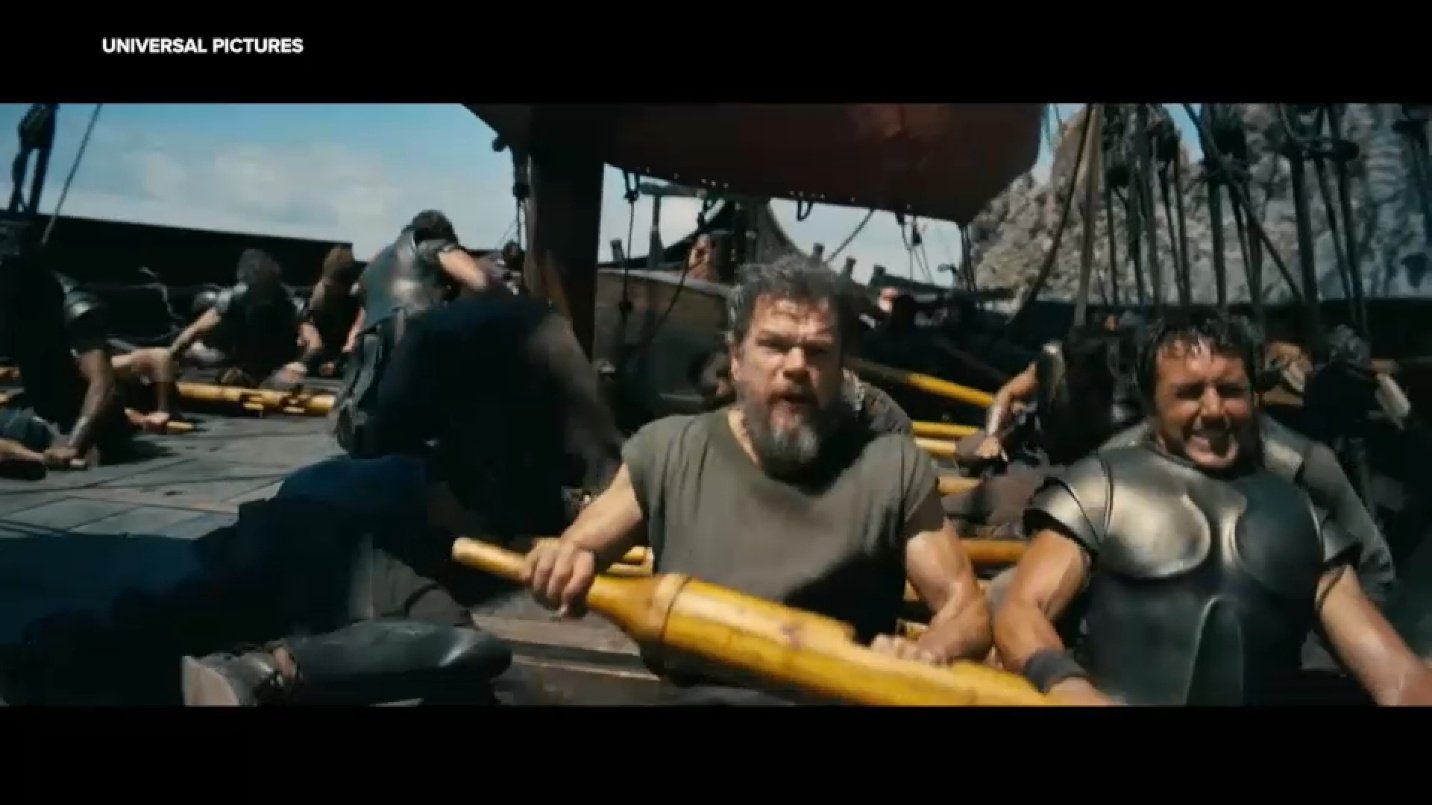
There is something unsettling about hiding inside a wooden horse.
Not frightening in the ordinary movie sense. There are no monsters waiting in the darkness, no supernatural creature breathing down your neck, no sword fight to distract you from the danger. There is simply a group of men packed inside a wooden structure, waiting.
Waiting to be discovered.
Waiting to be killed.
Waiting for someone outside to make one wrong move.
And perhaps most unsettling of all, they are waiting for their own plan to succeed.
This is Christopher Nolan’s Trojan Horse sequence in The Odyssey, and it may be one of the most revealing scenes in the entire film. On the surface, it is the story of an ingenious military deception. Odysseus has found a way to accomplish what brute force could not. The Greeks will enter Troy not as conquerors, but as a gift.
Yet Nolan doesn’t allow the Trojan Horse to remain simply a symbol of Odysseus’s brilliance.
He turns it into something much more uncomfortable.
The horse becomes a box containing victory, fear, guilt and the seeds of everything that will follow.
And that is where Nolan’s Odyssey becomes much more than an adventure story.
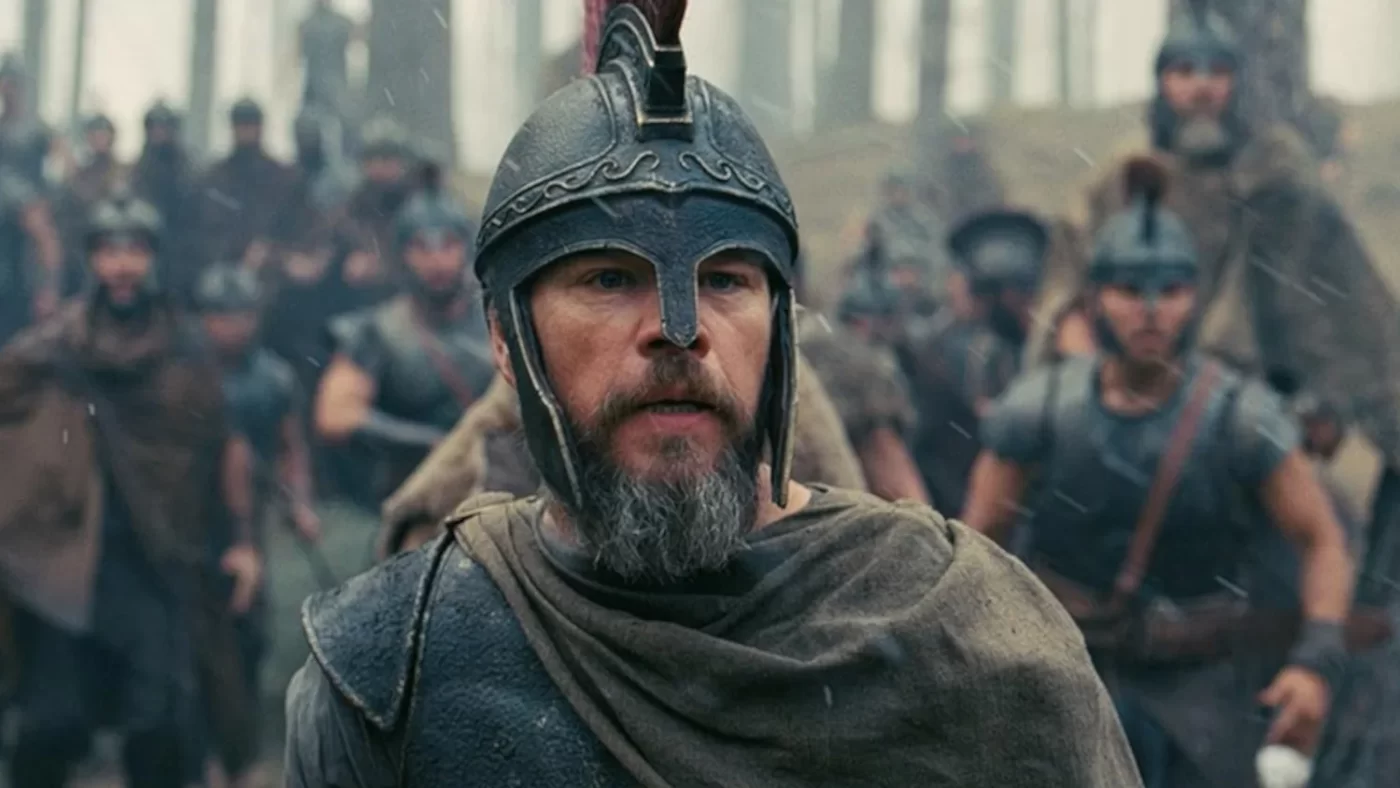
The Horse Arrives
The image itself is almost absurd.
A gigantic wooden horse has been brought to the shores of Troy. It is enormous enough to dominate the landscape. It looks less like a weapon than a monument, perhaps even a strange offering from one civilization to another.
Nolan had apparently carried a particular image of the Trojan Horse with him for years. In an interview with the Los Angeles Times, he explained that he had imagined the horse listing over in the sand, an image that stayed with him long before he ultimately made The Odyssey.
That matters because Nolan understands something important about cinema:
Sometimes an image can tell you what a thousand lines of dialogue cannot.
The horse is beautiful.
The horse is ridiculous.
The horse is ominous.
And the horse is lying.
The Trojans see a gift.
Odysseus sees an opportunity.
The audience sees a trap.
Everyone is looking at the same object, but everyone understands something different.
That is storytelling at its most deliciously dangerous.
Movie Trailer
Inside the Horse
Then Nolan takes us inside.
And suddenly the enormous spectacle becomes claustrophobic.
The outside world disappears.
The soldiers are cramped together in darkness. Their bodies are pressed close. Their weapons are useless unless they remain absolutely silent. These are warriors who have spent years fighting in open spaces, yet their greatest victory requires them to sit still.
It is a wonderful reversal.
The mighty Greek warriors must become invisible.
Odysseus, the great strategist, cannot solve this moment by shouting an order or charging into battle.
He has to wait.
And waiting is often harder than fighting.
Nolan has always been fascinated by pressure. His characters are frequently placed inside systems that gradually tighten around them. Time becomes a weapon. Space becomes a weapon. Silence becomes a weapon.
Here, all three come together.
The horse becomes a prison.
The prison becomes a hiding place.
The hiding place becomes a weapon.
And the weapon is activated by patience.
The soldiers cannot simply be brave.
They must be quiet.
They must trust one another.
They must control their fear.
And they must understand that one man’s panic could kill everyone.
That makes the scene surprisingly intimate.
This is not simply an army.
It is a collection of human beings trying desperately not to breathe too loudly.
The Sword
Then comes the moment that makes the whole plan feel horribly real.
A Trojan soldier becomes suspicious.
He investigates the wooden horse.
A sword is pushed into it.
The Greeks cannot react.
The blade strikes one of the men hiding inside.
The wounded soldier has every reason to cry out.
Any normal human being would.
But the others must silence him.
The scene becomes a brutal lesson in the difference between courage and survival.
The man inside the horse is not asked to be fearless.
He is asked to suffer silently.
And his companions are forced to participate in that suffering because the survival of everyone depends upon it.
There is something almost unbearable about that.
In a traditional war movie, an injury is often the beginning of action.
Here, an injury demands stillness.
The men cannot rescue their wounded companion.
They cannot attack the soldier outside.
They cannot even acknowledge what has happened.
They have to absorb it.
That is the Trojan Horse in miniature.
Everything is suppressed until the moment when suppression becomes violence.
The Gift
Eventually, the Trojans accept the horse.
And this may be the most important part of the scene.
They do not conquer it.
They receive it.
That distinction becomes crucial in Nolan’s interpretation.
The horse enters Troy because the Trojans themselves bring it inside.
The Greeks have weaponized trust.
The thing that makes civilization possible, the willingness to accept a gift, has been turned into a military strategy.
This is where the symbolism becomes much darker.
The Trojan Horse isn’t simply a symbol of cleverness.
It is a symbol of what happens when cleverness becomes more important than morality.
Nolan’s film makes that connection explicit. The Los Angeles Times notes that his version treats the Trojan Horse as something that eventually weighs on Odysseus’s conscience, connecting his great act of cunning to a violation of the sacred obligations surrounding hospitality.
That changes our understanding of Odysseus.
He has won.
But the film asks whether he has actually done something worthy of celebration.
Night Falls
Once the horse is inside Troy, the atmosphere changes.
The city is celebrating.
The Greeks are hidden.
The Trojans believe the war is over.
And that is when the audience realizes that the horse has not brought peace into the city.
It has brought the opposite.
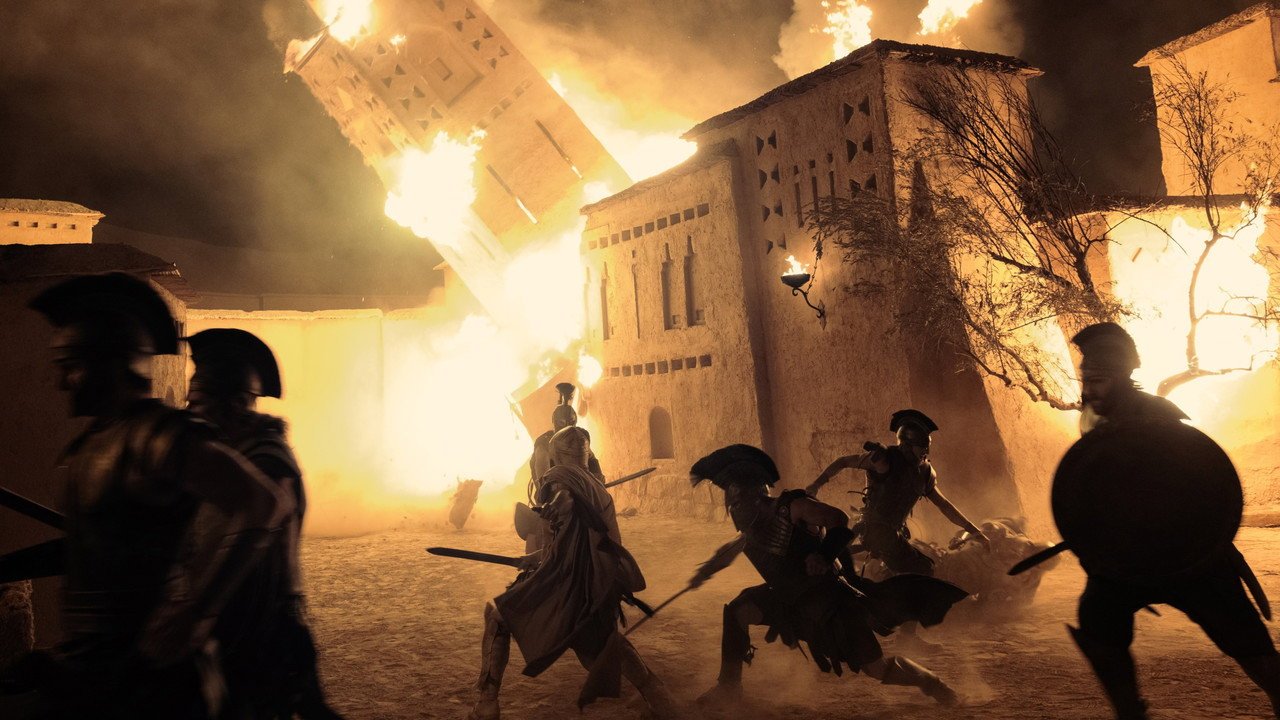
The Greeks emerge.
The deception is complete.
The city that believed it was safe discovers that it has invited its own destruction through its gates.
The sequence becomes increasingly violent, but Nolan’s larger point has already been established.
The battle was not won when the Greeks defeated the Trojans.
It was won when the Trojans trusted them.
That is a chilling idea.
And it is precisely why the Trojan Horse has remained such a powerful image for thousands of years.
It is not merely about military strategy.
It is about betrayal.
Nolan’s Eye for Scale
One of the fascinating things about Nolan’s version is that he refuses to treat the Trojan Horse as a purely digital fantasy object.
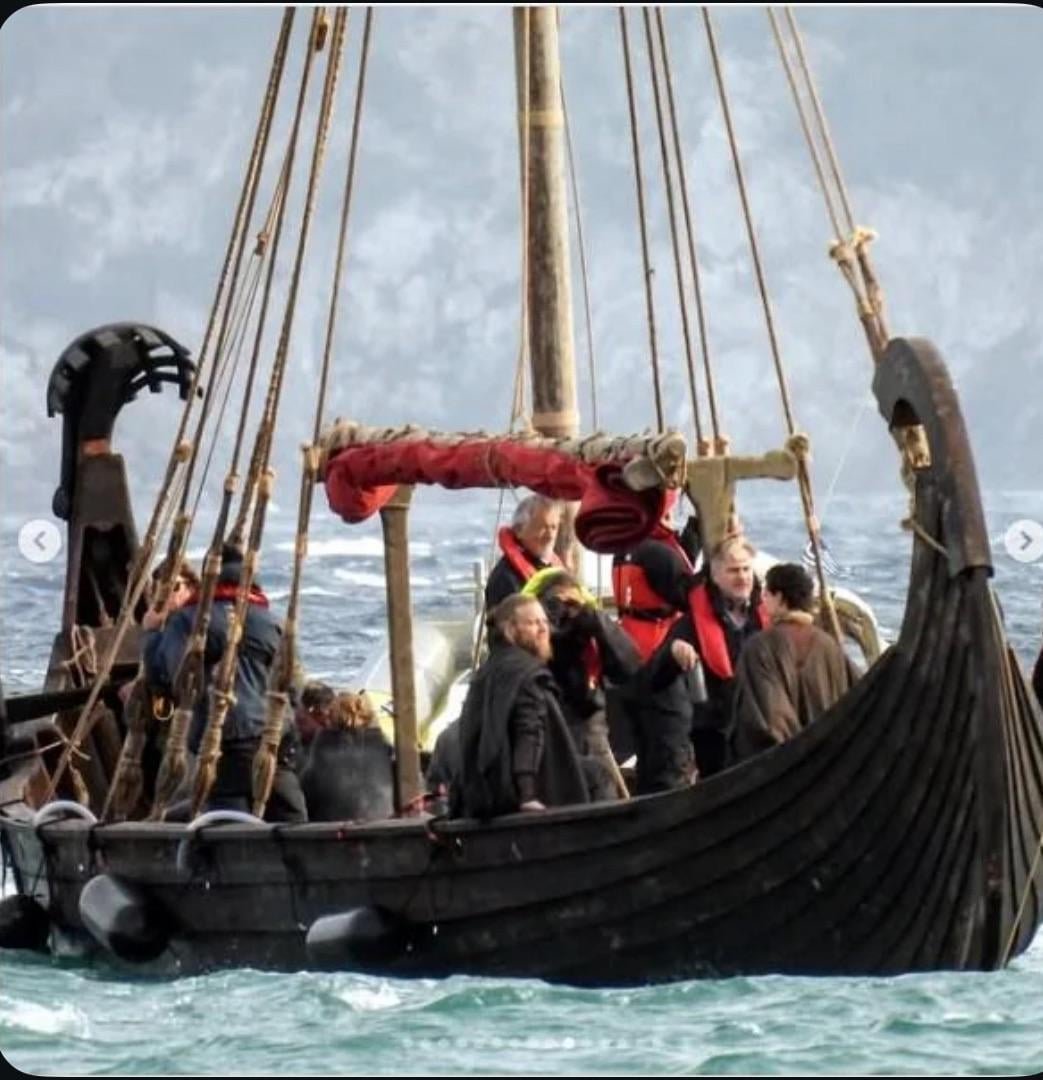
The Odyssey was shot entirely on IMAX film, a first for a feature, and Nolan deliberately pursued physical environments, real locations, and practical production methods. The production actually built a Trojan Horse large enough for actors to occupy it. The Associated Press reported that Nolan wanted audiences to experience the world physically, including going inside the horse itself.
That decision is important.
We don’t merely see the horse.
We believe it occupies space.
We believe it has weight.
We believe the men are actually inside it.
And Nolan knows that physical reality creates a particular kind of tension that visual effects sometimes struggle to reproduce.
There is something about watching actors climb into a giant wooden structure and knowing that the structure really exists that makes the scene tactile.
The wood has weight.
The darkness has weight.
The waiting has weight.
Even the silence feels physical.
And this is where Nolan’s enormous filmmaking ambitions become surprisingly human.
The larger the movie becomes, the more important the tiny details become.
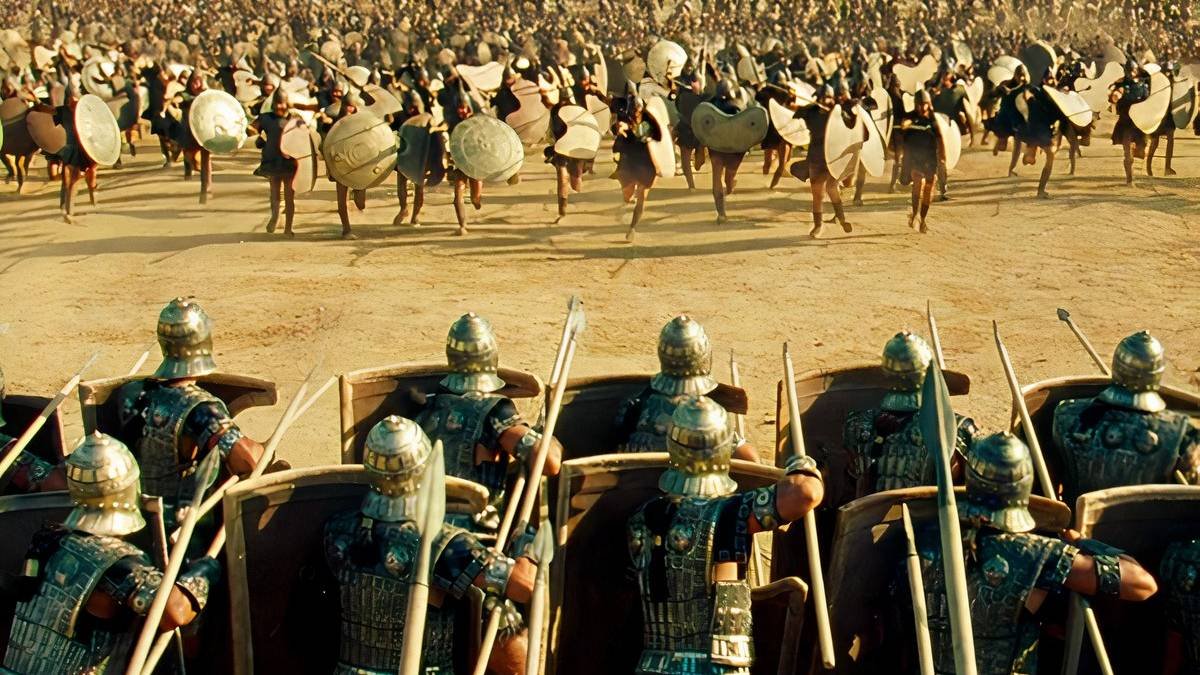
Thousands of soldiers can fill the screen.
But one frightened man trying not to scream can become the image you remember.
The Great Irony of Odysseus
Odysseus is supposed to be the cleverest man in the room.
That is his gift.
He thinks around problems.
He sees possibilities that other people don’t.
He survives because he can imagine a way out.
The Trojan Horse is therefore the ultimate expression of Odysseus.
It is his masterpiece.
Except that Nolan does something very interesting with that masterpiece.
He makes it haunt him.
The victory becomes inseparable from the violence.
The brilliance becomes inseparable from the guilt.
The triumph becomes the beginning of the journey home.
That is why the Trojan Horse matters so much to the entire movie.
It isn’t just something Odysseus does.
It is something he has to live with.
The Horse as an Original Sin
There is a temptation when watching an epic to divide people into heroes and villains.
Odysseus is the hero.
Troy is the enemy.
The Greeks win.
End of story.
But Nolan doesn’t seem satisfied with that arrangement.
His Odyssey asks what happens after the cheering stops.
What happens when the hero remembers exactly how he won?
What happens when the brilliant strategy that saved thousands of Greek lives also destroyed thousands of Trojan lives?
What happens when the person who was celebrated for his cleverness eventually has to confront the moral consequences of that cleverness?
The Trojan Horse becomes almost an original sin in the film’s mythology.
Odysseus crosses a line.
And although he wins the war, he cannot simply cross back.
He has to live with what happened.
That gives the entire journey home a different emotional meaning.
He isn’t merely trying to get back to Ithaca.
He is trying to get back to himself.
The Journey Was Already Beginning
This may be the most heartbreaking irony of the scene.
When Odysseus climbs into that horse, he believes he is going to Troy to end a war.
He doesn’t know that he is also beginning another journey.
The war outside the horse is almost over.
The war inside Odysseus is just beginning.
That is what makes the scene so much more powerful in retrospect.
The Trojan Horse is the doorway to Troy.
But metaphorically, it is also the doorway into Odysseus’s punishment.
Every victory has a receipt.
Odysseus simply doesn’t know yet how long the bill will be.
What Makes This Human
And this is where I think Nolan’s Trojan Horse becomes more than mythology.
Most of us will never hide inside a wooden horse.
Most of us will never sack Troy.
Most of us will never have an army waiting for our command.
But we do understand winning something and discovering that winning changed us.
We understand getting the job and discovering that the job isn’t what we imagined.
We understand fighting for a relationship and then realizing that the fight itself damaged the relationship.
We understand accomplishing something we desperately wanted and discovering that the person who finally got it isn’t quite the same person who wanted it.
That is Odysseus.
He gets the victory.
And then he has to become the man who can live with it.
That is considerably more interesting than simply watching a hero win.
The Horse and the Man
Perhaps the most fitting image in the entire sequence is not the moment when the Greeks attack.
It is the moment before.
The horse sitting there.
The soldiers hidden inside.
The Trojans approaching.
Nobody knows yet what is going to happen.
That is the moment when everything is still possible.
The horse is simultaneously a gift and a threat.
A monument and a weapon.
A victory and a mistake.
A beginning and an ending.
And Odysseus is all of those things too.
He is a hero.
He is a husband.
He is a father.
He is a king.
He is a soldier.
He is a strategist.
And he is a man who has to live with his decisions.
That is what makes the Trojan Horse such an effective centerpiece for Nolan’s The Odyssey.
The spectacle is enormous, but the question underneath it is painfully small:
What do we become when we get what we wanted?
The Victory That Wasn’t Quite a Victory
The Greeks win Troy.
The story should be over.
Except it isn’t.
Odysseus still has to go home.
And that is the cruel joke at the center of the epic.
He has conquered the city that stood between him and Ithaca, only to discover that the road home will become the longest journey of his life.
The Trojan Horse therefore represents the moment when Odysseus gets what every warrior wants: victory.
But Nolan turns victory into a question.
Was it worth it?
And perhaps even more painfully:
Who did you have to become to win?
That is a question that survives long after the movie ends.
Because eventually, in one form or another, all of us encounter our own Trojan Horses.
We make the clever decision.
We take the opportunity.
We win the argument.
We get through the door.
We accomplish the thing we have been fighting for.
And sometimes we look around afterward and realize that the landscape has changed.
The person standing there is still us.
But perhaps not quite the same us.
That is the quiet power of Nolan’s Trojan Horse.
For all the enormous armies, ships, gods, monsters and mythical landscapes in The Odyssey, the most recognizable thing inside that gigantic wooden horse is not a warrior.
It is a human being trying to live with the consequences of his choices.
And maybe that is why the ancient story still has such a remarkable grip on us.
The horse was supposed to be the end of the war.
Instead, it became the beginning of the journey.
And Odysseus was never really coming home the same man who went away.