
He’s been called “Ingredient X” and “The Cat Behind the Cat” by jazz journalist Andy Gilbert. San Francisco Bay Area multi-instrumentalist Roger Glenn has a hefty resume that dates back to the 1960s and comprises some of jazz, blues, and R&B’s greatest artists.
Fluent on a multitude of instruments, including saxophone, flute, vibraphone, marimba, and percussion, Glenn has been the secret sauce that has graced live performances and recordings by such luminaries as Latin mambo/ salsa legend Tito Puente, vibraphonist Cal Tjader, pianist Mary Lou Williams, Cuban percussion maestro Mongo Santamaria, bebop trumpet king Dizzy Gillespie, flute great Herbie Mann, and pioneering jazz/funk trumpeter Donald Byrd.
Glenn diligently studied his craft and came by his love for music honestly being immersed in it from an early age. He had some big shoes to fill, as his father was the very accomplished trombonist and vibraphonist Tyree Glenn. The elder Glenn did extended residencies with some of the greatest talents in jazz. Cab Calloway, Duke Ellington, Louis Armstrong, and Don Redman all had him in their employ from the 1930s through the early ‘70s.
Summer of 2025 was very significant for Roger Glenn because it was the release of his second album in a half-century as a leader on Patois Records called “My Latin Heart.” In 1976, in the midst of all his session and sideman work, his friendship with celebrated producers Larry and Fonce Mizell afforded him the chance to record, what became, a cult classic debut on Fantasy Records called “Reachin’.” It was a blend of ballads, jazz-fusion, funk, and Latin grooves which served as an introduction for the, then, young burgeoning musician.
With “My Latin Heart” Glenn has spent a lifetime preparing for this sophomore release. But the album was a labor of love and reveals the true essence of an artist whose time has come. “I think it’s very significant recording an album like this today,” explains Glenn. “You look at, especially very recently, Bad Bunny at the Super Bowl. And people becoming more aware of Latin music. You know, there was a phase back in the ‘50s, I think it was, ‘50s into the ‘60s of Latin music, you know growing up around New York City, with the mambo, the cha-cha and stuff like that. And so that has always been my love, aside from being a jazz musician. Also, I love to dance.”
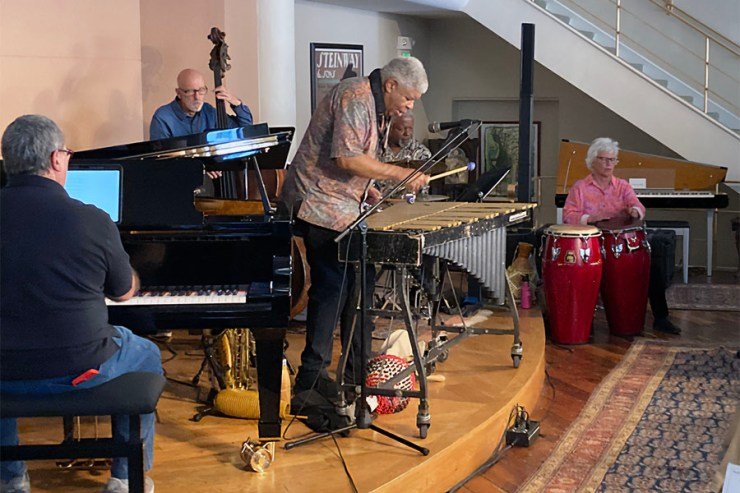
Glenn’s relationship with Latin music initially came to the fore when his brother Tyree Glenn Jr. got him a summer gig at a place called the Raleigh Hotel in the Catskills. Young Glenn would work the spotlight for shows in the evening. And, in doing so, he befriended this group playing poolside known as the Plata Sextet. “I was there through the summer and the band started learning more Latin music,” says Glenn. “I would sit in with them and learn the mambos, cha-chas, and stuff like that. But what’s interesting is I had a Latin band in junior high school with guys who I grew up with. A guy named Ronnie Scruggs was in the band and his mother was Faye Adams, who had a hit back in the early ‘50s called ‘Shake A Hand.’”
This period was the genesis of Glenn’s love for jazz, blues, and Latin music. And, not only is his latest album “My Latin Heart” a testament to that fact, but it is a document of his personal musical history and a reconnection with many of the musicians that have helped shape the multi-instrumentalist into the man he is today. Joining the leader is pianist and arranger David K. Mathews, guitarist Ray Obiedo, bassist David Belove, drummer Paul Van Wageningen, conga player Derek Rolando, vocalist/percussionist John Santos, and vocalist/percussionist Michael Spiro.
However, Glenn’s story actually started out back East in New York City. “I was working with Mongo Santamaria, living in New York, and we came out to San Francisco. And every time I came out here I really loved it,” says Glenn. “I’m also a pilot and it was always great flying weather in California. When we were on tour with Mongo and Armando Parrazza we played at a place called Cesar’s Latin Palace.” While on vacation visiting a friend some time later the owner Cesar approached Glenn after recalling his performance with Mongo Santamaria in the past. He offered Glenn a job and the multi-instrumentalist decided to stay on and make San Francisco his permanent home.
All the players on Glenn’s current album are folks he cut his teeth with on various gigs throughout the years in the Bay Area and beyond. And his musical exploits have taken him to various locales around the globe. Locales that have shaped his world view and a sensibility and aesthetic he has applied to his latest album.
“Dizzy and I went down to South America for one tour,” explains Glenn. “We went down to Brazil and Argentina. That was a great experience being able to play down in Brazil. We finished the tour and I stayed about a month afterwards, just hanging out near Rio and San Paulo, you know, just because I love Brazilian music. I love music of the Americas, which sort of leads to this latest album, because of my love for those rhythms. But I also realized the influence of European music and African music, and how that has been a crucial thing in regards to music of the Americas.”
When Glenn speaks of the Americas he is talking about, not only South, Central and North America, but other cultures that have significantly impacted world music and jazz like Portuguese, Nigerian, Senegalese, Spanish, Angolan, and the slaves and music that evolved from said cultures. The Americas have been a virtual melting pot of multiple races, ethnicities and traditions.
“There is a song on my new album called ‘Congo Square’ and it is dedicated to those Angolan slaves that were down in New Orleans,” says Glenn. “The slaves could only play their music on Sundays in New Orleans and the place they would meet was called Congo Square. And from that the Europeans were influenced by what they were hearing as well. The music would eventually spread to other parts of the country like Chicago and New York.”
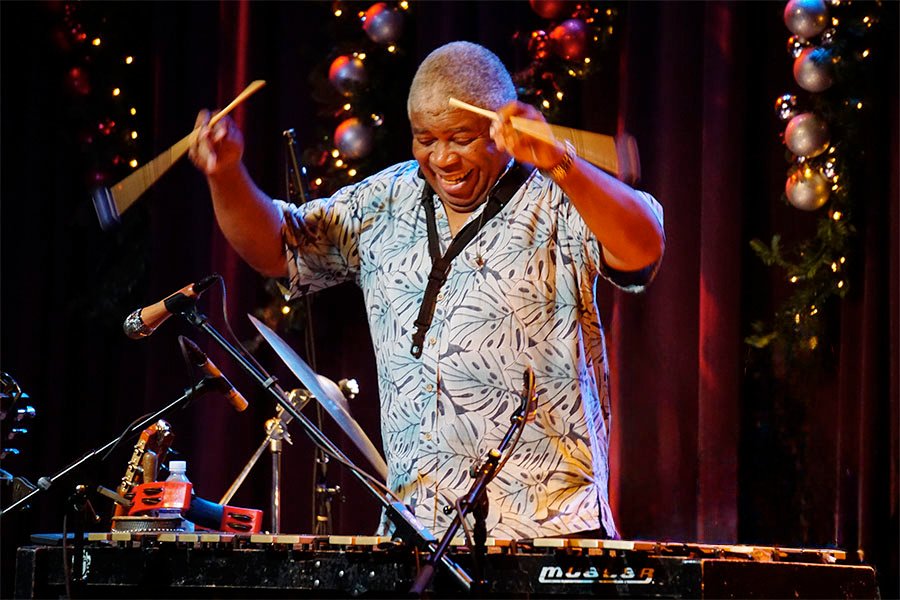
As a vibraphone master, Glenn has explored the origin stories behind the manifestation and creation of his instrument. And, just as the music has evolved throughout various cultures, the instruments upon which the music was built have a vast and illustrious history as well.
“Look at the history of the vibes for example,” inquires Glenn. “The slaves brought over bilophones that they played. It was a five-note pentatonic instrument. And from that African instrumentation versus the European chromatic scale came the xylophone and marimba. And then somebody in the 20th century thought let’s make the bars on the instrument metal instead of wood, and it created this vibrato, and so vibes came along from that. Plus, the African bilophone made its way to the silk trade and the Asian influence. So, suffice to say, diversity needs to be celebrated and people need to learn more about it because it’s our history, it’s their history and it’s everybody’s history!”
And, perhaps, there is some real palpable truth to the time being right for a greater appreciation of Latin and world beat sounds. Since the release of “My Latin Heart” this past August the album has been skyrocketing up the global jazz charts and, as a result, Glenn has become a hot property doing interviews on radio, podcasts, and print media throughout the world. Also, a video for the track “Congo Square” has been gaining traction at various film festivals, including the California Music Video Awards, The World Film Festival in Cannes, France, and many others in New York, London, and Paris.
“You know it’s been great being able to finally put this album out,” says Glenn. “But what goes hand in hand with that is the ability to go on tour and play live. Albums are like calling cards. I’m looking at it that way. You’re not going to be making or selling platinum, gold, or diamond releases and stuff like that. But the main emphasis is it’s a calling card to do live performances. And what’s so crazy is, essentially, I have a hit album. It’s been getting various international awards, and I’ve had a lot of local response to it as well, but the problem has been getting gigs and being able to tour, which is what I desire to do. I’m sure it can happen but there are a lot of financial obstacles in the way. But that’s the goal I’m looking for.”
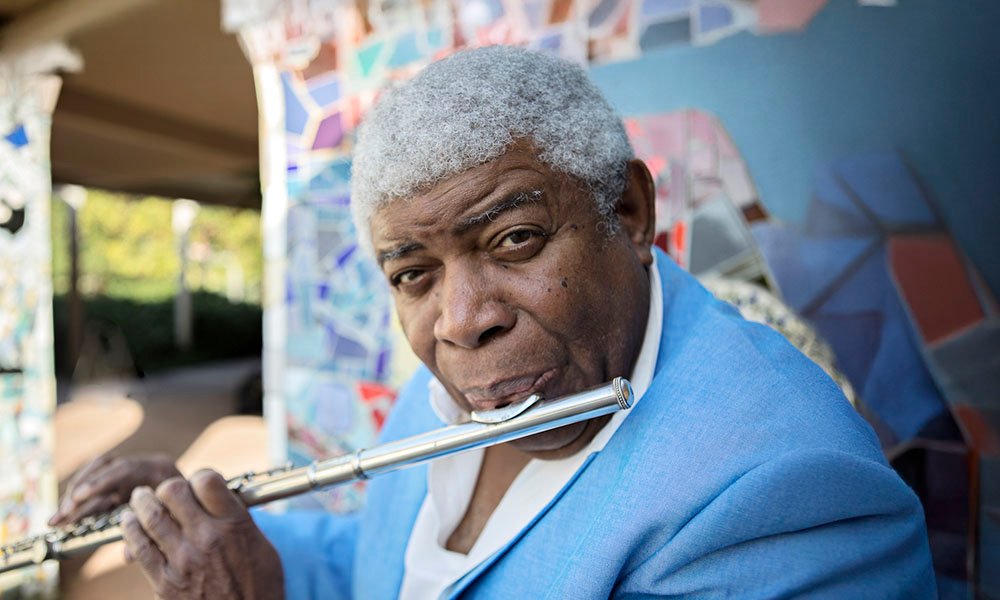
In addition to some of the previously mentioned artists, Glenn has kept some career momentum going in recent years doing a series of dates with blues legend Taj Mahal, jazz vocal great Kurt Elling, and a tour with an organ trio opening for Steely Dan. And if the seasoned Glenn has any advice he could bestow to budding music fans and artists it would be to try and ply your craft wherever and whenever you can.
“I’ve been able to play with some really great musicians,” says Glenn. “I think young people need to play with a lot of other musicians and be able to play live. I know there are hardly any places where young people can go and jam anymore. There are not that many venues for them to play. And the music programs in the schools, they need to offer more opportunities for kids to learn an instrument in school. And that’s also why I want to tour and travel. I want to inspire people and influence them to play an instrument. Also, playing an instrument improves your left brain and gets you functioning more and thinking.”
Currently, Glenn is in the process of composing material for a new recording project. The multi-instrumentalist, pilot, boater, filmmaker, musicologist, and dancer, is a renaissance man of the highest order. And his goal is to keep his creativity ever flowing and connecting to as many people that want to hear his message of freedom through music as possible.
“As an African American, ‘My Latin Heart’ is an album that was right on time,” says Glenn. “I’m African American, but my heart is also in the Americas of the music that has been created, aside from our national jazz and blues here in the United States. But I could go on. You know the Caribbean music that’s created there, Mexico and Central America and South America. It is just out there waiting to be touched by all individuals. And so we as artists are trying to put the message out to the world that we’re all speaking the same thing, you know. We all dance together but, because of political reasons, sometimes we are denied the ability to be able to enjoy each other’s presence and each other’s history.”
For more information on Roger Glenn just go to www.rogerglennjazz.com.


