When I was a child, my family would have movie night. Every holiday we would gather together and watch our favorite holiday movies. Call it our family tradition, we would make popcorn, snacks, hot cocoa and eggnog; while the snow fell in the distance. The movies we would watch would become the thing I remembered the most about Christmas and opening those presents in the morning.
Trying to stay awake to see what Santa got me for Christmas. My Grandmother used to use Christmas bells, to tell us she just saw Santa. “There goes his reindeer”. Those are the memories I will hold on too. Now that I am an adult, “A Christmas Story is one of those movies.
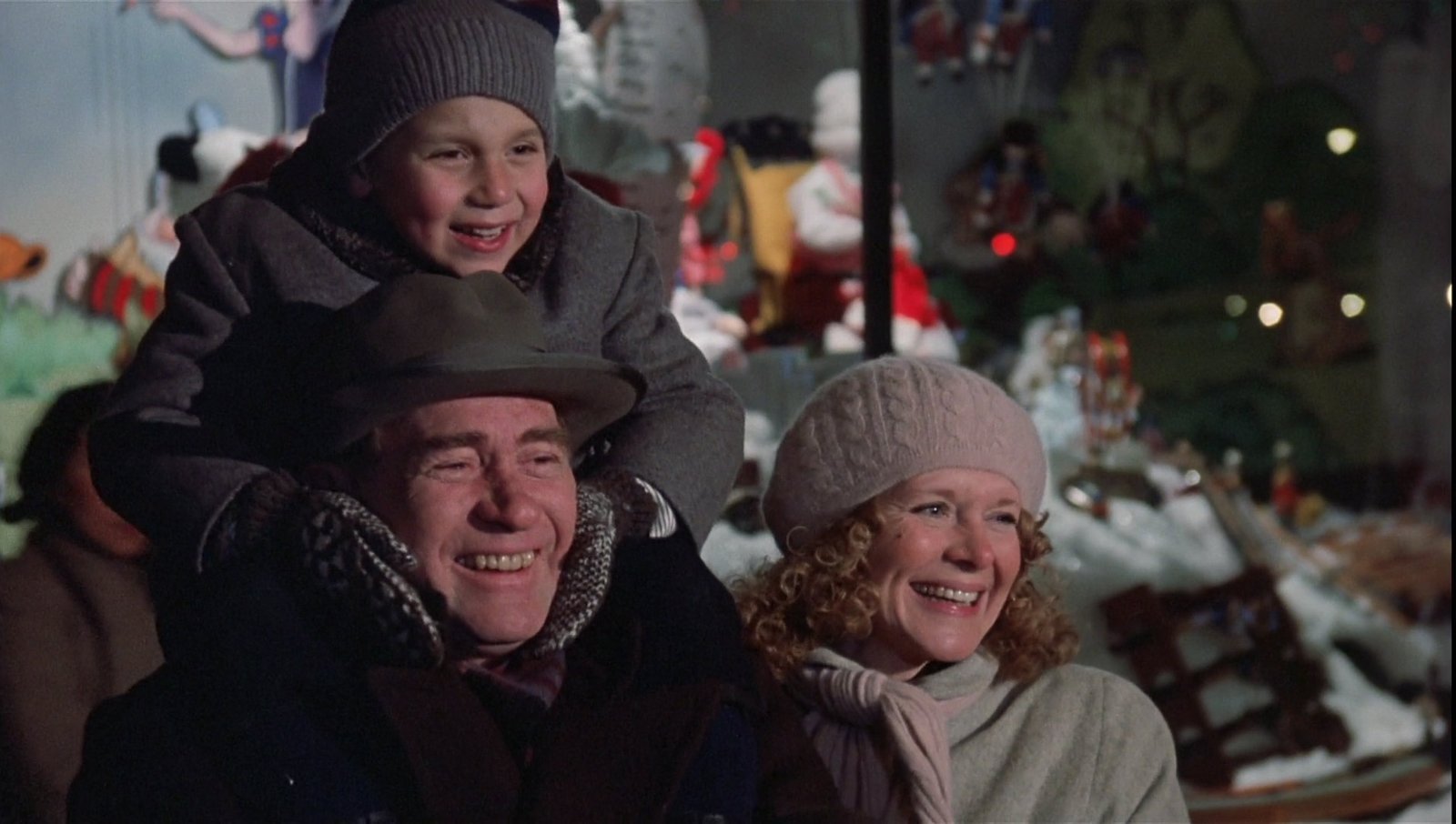
Few holiday films have carved themselves into collective memories like A Christmas Story, 1983. At first glance, it’s a cozy, snow-globed slice of 1940s/’50s nostalgia, a wide-eyed boy, a quirky family, and the ultimate Christmas wish, a Red Ryder BB gun. But beneath the tinsel and kitsch lies something sharper.
This isn’t just a film about childhood, it’s about the strange, surreal world of growing up, where adults are absurd, dreams are dangerous, and even Santa might push you down a slide. Endlessly quotable and rewatched like a seasonal ritual, A Christmas Story endures not because it’s sweet, but because it’s honest, cynical in just the right places, sentimental in others, and always just a little off kilter.
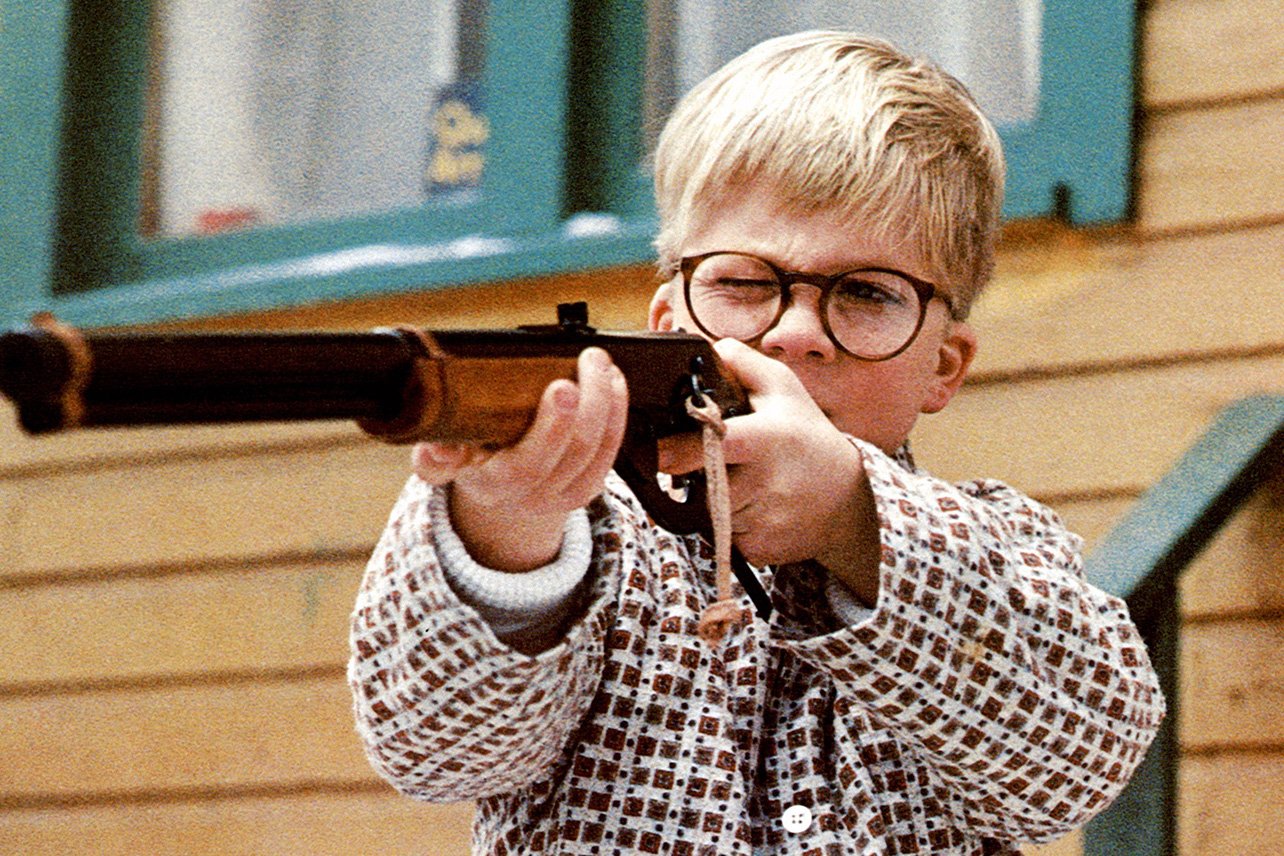
At its heart is that infamous warning. “You’ll shoot your eye out, kid”, a line that sums up the entire anxious push-pull of childhood ambition: dream big, but not too big… or you’ll put an eye out. At the heart of A Christmas Story lies a simple childhood wish: Ralphie Parker wants a Red Ryder Carbine Action 200-shot Range Model air rifle. Badly. But this desire is anything but simple. It’s not about the toy itself, it’s about what it represents: freedom, control, and the intoxicating idea of growing up.
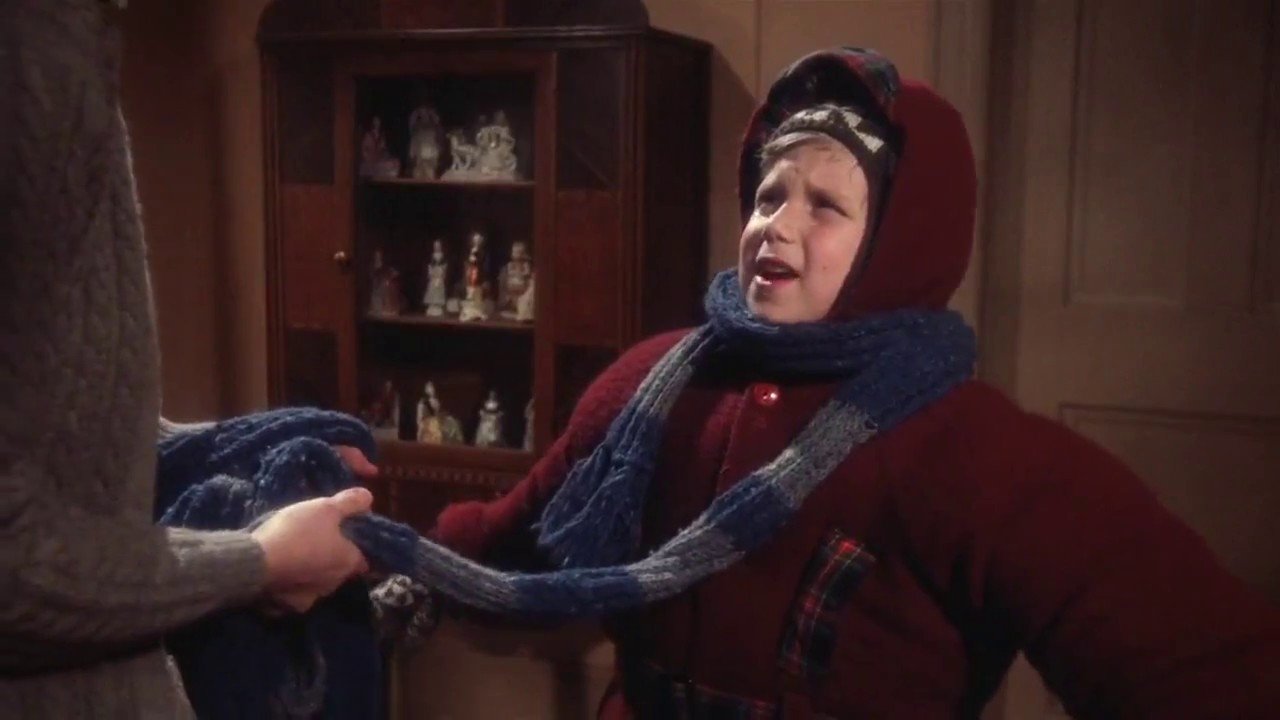
For Ralphie, the Red Ryder isn’t just a BB gun; it’s a symbol of identity, of stepping into a world where he’s no longer small, overlooked, or dismissed. In every elaborate daydream, he isn’t just playing, he’s the hero, the protector of his family, the clever avenger with a deadeye aim and unshakable cool. It’s less about violence, and more about validation. His obsession becomes a lens through which we view the blurred border between fantasy and reality, between childhood powerlessness and adult agency.
The more he’s said no, by his mother, his teacher, the school psychologist, even the department store in Santa, the more the gun becomes a sacred object, something mythic and forbidden. Each warning of “You’ll shoot your eye out” only fuels the flame, turning a toy into a talisman. This relentless pursuit taps into something universally human: the need to be taken seriously. Ralphie doesn’t just want the gun, he wants recognition, respect, and a world that finally listens to when he speaks. His desire is personal, but also archetypal.
It’s about becoming someone more than what the world allows a kid to be. The gun, ridiculous as it may seem, is a rite of passage. To possess it is to step beyond childhood, and maybe, just maybe, survive it. At first glance, A Christmas Story presents a warm, sepia-toned portrait of the mid-century.
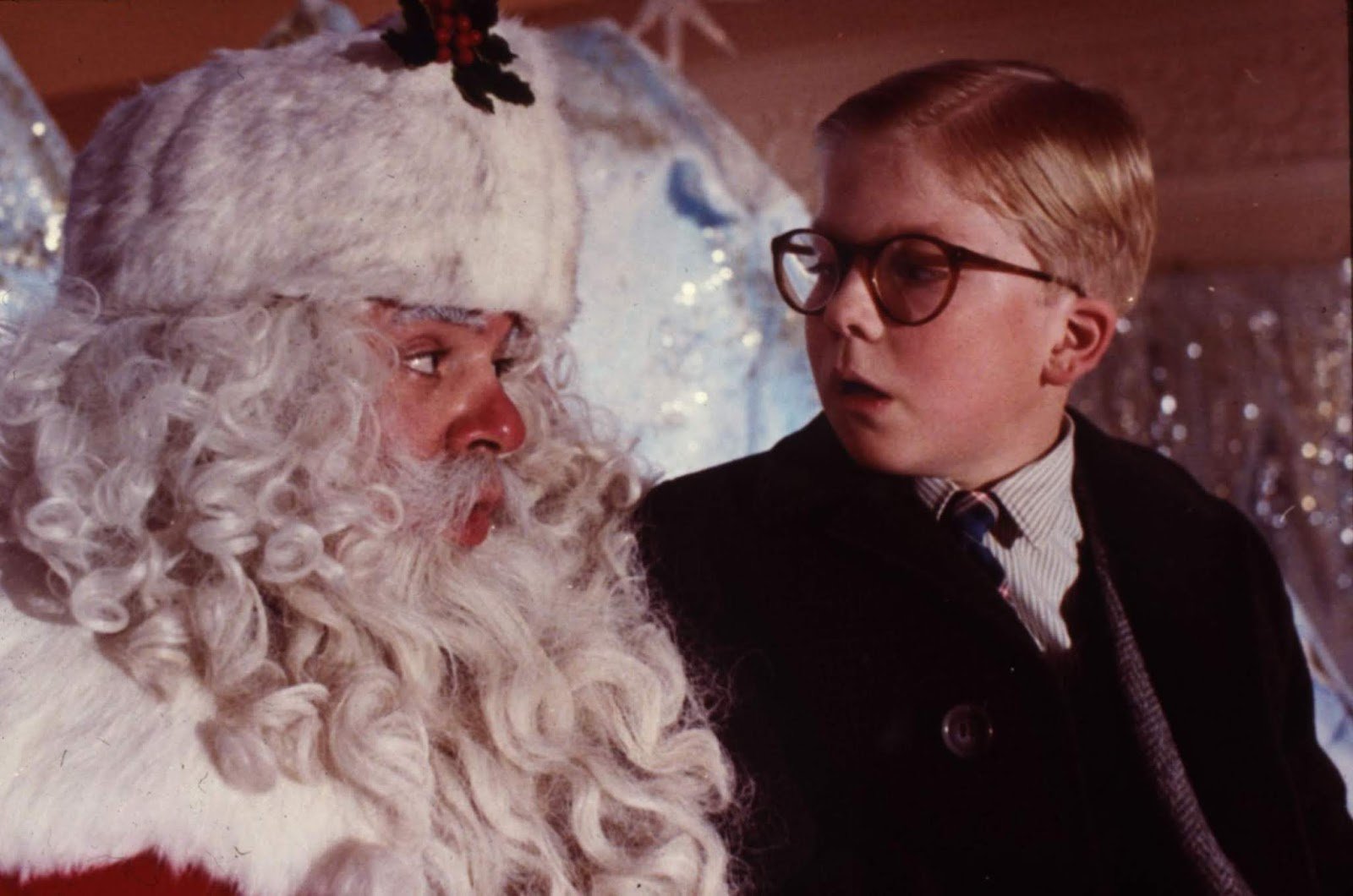
American childhood, snowball fights, flannel pajamas, and the golden glow of department store windows. But scratch the surface of this nostalgic veneer, and something sharper begins to gleam. Ralphie’s world may be sentimental in style, but it’s a minefield in substance. Behind the twinkling lights lurk frozen flagpoles that threaten to rip off your tongue, bullies who roam like wolves in snowsuits, and teachers who want justice.
Even Santa Claus, arguably the safest figure in a child’s imagination, becomes a boot-wielding enforcer of disappointment. The brilliance of the film lies in how it weaponizes nostalgia. It seduces you with its warmth, then quietly reminds you just how dangerous childhood really felt. There are few safe places in Ralphie’s world, and even fewer adults who offer clarity or comfort. Rules are enforced with arbitrary logic.
Authority figures range from well-meaning but clueless to bizarre and threatening. Fear lurks around every corner, not in epic or tragic form, but in small humiliations and sudden injustices: the snapping of a teacher’s voice, the sting of getting blamed, the terror of getting your mouth washed out with Lifebuoy.

And yet, we laughed. Because A Christmas Story understands that our most beloved memories are rarely pure. They’re jagged, bittersweet, wrapped in contradictions. The film doesn’t shy away from the danger, it leans into it, trusting the audience to remember that childhood wasn’t always safe, or fair, or even kind. It was a place where the world was just slightly too big, too loud, and too unpredictable.
Yet somehow, we survived it, and now, we retell it like legend, sharp edges and all. If the Red Ryder BB gun is Ralphie’s forbidden object of desire, then the leg lamp is its adult counterpart, a glowing, fishnet-wrapped monument to fragile masculinity and unspoken domestic tension. At first glance, it’s comedy gold: a gaudy, hypersexualized lamp in the shape of a woman’s leg, shipped in a wooden crate marked “FRAGILE” (pronounced, of course).
The Old Man’s pride in his “major award” is ridiculous, but beneath the slapstick is a telling glimpse into the undercurrent of adult longing and frustration simmering just beneath the domestic surface. The lamp is more of a declaration of identity. For Ralphie’s father, who lives in a world of broken furnaces, mundane dinners, and marital compromises, the lamp represents something his own, a touch of glamour, indulgence, and, yes, eroticism in a house otherwise ruled by utility and order.

Enter the mother. Her passive-aggressive loathing of the lamp is never openly stated, but it doesn’t need to be. Her disdain is silent, seething, and utterly calculated. When the lamp is “accidentally” broken, it’s not clumsiness, it’s an execution. And the father’s meltdown isn’t just about a broken lamp. It’s about humiliation. About losing one of the few things that felt like his. In that moment, the lamp becomes the battleground for something unspoken and primal, the war for space, for identity, for power within the domestic sphere.
What’s brilliant is how the film never lets this conflict dominate the narrative, it plays out in the background, comedic yet deeply telling. The leg lamp scene isn’t a filler. It’s subtext with a spotlight. It’s about desire stifled by responsibility, sexuality clashing with repression, and the quiet warfare waged in the margins of a marriage. And all of it, wrapped up in glowing, plastic absurdity. It’s hilarious.
It’s unsettling. It’s Christmas. In the snow-covered universe of A Christmas Story, adults aren’t wise guides or reliable protectors, they’re overblown caricatures, each more absurd, unpredictable, or ineffectual than the last.
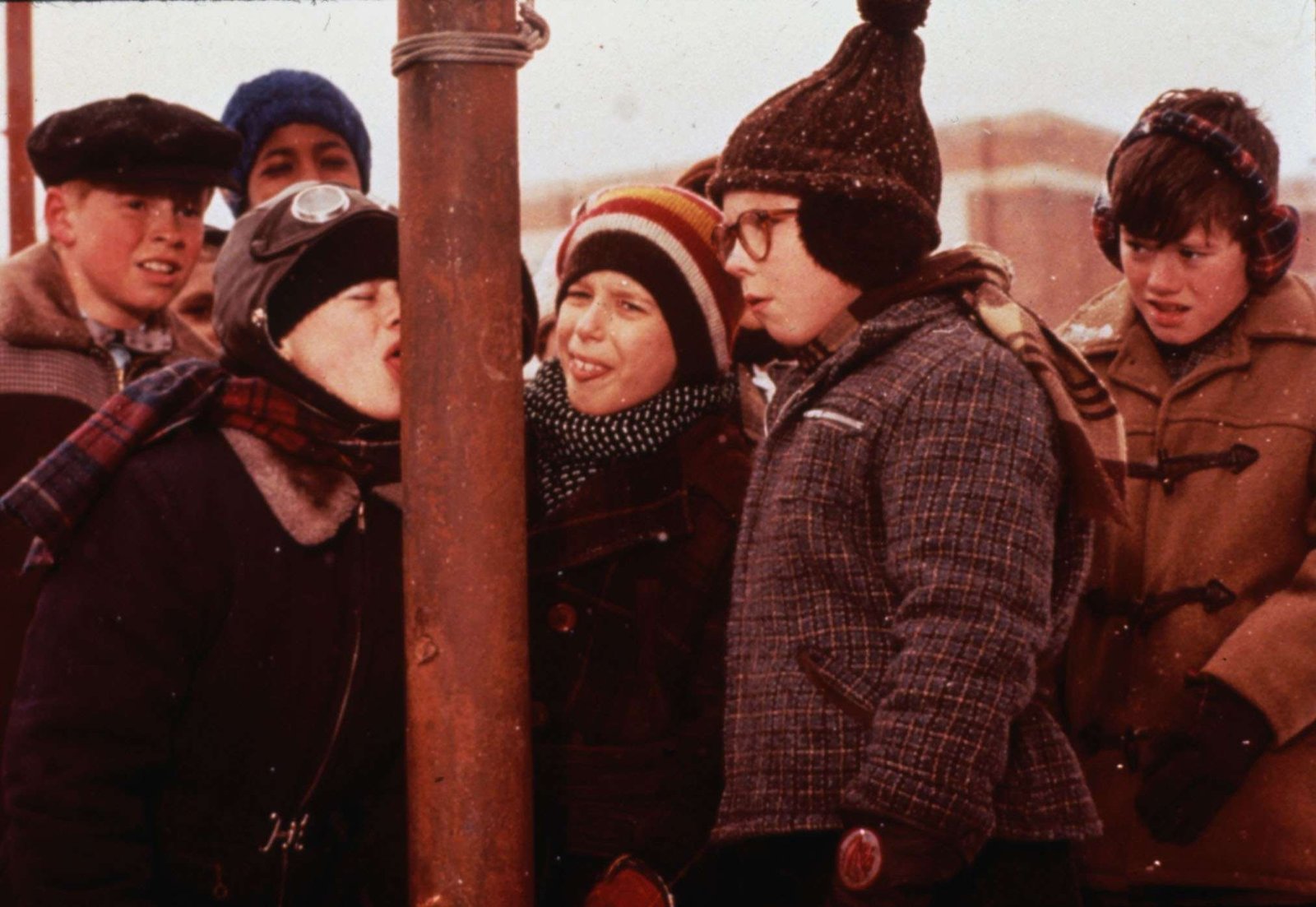
From Ralphie’s baffled, battle-worn parents to the mall Santa, every grown-up in this film embodies a different flavor of dysfunction. And to a child trying to navigate the chaos of the world, that absurdity doesn’t just confuse it terrifies. Take Ralphie’s teacher, Miss Shields. She smiles sweetly one moment, then presides over a humiliating classroom fantasy the next, reducing Ralphie’s lovingly crafted BB gun essay to a glowing red “C+” and a scolding chant of “You’ll shoot your eye out!”
Her authority is irrational, her judgments exaggerated, because this is how children often experience power, as unpredictable, theatrical, and absolute. Then there’s Santa. In theory, the jolly north-pole patriarch is the final hope, the one adult who might understand Ralphie’s plea. Instead, he’s a grotesque, exhausted mall employee, slurring his lines and barking orders, a far cry from the myth.
When Ralphie’s desperate words finally escape his lips, “I want an official Red Ryder carbine action two-hundred shot range model air rifle! “Santa barely blinks before delivering the same damning line: “You’ll shoot your eye out, kid.” Then, with industrial efficiency, he plants a boot on Ralphie’s forehead and sends him sliding back into reality.
Even Ralphie’s parents, the most grounded adults in the film, are presented with emotional distance and comedic exaggeration. His mother is loving but manipulative, often resorting to quiet subversion rather than confrontation. His father, loud and bombastic, is prone to rants, random victories, and constant battles with the furnace, a domestic gladiator who can’t even protect his “major award.” Together, they love Ralphie, yes, but they’re also busy, distracted, and locked in their own strange Cold War of middle-class survival.
The genius of A Christmas Story is how it captures the child’s-eye view of adult power. Grown-ups appear larger than life, until they don’t. They speak in ultimatums, enforce rules with no logic, and often seem just as confused by the world as the children they’re meant to guide. Ralphie’s journey isn’t just about getting a BB gun, it’s about realizing that no one really has it all figured out. Not even the people in charge.

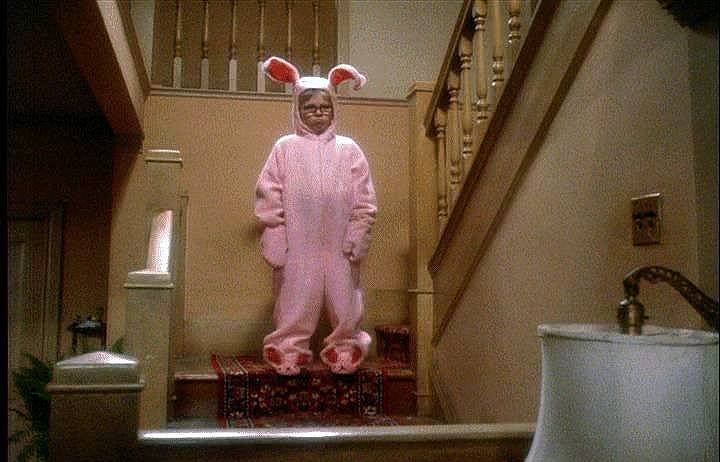
Because in the end, authority is just another costume adults wear. And eventually, every kid sees the zipper down the back. Ralphie may have faced bullies, disappointment, and the slow erosion of his childhood illusions, but nothing crushes him quite like the pink bunny suit. On the surface, the scene plays for laughs.
Ralphie, decked out in a full-body rabbit onesie, looks like a walking embarrassment, complete with floppy ears and mortified silence. The narration calls it what it is: a “pink nightmare.” But underneath the humor is something far more uncomfortable, something that every child, at some point, has felt in their bones: the sting of being forced into someone else’s vision of who you should be.
The bunny suit, gifted by a well-meaning but utterly tone-deaf relative, is pure infantilization. It strips Ralphie of the budding masculinity he’s been chasing throughout the film, his desire to be brave, capable, and respected.
After spending days trying to prove his maturity and agency through elaborate fantasies and desperate appeals for his Red Ryder BB gun, he’s suddenly thrown back into the role of the powerless child, dressed like a plush toy and paraded for adult amusement. It’s a sartorial regression, a visual punchline that echoes every moment a child is told, “You don’t know what you want.
You’ll wear this. You’ll smile.” His mother finds the whole thing adorable, of course. She insists that he wears it. His father, to his credit, delivers a lifeline with a single phrase: “He looks like a deranged Easter Bunny… he can’t wear that.” It’s the only moment of masculine solidarity Ralphie gets all day, and it’s saying that it comes not from strength, but from mockery, a form of acceptance cloaked in insult. The power of this scene is how accurately it distills a child’s deepest, quietest fear, that they are not in control of their own identity.

That at any moment, an adult can redefine them with a gesture, a costume, or a nickname. And they’ll be expected to comply, to smile at the camera, to say thank you, to wear your ears. The pink bunny suit becomes a symbol of forced vulnerability, a visual gag loaded with emotional weight. Because growing up isn’t just about becoming who you are, it’s about learning when, and how, to resist who the world insists you should be.
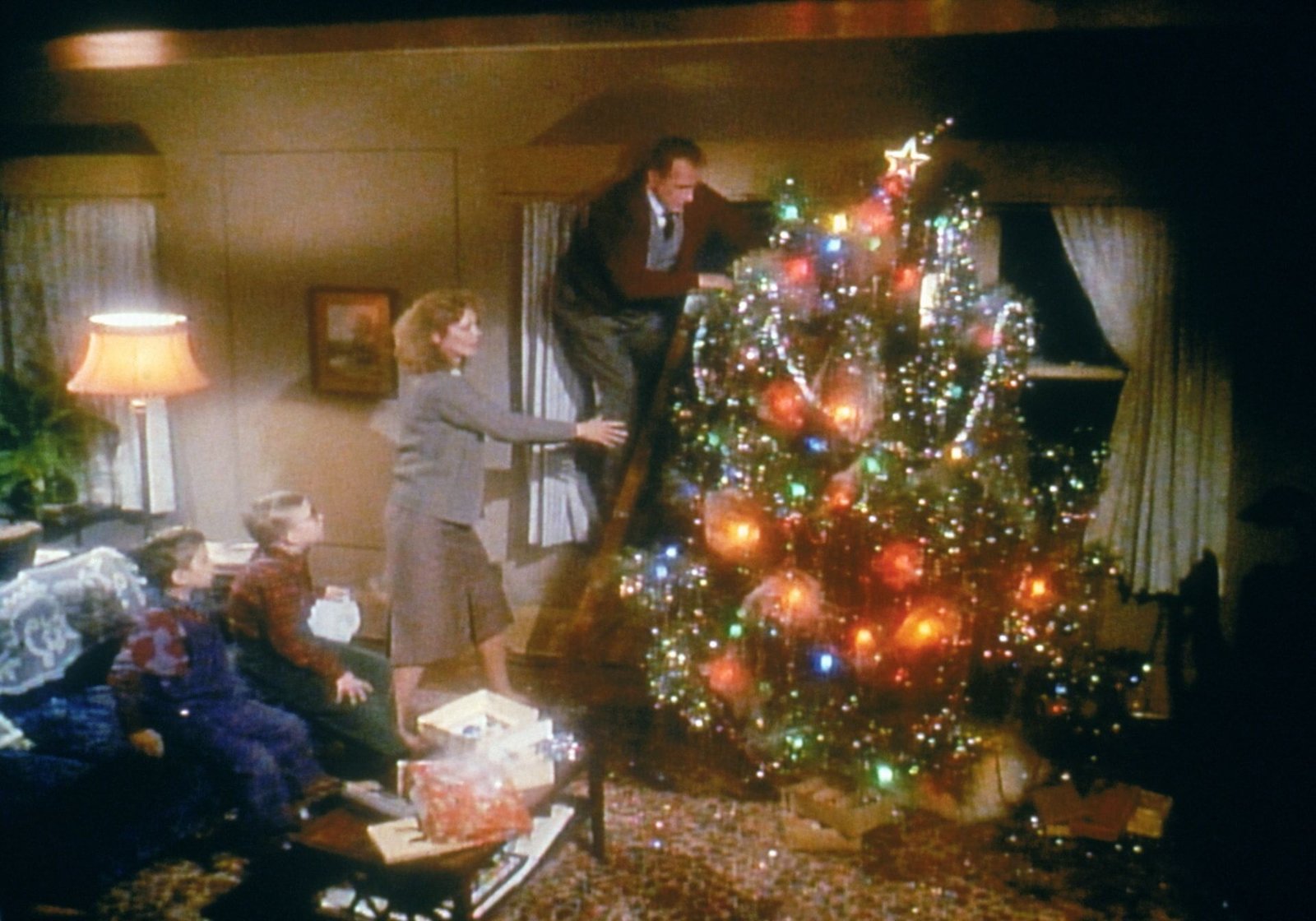
After all the buildup, the letters to Santa, the mounting anticipation, the family squabbles, the flickering glow of holiday expectations, A Christmas Story delivers one final twist of fate: Christmas dinner is ruined. The neighbor’s dogs swarm in like chaos incarnate, devour the turkey, and leave Ralphie’s family staring at crumbs where tradition should’ve been. And yet… it’s perfect.
The film’s final act, set in a Chinese restaurant lit by novelty and necessity, is both hilarious and quietly profound. The waiter sings Christmas carols in heavy accent, the duck is presented with its head still intact, and the family bursts into laughter.
A kind of cathartic, spontaneous joy that none of their carefully planned holiday rituals ever quite delivered. In this moment, the veneer of the “perfect American Christmas” is shattered, and what replaces it is something more honest.
Imperfection, resilience, and the unexpected beauty of letting go. This finale has no accident. It’s the film’s final commentary on tradition, the idea that happiness must follow a specific formula: turkey on the table, gifts under the tree, everything in its rightful place. But Ralphie’s family finds joy only after that formula collapses. They adapt, they laugh, and they discover that connection matters more than presentation.
The chaos becomes a communion. What makes this ending stick is that it doesn’t offer some syrupy moral lessons. It just quietly insists that the myth of the flawless holiday is exactly that, a myth. Real joy comes not from recreating some idealized version of the past, but from embracing the unpredictable, the awkward, the absurd. It’s a strangely mature message, tucked into the folds of a holiday comedy about BB guns and bunny suits.
By the time Ralphie curls up in bed with his coveted rifle safely tucked beside him, snowfall blanketing the world outside, we realize the real magic of A Christmas Story lies in its refusal to play it straight. It tells the truth wrapped in tinsel: that family is weird, holidays are messy, and sometimes the best moments are the ones you never planned. “You’ll shoot your eye out, kid.”
It’s the warning that haunts Ralphie from the film’s first act to its final scenes. On the surface, it’s just a joke, a repeated catchphrase that grows more absurd with every utterance. But by the end of A Christmas Story, it begins to feel like something more: a prophecy, a cautionary tale, and a perfect distillation of the film’s bittersweet genius. Ralphie does get his gun. He unwraps it with reverence, the culmination of weeks of scheming, fantasizing, and pleading.
And not five minutes later, he nearly lost an eye. It’s the ultimate cosmic punchline, a moment that validates every adult concern but still grants Ralphie his triumph. The BB gun isn’t just a toy, it’s a reminder that desire is never without danger, and that even dreams, once fulfilled, can sting a little. That’s the quiet brilliance of A Christmas Story. It seduces you with nostalgia but sneaks in something sharper, more complicated.
It understands that childhood isn’t just sugarplums and snow angels, it’s confusion, fear, frustration, and longing, all wrapped up in myth and memory. It’s a film that dares to say: the good old days weren’t always good, but they were real. What makes the story endure decades later, isn’t just its quotability or its iconic imagery. It’s the emotional depth hiding under the humor. The satire wrapped in the sentiment.
The way it gently dismantles the mythology of the perfect American Christmas while still honoring the heart beating beneath it. It’s warm without being cloying, critical without being cruel. In the end, A Christmas Story isn’t about getting a gun or surviving the season. It’s about the messy, magical contradictions of growing up. And maybe, just maybe, learning to aim a little better.