
Robert Lee Balderrama—“Sunset Beach” (single) Bullfrog Records:
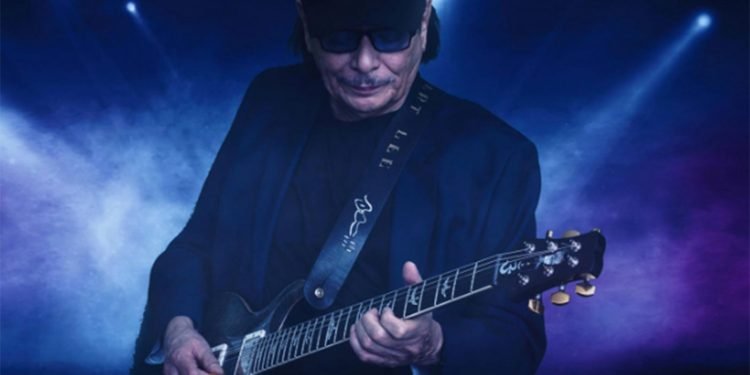
Guitarist extraordinaire Robert “Bobby” Balderrama is currently climbing up the national smooth jazz charts, with this relaxing and atmospheric single entitled “Sunset Beach.” This follows in the footsteps of previously charting singles, with the band Le Sonic, “Any Moment” and “I’ll Be the One.”
But Balderrama is no stranger to having singles chart success. As a charter member of garage rock pioneers Question Mark & The Mysterians he hit #1 on the Billboard Hot 100 in 1966 with a generational anthem called “96 Tears.” The keyboard-driven tune sent the band on a career trajectory that implanted him firmly in the music business. Forays into the blues, Latin music, and Tex-Mex followed over time, but, ultimately, it was jazz that won his heart. And for the last two decades the smooth jazz scene has been where the eclectic guitarist has made his mark.
As with a number of Balderrama’s compositions, “Sunset Beach” is not cluttered with a lot of musical hyperbole and flash. Oh, he can certainly play a flurry of notes when called upon, but his tendency with a lot of material is to create a serene space and mood. And that’s what you’ll find here.
Robert Balderama playing “Sunset Beach”
The Saginaw/Bay City-based axe man is cut from the George Benson meets Wes Montgomery cloth, forging a meditative and reflective quality that is transformative and tranquil. Also on the track are former and current Mysterians’ partner Frank Rodriguez on keyboards, Paul Wilkinson on Moog synthesizer, David Paul Britton on trumpet, Takashi Lio on bass guitar, Pete Woodman on drums, Tom Kissel on percussion, Larry Hammond on percussion and Amy Lynn Balderrama on shakers and maracas.
“’Sunset Beach’ is a song about all my travels with Question Mark & The Mysterians,” explains Balderrama. “Playing in Hawaii, California, the South of France and in my home state of Michigan, I have always enjoyed being by sunset beaches. I wrote ‘Sunset Beach’ as a great smooth jazz song to listen to with seagulls in the song to feel the ambience of the water!”
Roger Glenn—“My Latin Heart” Patois Records
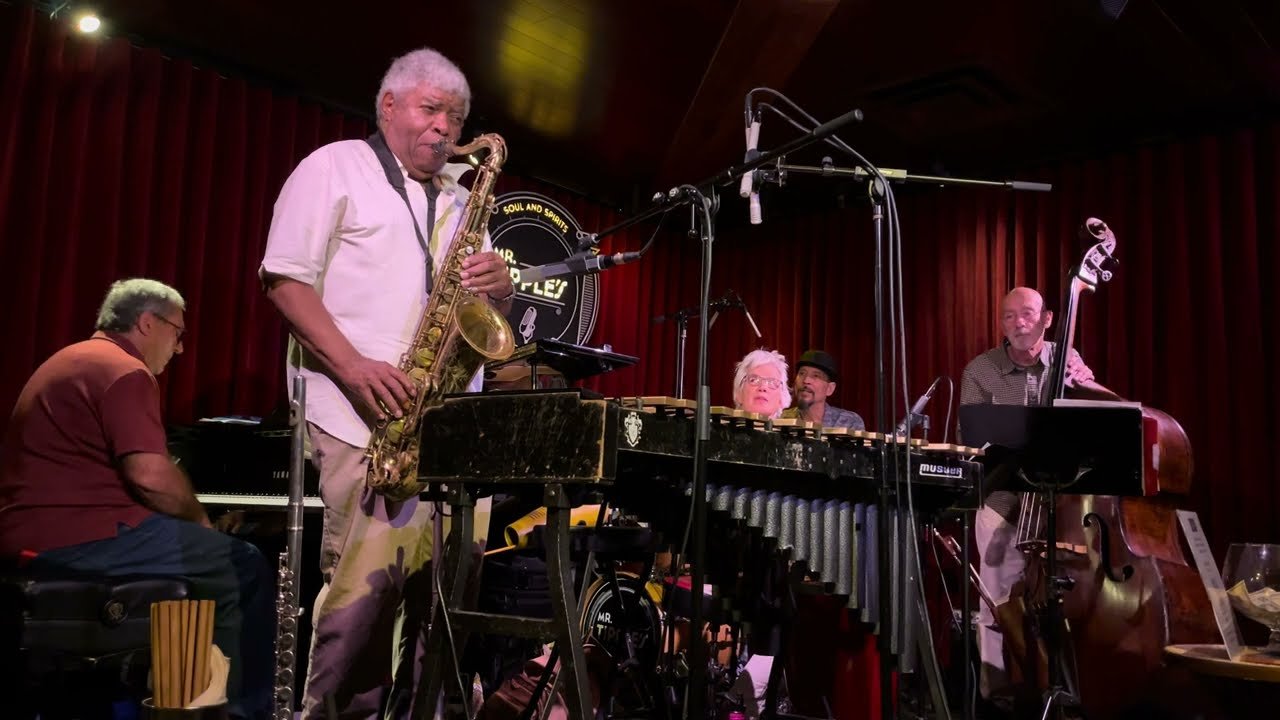
Roger Glenn is a great multi-instrumentalist that comes from an esteemed jazz family background. The 80 year old flautist, vibraphonist, alto saxophonist, marimba player, and vocalist had a father that played trombone and vibes with Cab Calloway, Don Redman and Duke Ellington. And he has personally cut records with jazz greats like Cal Tjader, Herbie Mann, Mary Lou Williams, Mongo Santamaria, Donald Byrd and Dizzy Gillespie—not a bad resume, to be sure!
However, it has been a half-century since Glenn has stamped the role of “leader” on a recording date and, hence, this current release has been a long time coming. But, here it is and it was, as they say, well worth the wait! He’s got some heavy hitters on here from the mainstream jazz and Latin music worlds, including David K. Mathews on piano, Ray Obiedo on guitar and co-production, David Belove on bass, Paul Van Wageningen on drums, Derek Rolando on congas, John Santos on backing vocals and percussion, and Michael Spiro on backing vocals and percussion.
This is an absolutely lovely collection of original tunes by Glenn, with co-arranging from Obiedo and Mathews. “Zambo’s Mambo” ushers in a spirited and vibrant salsa-flavored beat, fired up by the leader’s glistening flute and Mathews’ supportive piano shadings. “Cal’s Guajira” is dedicated to Cal Tjader and has a mid-tempo Latin feel. Glenn really shines on vibes over a strong montuno vamp that is further baked in by the rhythm section. Obiedo offers some tasty guitar leads as well. “Brother Marshall” is dedicated to one of Glenn’s former teachers and features his adept skills on alto sax. The tune is heavily melodic and rich, with an earnestness and commitment to the mambo tradition.
Roger Glenn playing ”Zambo Mambo”
“A Night of Love” shows the leader’s softer side spotlighting a smooth and gentle ballad. Mathews’ lyrical piano and Glenn’s marvelous flute work make this one a highlight. “Energizer” appropriately picks up the pace featuring punchy accents and acrobatic lead lines. Glenn’s vibraphone work really stands out. “Congo Square” is a work to honor the ancestors of musicians from Europe and Africa that have converged on New Orleans. This features Obiedo offering some cool interplay with the vibraphone. “Angola” continues a tribute to African culture, with a focus on bata drums, marimba and a modern bop feel. Be sure and slip on your dancing shoes for a trip to Brazil via the track “Samba De Carnaval.” It’s a vibrant flute and percussion affair that is stimulatingly light and airy.
Call it Latin jazz, Afro Cuban jazz, world beat, or whatever you like. The bottom line is that it encompasses all that and then some. Simply put…it’s a fantastic album!
Candice Ivory—“New Southern Vintage” Nola Blue Records
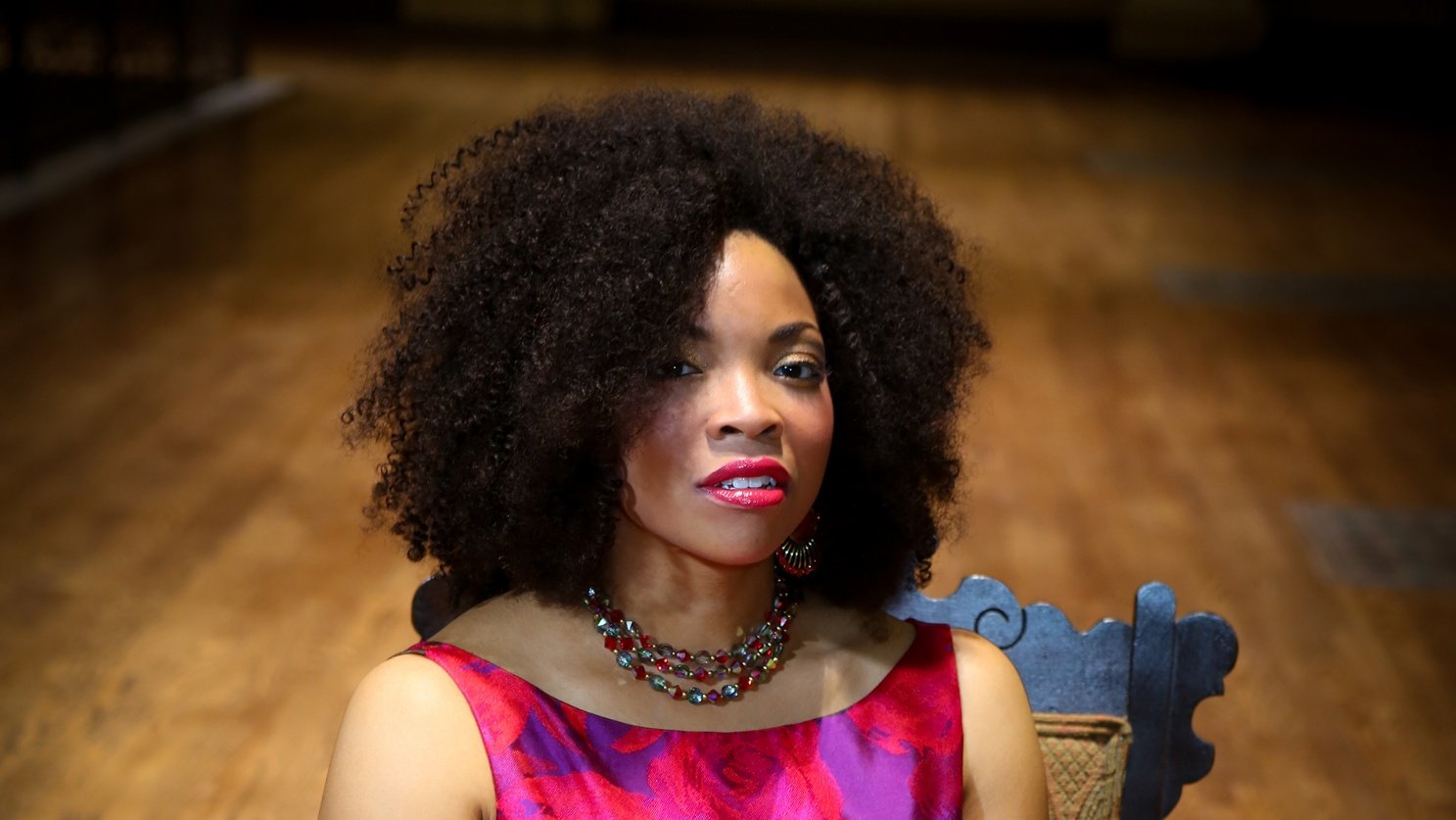
Grammy-nominated rising blues star vocalist Candice Ivory has been bringing her “avant soul” to global audiences for the last few years now. She is a blues and jazz scholar and graduated from the New School of Jazz and Contemporary Music in NYC. Hailing from St. Louis, Missouri, Ivory drew universal acclaim with her last album “When the Levee Breaks: The Music of Memphis Minnie.”
With “New Southern Vintage” Ivory continues her dedication to the blues and its roots where all the songs maintain a sense of commitment to musical history while experimenting with far reaching and contemporary structures. Ivory has a subtle and soulful voice where she is able to work in various musical forms that seem limitless.
The leader has a core band The Blue Bloods that she works with on this album. Guitarists Robert Allen Parker and Adam Hill, bassist Khari Wynn and drummer Donnon R. Johnson cover a lot of stylistic terrain, with many of the 14 tracks penned by Ivory and the band.
Shining the spotlight on some of the stand outs, “AIn’t So Blind” ushers in this collection, with an original take on the John Lee Hooker vibe. It’s got that vamp-ish groove that is almost trance-like. The same can be said for “Blue Blood” that features harmonica and guitar over a percolating beat. “Foolish Pleasure” is stellar for the country, swampy guitar feel and mystical New Orleans kick. “World of Trouble” and “Shout the Boogie” are exceptional as well for Ivory’s reverent interpretations of that “Memphis Minnie” Lawlers sound.
She calls the blues “ancient-to-the-future”; blending the old with the new. And there’s no doubt that Candice Ivory is one of the leading lights in perpetuating its history and adheres to those time-honored standard.
Rahsaan Roland Kirk—“Variations in the Village: Live at the Village Gate”, Resonance Records
There is no doubt that the ‘60s were such a flourishing time for the arts, culture, politics—you name it! It was a time when giants such as Miles Davis, John Coltrane, Charles Mingus, Wayne Shorter, and Rahsaan Roland Kirk were all coming into their own as artists and cultural icons.
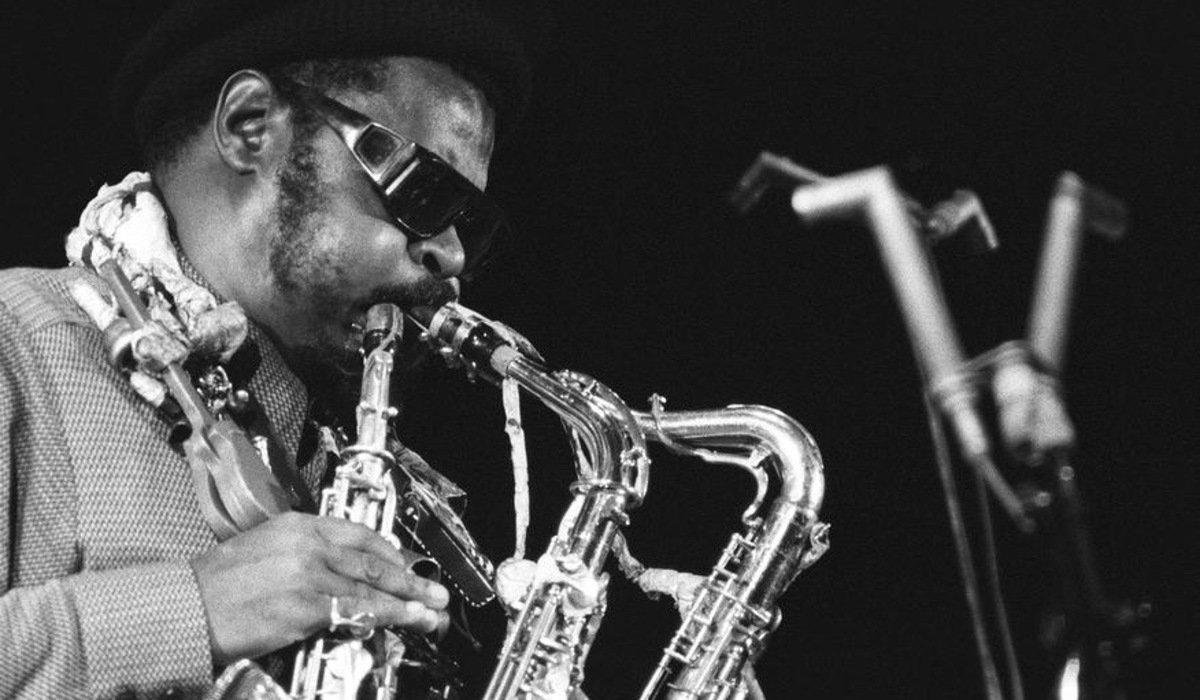
Kirk was a musical innovator and inventor almost from the time he hit the stage as a professional musician. He rarely was a sideman and quite often led his own groups, although he did do significant recorded work with Quincy Jones and Mingus. As a musical innovator, Kirk developed a style where he would play two saxophones at the same time, hence expanding his sound with more advanced arrangements and depth on the spot. He also studied classical music, in addition to jazz and pop, and would integrate woodwinds like the flute and oboe into his arsenal. As an inventor Kirk, blind since his early childhood, developed a keen and innate sense of timbre and sonic nuance which led to designing his customized soprano saxophone called the manzello and the stritch, which was a customized alto sax, with a specially fitted French horn bell.
The live tracks on this November 1963 recording were originally intended for a documentary that was to be released on the young burgeoning woodwind multi-instrumentalist. Unfortunately, the filmmaker died and the tapes were seemingly lost for over 40 years. However, a recording engineer Ivan Berger was granted possession of these original recordings and, via the blessing of Kirk’s widow Dorthaan, the tapes finally saw the light of day and have been placed in the caring and capable hands of producer Zev Feldman.
The Village Gate was one of THE jazz spots in New York City where you heard the best of the best in jazz, R&B and, occasionally, cutting edge comedy. And Kirk was known to employ all those elements and more into his act. On this particular date he worked with musical titans all around, with pianists Horace Parlan, Melvin Rhyne, Jane Getz, bassist Henry Grimes, and drummer Sonny Brown.
There are nine tracks here that cover a wide spectrum of musical sources and styles. Kirk was always known to share the wealth when it came to selecting material. And he does so here, with some of his own up tempo selections like “Jump Up and Down—Fast” and “Three for the Festival” and re-worked arrangements of ballads like Johnny Mercer’s “Laura” and the Hammerstein/Kern gem “All the Things You Are.”
“Vibrations in the Village” is a stunning 2-LP vinyl set as well as an extended single CD deluxe edition, including a 30 page booklet chock full of artist interviews and photos. This is a must-have for any self-respecting jazz fan and historian.
Kenny Barron—“Sunset to Dawn” Muse Records/Time Traveler Recordings
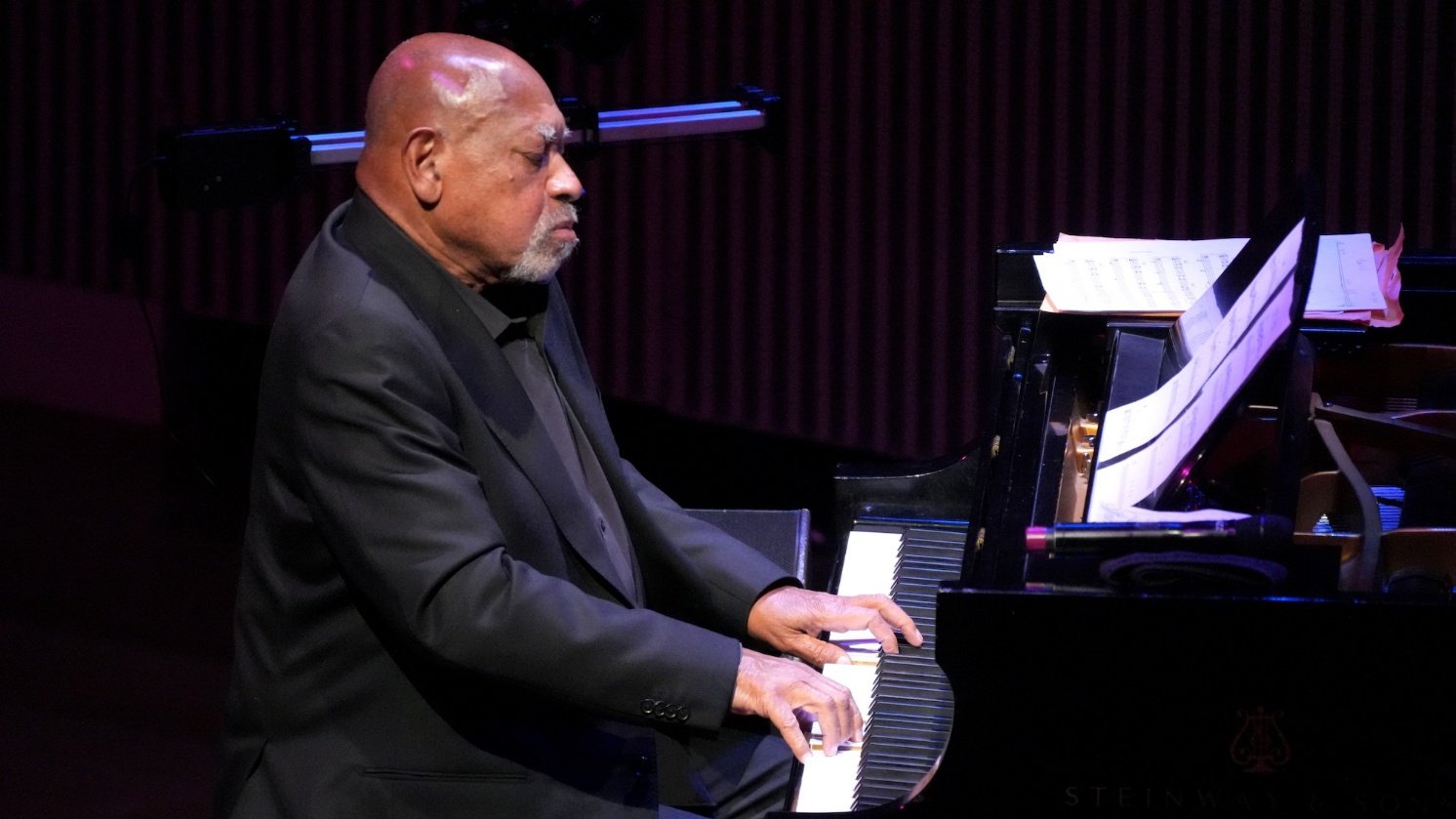
Originally released in 1973, multi-Grammy nominated Kenny Barron was just scraping age 30 as well as launching a nearly 50-album discography, with “Sunset to Dawn.” And it’s an interesting album too in that it is naturally rooted in the discipline that is post-modern bebop, but also draws on elements that were evolving in music at the time such as fusion and free modal music.
An astutely accomplished acoustic pianist, apparently Barron was initially not a fan of the electric piano, and didn’t even own one. But, as a number of jazz and pop gigs began calling for it in the early ‘70s, he adapted and flourished on the instrument. The balance of acoustic and electric sounds creates an interesting dichotomy that defines the heart of this project.
The opening track “Sunset” ushers in the album, with trippy space explorations that recall some of George Duke, Lonnie Liston Smith, and Jan Hammer’s early work. The rhythm section of electric bassist Bob Cranshaw, drummer Freddie Waits, conga player and percussionist Richard Landrum and vibes/percussionist Warren Smith really lock in a funky mid tempo feel. “A Flower” delves into the softer acoustic side of things, with a very lyrical solo piece. There is a lot of space for chord development and variations on a theme. The eerily-named “Swamp Demon” kind of blends a Ramsey Lewis-flavored R&B feel, with proto-fusion and freewheeling salsa.
This is exciting and very modal where the rhythm section densely fills out the spaces with a driving and relentless beat. “Al-Kifha” keeps the pace at a high level where Cranshaw’s uber-walking lines define this brisk post-modern groove. There is a ferocity and attack on the keyboard by Barron that is almost otherworldly. His comping is so precise, yet very free and right on! Things get reflective on “Delores Street, S.F.” It is an impressionistic departure and a depiction of a Mission District neighborhood. It is a timeless piece supported by subtle percussion. The album is bookended by the appropriate closer “Dawn.” It is a return to the electric piano where Barron plays a light vamp that is relaxed and blends nicely with Smith’s complementary work on vibes.
For being one of Barron’s first recordings as a leader his diversity and approach to these tunes is a well measured balance of sophistication, introspective thought and extroverted cool.
Roy Brooks—“The Free Slave” Muse Records/Time Traveler Recordings
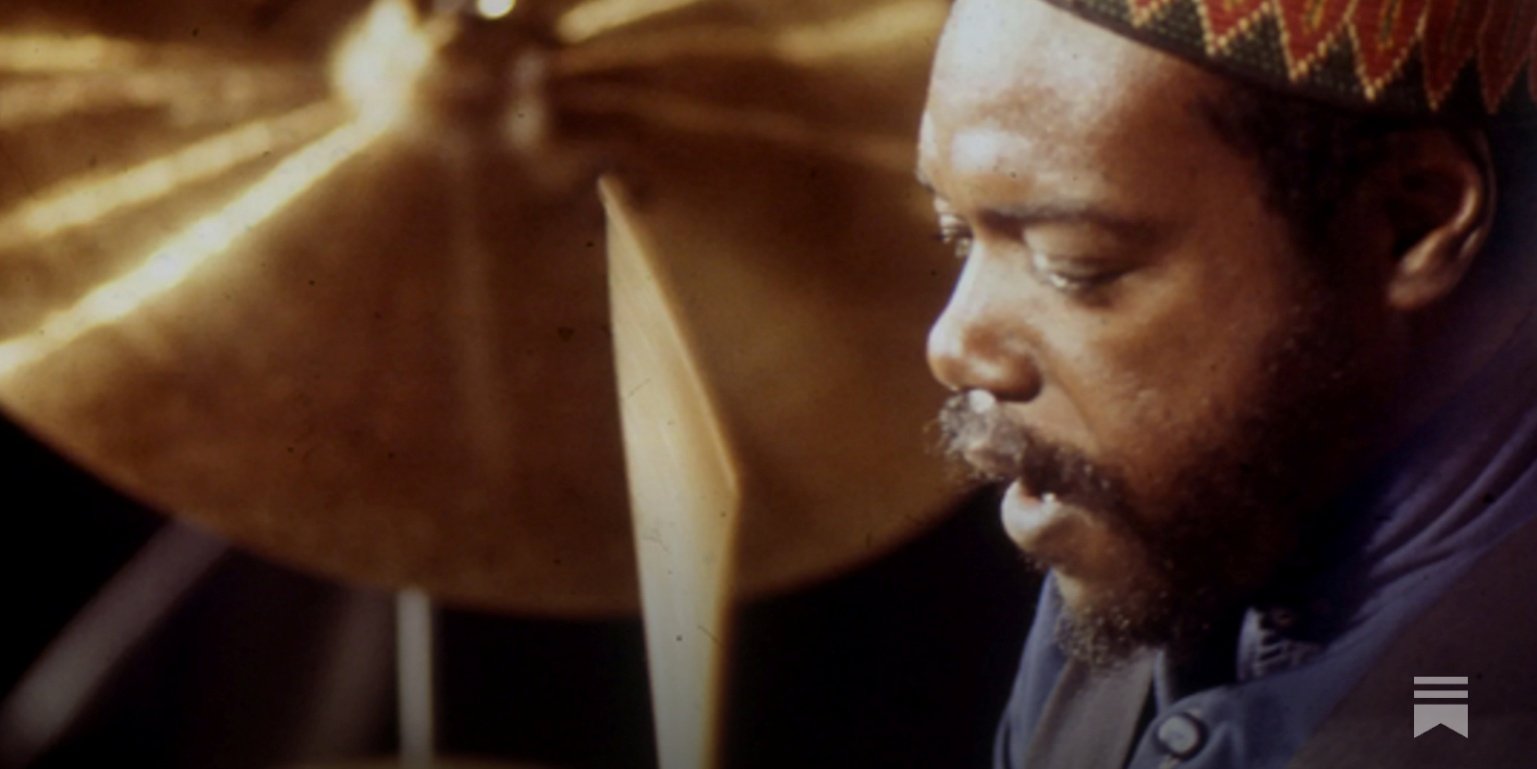
Drummer and percussionist Roy Brooks is one of the best jazz ambassadors to ever rise from the City of Detroit. He worked as a sideman for many years with Yusef Lateef, Sonny Stitt, and Chet Baker and was also a charter member, along with the legendary Max Roach, in the percussion collective known as M’Boom.
This album, originally recorded live in April, 1970 at The Left Bank Jazz Society in Baltimore, Maryland was only his second release as a leader. But it is a powerful statement that is supported by a stellar cast, including trumpeter Woody Shaw, tenor saxophonist George Coleman, pianist Hugh Lawson, and bassist Cecil McBee.
“The Free Slave” is a live record in every sense of the word. You hear the audience really engaged in the performance expressing enthusiastic applause and verbally uttering words of encouragement and contentment, with what they are hearing. Hence, that exchange brings out the best in the musicians…..and there you have it….magic time! Over a driving, yet laid back ostinato beat, Brooks keeps things hot and percolating allowing the trance-like vamp to take hold. McBee is the anchor that holds it down and the melody and groove recall early ‘60s cool like Lee Morgan’s “The Sidewinder.” “Understanding” is another Brooks composition that is very lyrical, with a lilting Horace Silver kind of feel. The collective solos seem to ebb and flow within a slightly shifting and dynamic groove. The leader really raises and lowers the intensity ala Art Blakey or Tony Williams. The McBee penned “Will Pan’s Walk” has a brisk up tempo swing. This is fast post-modern bop, with a freedom and openness that brings out the best in everyone. “Five for Max” concludes the show, with a tribute to his mentor Max Roach. It is significant where you hear members of the crowd encouraging Brooks to “do his thing!” And that he does, laying down a sizzling 5/4 groove that sets the stage for some nice lyrical solos from the band and a chance for Brooks to experiment with his pitch shifting percussive invention the Breath-A-Tone.
This is exciting improvisational music created in its natural habitat, and Roy Brooks and company are captured here at the peak of their powers. Well done!


