“Jimmy”, a new biographical drama exploring Jimmy Stewart’s wartime service and return to Hollywood, brings a familiar American icon into a more personal light. There are actors we admire and then there are actors who seem to become part of the family. Stewart belongs to that rare company. His voice is immediately familiar: hesitant, earnest, sometimes amused, suddenly resolute when something important is at stake. We know the face, the long frame, the uneasy smile. We remember the idealist refusing to surrender, the neighbor whose kindness goes unnoticed, the man discovering that an ordinary life can carry extraordinary meaning. His films have accompanied generations through changing times, returning each Christmas with the reassurance of an old friend.

Yet behind that familiar presence stood a life whose responsibilities extended well beyond the screen. Opening nationwide November 6, 2026, “Jimmy” turns toward Stewart’s World War II service and the journey that brought him back to Hollywood as George Bailey in “It’s a Wonderful Life”. Directed by Aaron Burns and starring KJ Apa, the film invites a closer look at the courage behind a beloved American image. The film brings his public achievements and personal responsibilities into focus, tracing the experiences behind one of American cinema’s most enduring performances.
The film follows the transformative years between Stewart’s Academy Award for “The Philadelphia Story” and his return from World War II. Leaving Hollywood for service as a combat pilot in the U.S. Army Air Corps, he flew twenty missions over Europe and reached the rank of colonel by the war’s end. “Jimmy” portrays his return home as a period of deep discouragement, before George Bailey and “It’s a Wonderful Life” offered a new direction. Its story brings wartime service, personal struggle, and the possibility of renewed purpose together around one of cinema’s most beloved actors.
The Man Before the Legend
Born in Indiana, Pennsylvania, in 1908, James Maitland Stewart came from a family associated with a local hardware store. He graduated from Princeton with a degree in architecture before theatrical work led him toward the profession that would make his name familiar around the world. Those beginnings offer an appealing contrast with the scale of his later celebrity. Before the studio lights and premieres, there was a hometown, a family business, and an understanding of work rooted in practical usefulness. Hollywood would enlarge his world without entirely displacing the associations audiences found so reassuring in him.
It is tempting to imagine that such a background explains every quality we recognize on screen. An actor’s life is more complicated than that and a performance is an achievement of craft as well as personality. Still, Stewart made a particular kind of decency dramatically interesting. His characters could hesitate, stumble, or grow frustrated without losing their humanity. Their integrity rarely depended on looking invulnerable. That is part of his lasting appeal: courage could belong to a person who was visibly uncertain and conviction could emerge from a voice that did not initially sound commanding.
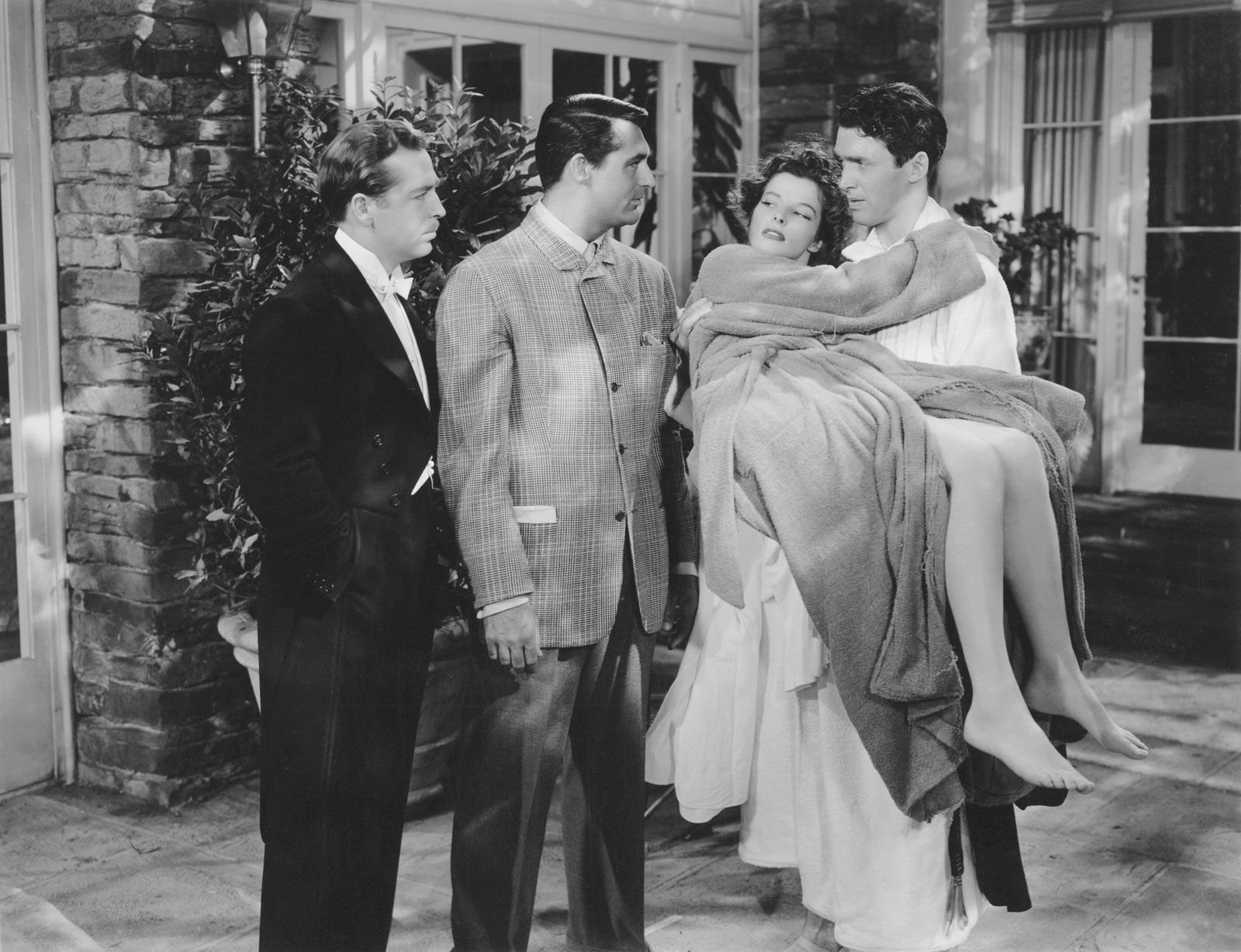
The Philadelphia Story,
An Academy Award and Another Calling
Stewart’s military chapter began when his film career was already flourishing. His films included You Can’t Take It with You (1938), Mr. Smith Goes to Washington (1939), Destry Rides Again (1939), Made for Each Other (1939), The Shop Around the Corner (1940), The Mortal Storm (1940), and The Philadelphia Story (1940). The last earned him the Best Actor award at the 1941 Academy Awards. Alongside Katharine Hepburn and Cary Grant, he had demonstrated his place among Hollywood’s leading performers. The timing gives Jimmy its essential tension. This was a successful actor with opportunities ahead, entering a period in which professional promise would have to share importance with another kind of obligation. His story asks what a person owes beyond the life he has worked to establish.
For admirers, that question gives Stewart’s achievements an additional dimension. Stardom rewards distinction, encouraging audiences to watch one person above everyone else. Military service places that person within a collective undertaking, where recognition cannot replace preparation or responsibility. The contrast is especially compelling in the life of an actor associated with everyday heroes. On screen, a character’s courage belongs to a carefully constructed story. Beyond the camera, choices have consequences that no writer can revise. Stewart’s service provides a reason to consider the relationship between the values we celebrate and the duties we accept.
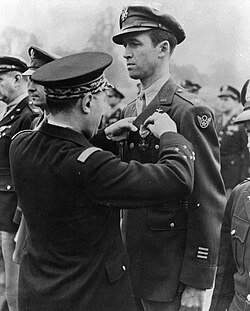
The Pilot Behind the Famous Face
Stewart’s interest in aviation was established before the war. The George C. Marshall Foundation documents his civilian flying experience and the licenses he earned before taking on military duties. That preparation matters because it grounds an extraordinary career transition in actual work. Flying was not simply a dramatic accessory to his fame. It involved skills and an existing commitment that would acquire a more serious purpose in wartime. The familiar movie star entered an environment where being recognized could not substitute for knowing what to do.
The United States Postal Service’s historical account identifies Stewart as a B-24 combat pilot and squadron commander who flew twenty missions over Germany. The Jimmy Stewart Museum records his rise from private to colonel during World War II and his later service in the Air Force Reserve. These are substantial achievements without embellishment. They also widen the story beyond one famous name. Command carried responsibility for other men, each with a family and a future. Remembering Stewart’s service should direct attention toward those shared obligations as well as toward the distinction of his own career.
A Film About the Journey Home
The official synopsis for” Jimmy” concentrates on the passage from Hollywood success through combat and into a difficult homecoming, culminating in the opportunity to play George Bailey. Its announced focus is therefore more specific than a comprehensive biography. The film brings a period of public achievement into contact with an experience that publicity cannot fully explain: how a person resumes familiar work after life has changed his relationship with it. The premise offers an intimate question beneath the larger historical setting. What does returning actually require?
That question carries emotional significance beyond the circumstances of a celebrated actor. Coming home may restore surroundings without restoring an earlier sense of self. Work, friendship, and responsibility can provide a structure for continuing, but the past does not disappear because a familiar door opens. In Stewart’s case, the return would also involve creating imaginary lives after years of actual danger. The filmmakers’ interpretation belongs to dramatic storytelling; it should not be mistaken for a complete record of his private thoughts. Even with that distinction, the meeting between history and art is deeply compelling.
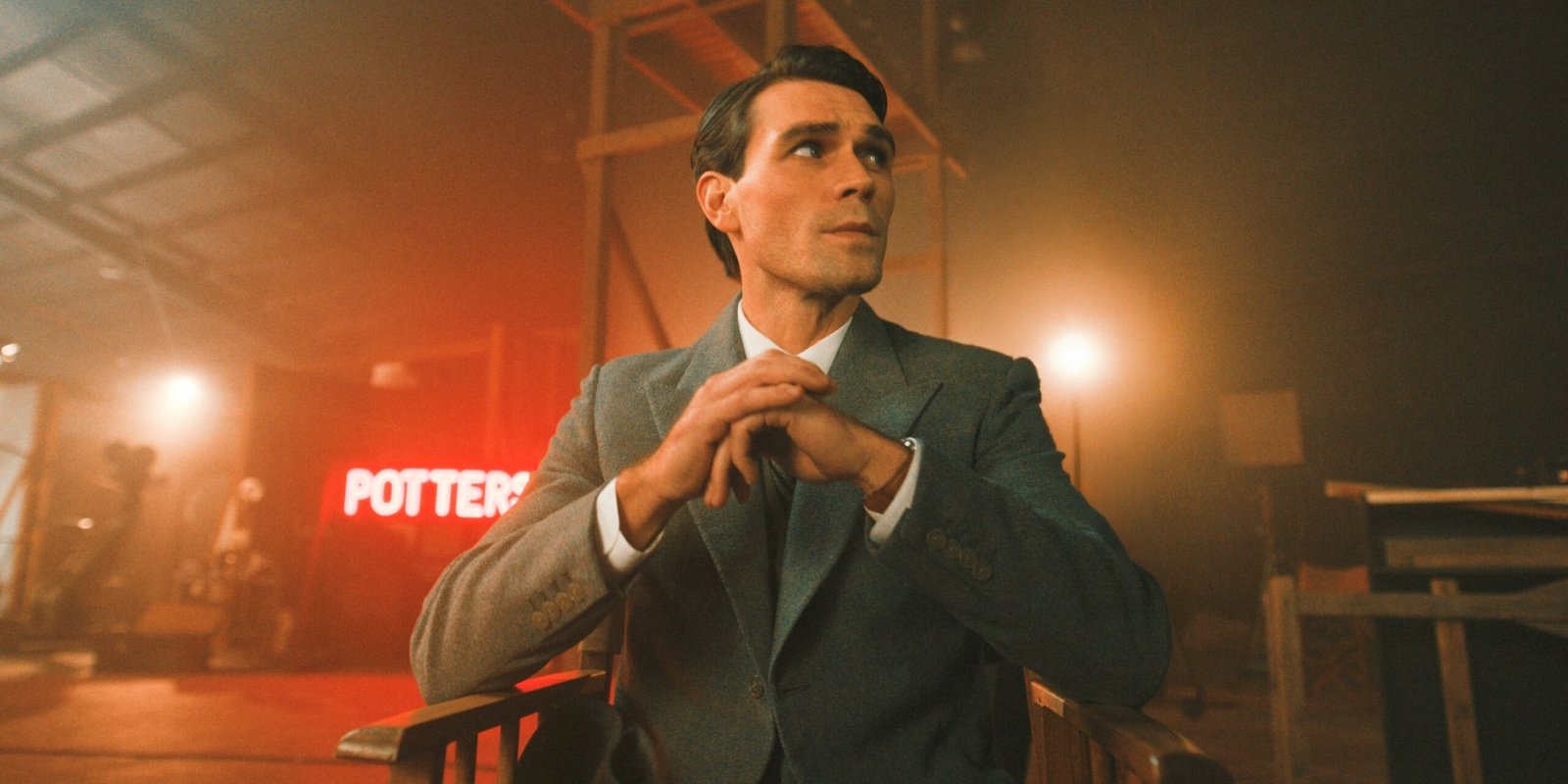
KJ Apa Steps Into Familiar Shoes
Playing Stewart presents a particular challenge because audiences already carry such a strong impression of him. A recognizable voice can establish identity quickly, but a portrait must eventually reveal something beyond recognition. Alan Ng, writing for Film Threat, finds that Apa meets much of that challenge. His favorable review awards Jimmy 8 out of 10 and praises a performance that evokes Stewart without becoming a caricature. Christopher Lloyd of Film Yap also identifies Apa as a major strength, admiring the vocal characterization and physical bearing despite differences in appearance.
Other reviewers are less convinced. Joey Magidson of Awards Radar finds the portrayal more limited and the larger film uneven. The disagreement is useful context for readers approaching the release: praise for Apa is significant, but not unanimous. For an actor embodying someone so beloved, the task involves more than accuracy of manner. Stewart’s hesitations could conceal thought, humor, discomfort, or resolve. The artistic question is whether the new performance allows those familiar details to suggest an individual life rather than simply reminding us of the original.
Faith and the Meaning of Service
Official publicity describes Jimmy in terms of sacrifice, faith, and hope. Stewart’s daughter, Kelly Stewart Harcourt, serves as an executive producer, giving the production a direct family connection. The film also received historical assistance from the Air Force Historical Research Agency, according to a September report from Secretary of the Air Force Public Affairs. These connections explain something about the care and intention behind the project, while leaving its dramatic choices open to assessment. Respect for a subject provides a foundation; a film must still bring that subject to life.
The spiritual dimension is particularly fitting beside Stewart’s most enduring holiday role. Faith in a meaningful life does not require that life to be easy or entirely understood. The more interesting promise is that difficulty need not have the final word. For viewers drawn to stories of purpose and perseverance, Jimmy’s premise offers a natural point of connection. Its treatment will matter as much as its message. Hope acquires weight when a story allows us to understand what has made it difficult to sustain.
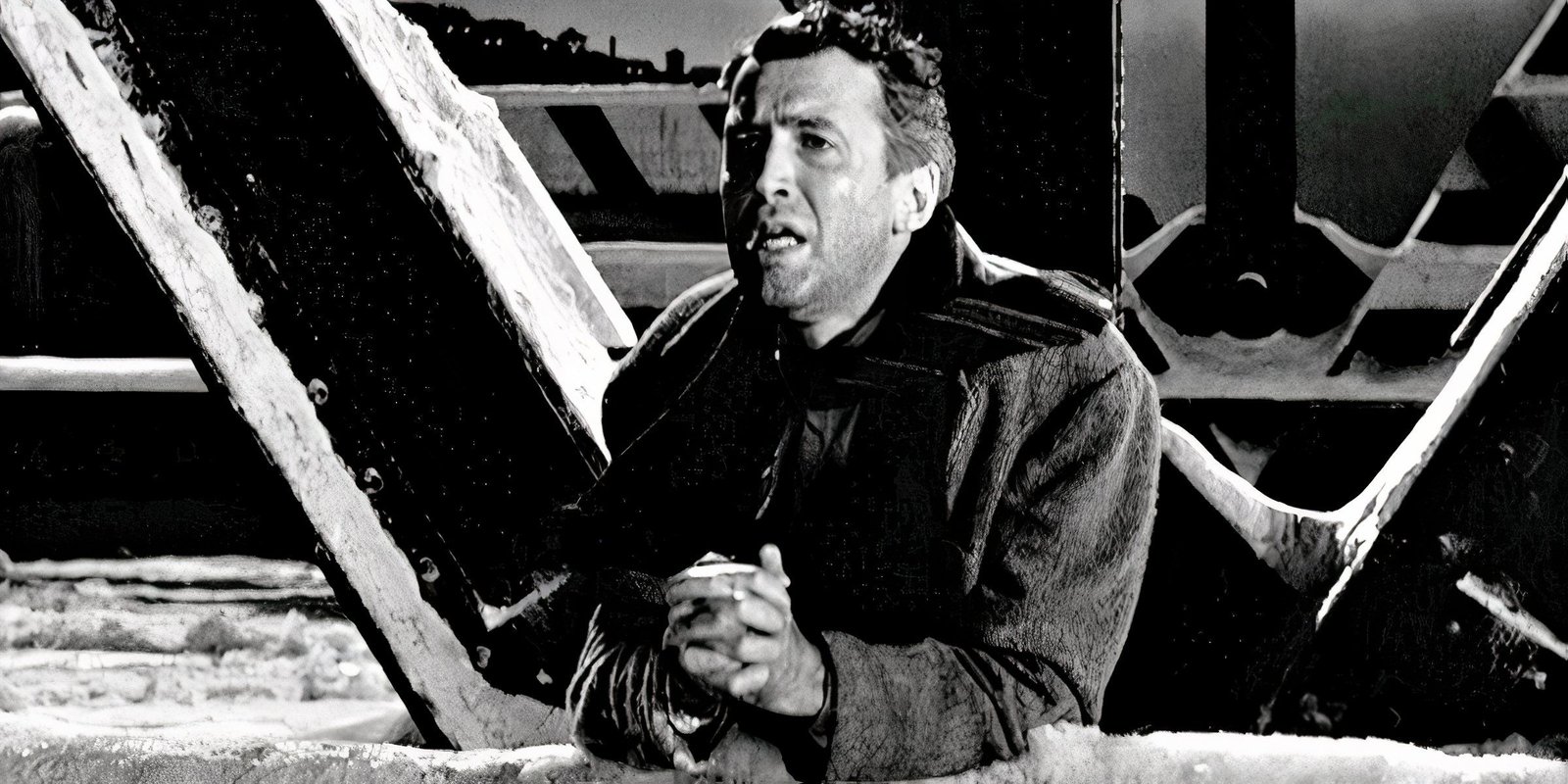
George Bailey in a Different Light
“It’s a Wonderful Life” was Stewart’s first feature after his wartime service, pairing him as George Bailey with Donna Reed as his wife, Mary. That documented fact gives the new film’s destination a significance beyond nostalgia. The 1946 classic is often remembered through its final warmth, but George Bailey reaches that conclusion through frustration, anger, and profound discouragement. His generosity does not spare him disappointment. The performance remains affecting because it permits a good man to struggle. Returning to it with Stewart’s wartime absence in mind may encourage audiences to notice qualities that seasonal familiarity has softened.
Published reviews differ on how successfully “Jimmy” develops this connection. Matt Gillam of The Movie State finds the postwar material more interesting than much of the wartime narrative, while questioning the balance between them. Hunter Friesen of The Cinema Dispatch likewise recognizes the potential of the selected period but criticizes the filmmaking. Their reservations belong beside the warmer responses. They suggest a distinction worth keeping: Stewart’s life offers powerful material, while viewers and critics may disagree about how completely a particular film realizes it.
A Christmas Day Tradition
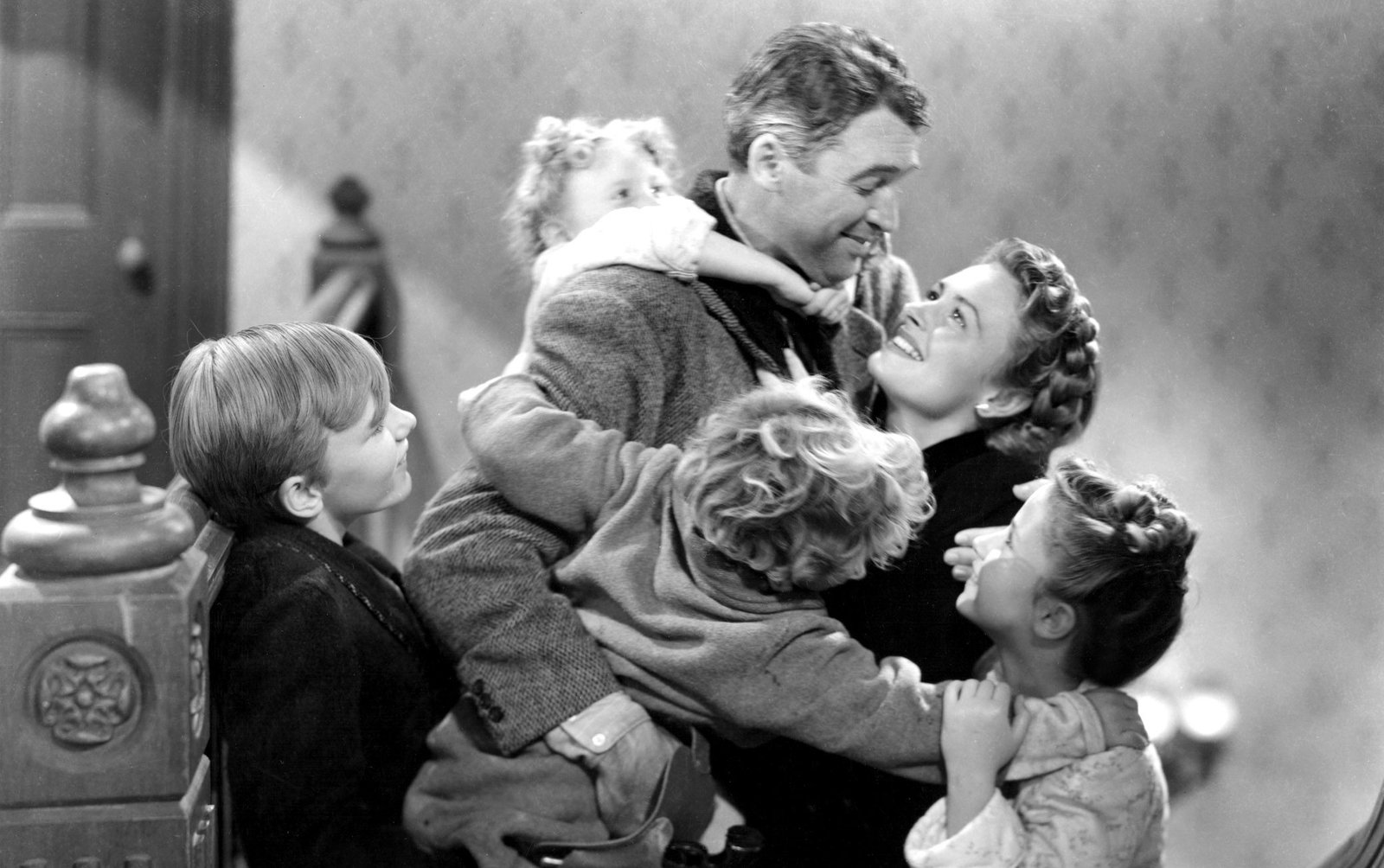
For me, Stewart’s legacy is personal. I watch It’s a Wonderful Life every Christmas Day and its closing scene moves me as deeply now as it did the first time. George’s friends gather around his family, bringing what they can to help. Then comes “Auld Lang Syne,” with its remembrance of old acquaintances and the affection that endures between them. The song gives voice to what the gathering has already shown: shared lives matter. People remember. The kindness George thought had disappeared into ordinary days comes back to him in faces he knows and voices singing together.
George has measured his life against the places he never traveled and the ambitions he repeatedly set aside. Clarence’s gift is to let him see the difference his presence has made. A life that seemed confined to one small town has reached farther than George could imagine, through people whose lives have touched still others. His ordinary days have carried extraordinary consequences. The final gathering makes that hidden influence visible: the man who so often stood beside his neighbors discovers that they will stand beside him.
Faith Made Visible
The film begins with prayers for George. Its answer comes through Clarence, the gentle angel who becomes his friend, and through the family and neighbors who refuse to leave him alone. At the end, a bell rings, and Zuzu explains that an angel has received his wings. George understands that Clarence has earned his. An unseen friendship becomes present in that small sound. Between the bell and the singing, faith takes an intimate form: heaven has heard, a friend has helped, and a community has come home to one another.
George’s worth existed before his neighbors arrived. Their generosity reveals it; it does not create it. The ending asks us to recognize how incomplete our judgments of our own lives can be. Exhaustion and disappointment can hide the truth of our belonging. Clarence helps George see the reach of his presence; his friends give that revelation human warmth. His life has meaning beyond the ambitions he never fulfilled, and his community becomes the living expression of a love that, in his darkest hour, he could no longer see.
The Life Behind the Performance
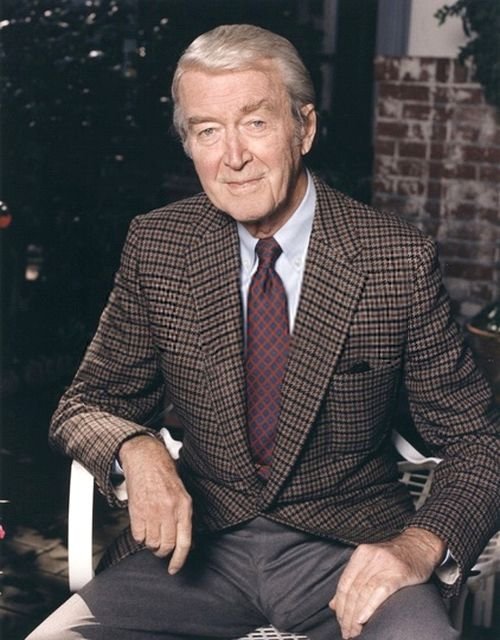
That connection gives Jimmy’s premise its emotional promise. Stewart returned from wartime service to play a man struggling to recognize the value of continuing. The new film interprets that meeting between experience and art as part of his return to purpose. George Bailey cannot explain Stewart’s private life, but the resonance is moving. An actor who had accepted responsibility beyond Hollywood gave lasting expression to a story about belonging and hope. His work would reach people he would never meet, with an influence impossible to measure.
For the viewer and reader, the invitation extends beyond either film. We may never know how far a kindness has traveled, what our presence has steadied, or how another person remembers a moment we have forgotten. We can keep faith with the lives entrusted to us, and allow others to care for us when our own strength falters. Each Christmas, as George’s friends sing, I am reminded that an extraordinary life can be lived within ordinary days—and that even when we cannot see our worth, we have reason to believe it is immeasurable.
Film Credits
“Jimmy”: biographical feature film, U.S., Burns & Co. Entertainment
Distribution: Fatham Entertainment (AMC)
Directed by: Aaron Burns
Written by: Justin Strawhand
Produced by: Aaron Burns, Angela Galgani Sullivan, Justin Strawhand, David Cook, John Norton, Jack McClintock
Executive producer: Kelly Stewart Harcourt
Cast: KJ Apa, Max Casella, Kara Killmer, Julian Works, Sarah Drew, Rob Riggle, Christopher McDonald, Jen Lilley, Jemma Donovan, Karolyn Grimes, with Neal McDonough and Jason Alexander
Music by: MŌRIAH and Grant Fonda, featuring the U.S. Air Forces in Europe Band
Works Cited
Burns & Co. Entertainment. “Jimmy.” Official film website. Synopsis, credits and official trailer. Source
Fathom Entertainment. “Burns & Co. Entertainment Partners with Fathom Entertainment to Bring JIMMY To Theatres Nationwide November 6.” 31 March 2026. Source
United States Postal Service. “James Stewart Backgrounder.” 2007. Source
The Jimmy Stewart Museum. “Jimmy Stewart Biography.” Source
Academy of Motion Picture Arts and Sciences. “The 13th Academy Awards 1941.” Source
The George C. Marshall Foundation. “Jimmy Stewart and the B-24.” 27 August 2026. Source
American Film Institute. “It’s a Wonderful Life.” AFI Catalog of Feature Films. Production history. Source
Klindt, Ethan. “AFA Panel Spotlights Upcoming Film ‘Jimmy.’” Secretary of the Air Force Public Affairs, DVIDS, 16 September 2026. Source
Ng, Alan. “Jimmy.” Film Threat, 20 October 2026. Source
Lloyd, Christopher. “Heartland Jimmy.” Film Yap, 9 October 2026. Source
Magidson, Joey. “Film Review ‘Jimmy’ Is a Reverential Yet Uneven and Surface Level Look at a Hollywood Icon.” Awards Radar, 5 November 2026. Source
Gillam, Matt. “Heartland Film Festival 2026 Jimmy Review.” The Movie State, 14 October 2026. Source
Friesen, Hunter. “Jimmy.” The Cinema Dispatch, 3 November 2026. Source