An introduction to the greatest scream queens of all time, there is a scream somewhere in the dark, for more than a century, horror has depended upon women. Not merely to suffer beautifully, but to carry fear, they make madness seductive and turn grief into the atmosphere. The women in horror movies, make possessions intimate, survival exhausting, blood glamorous, and death unforgettable. We call them scream queens, because the traditional image is familiar enough, frightened young woman, dark hallway, unfortunate footwear, something unpleasant breathing behind her.
There is nothing wrong with her, she helped build the house, but she never lived there alone. Horror also belongs to the woman who turns around and fights, the vampire who enters the room knowing everyone has already lost or the witch who makes evil look regal. She is the mother who knows the impossible thing she saw was real and sometimes the child who makes the adults afraid. Sometimes, she is the killer whose smile becomes more memorable than the people she murders.
She is the woman of many faces, her roles make her into legends, and the actress who returns, over and over again, because ghosts, demons, slashers, aliens, and assorted cinematic degenerates simply seem to behave better when she is in the room. Those women belong here too. Because the greatest scream queens were never defined by how loudly they screamed. They were defined by what happened when the darkness found them. Some fought to survive, or became it, and a select few looked around and decided to redecorate.
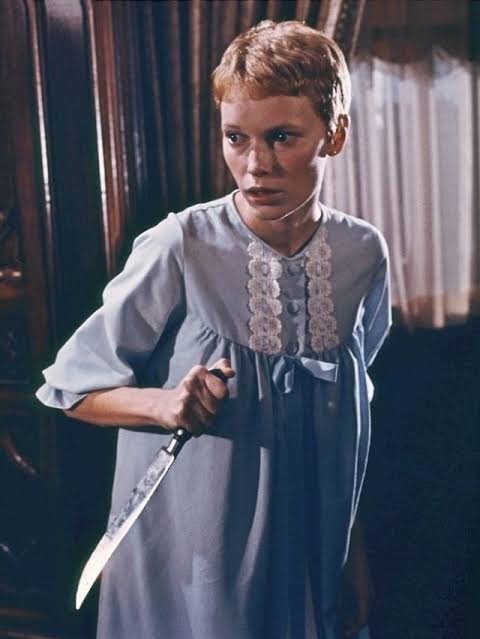
Mia Farow in “Rosemary’s Baby”
The rules of the house is that history matters, influence matters, and longevity matters, but none receives a crown by inheritance. A performance from 1960 does not automatically defeat one from 2022 because it arrived first, a legendary franchise does not automatically beat one unforgettable performance. Six mediocre horror movies do not necessarily outweigh one role people are still talking about twenty years later, and sometimes one extraordinary night really is enough to buy immortality.
What matters is what the actress did when horror handed her the room, performance comes first. Cultural impact, range, and longevity matters. Television counts when an actress truly lives inside horror rather than wandering through for a guest appearance. Years spent fighting vampires, surviving zombies, negotiating with ghosts, or watching civilization collapse are years spent doing the work. A larger horror career can break a close tie, it cannot manufacture a great performance that was never there. Nobody receives points merely for being older, the other mistake is pretending every woman in horror performs the same job.
Silver screen starlets belong to the earlier ballroom, elegant women walking through gothic mansions, dangerous marriages, and Hitchcockian nightmares before anyone thought to call the survivor a final girl. Final girls endure the nightmare, and heroes who fight and stop running to make the monster reconsider its career choices.
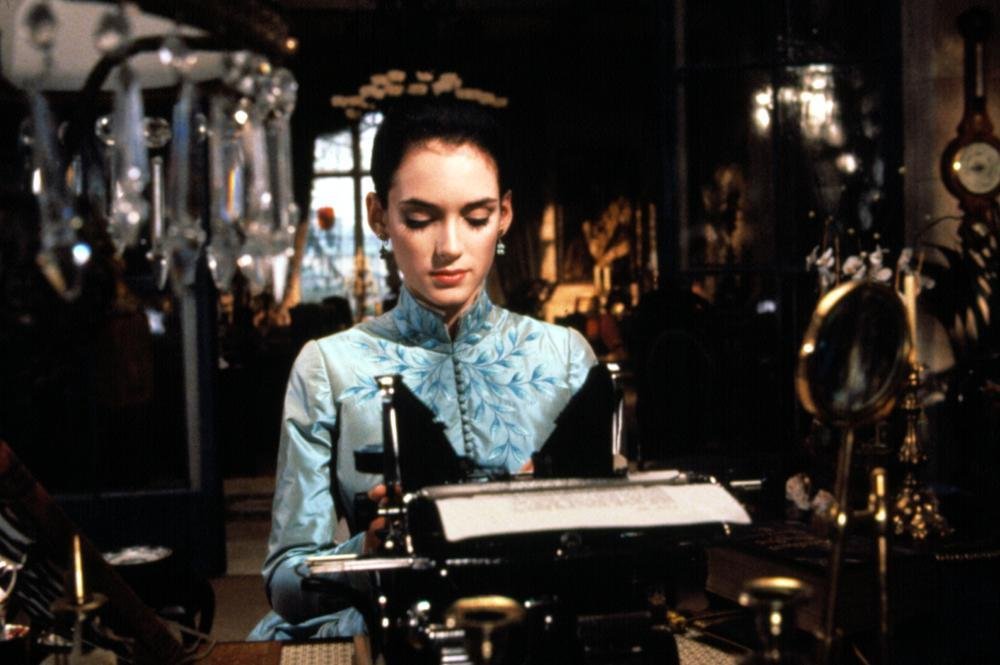
Wynona Ryder in “Bram Stoker’s Dracula”
Meta and camp queens understand the absurdity without letting the danger collapse, and childhood scream queens makes terror work, before adulthood has even supplied them with the vocabulary to explain it. Horror homebodies keep returning, in different roles, and as different monsters, they become legends and last decades. The immortal Icons, they will appear more than once.
Christina Ricci, Winona Ryder, and Sigourney Weaver, are some of cinema’s great horror movie actresses. Also, the legend, Jamie Lee Curtis can own enormous Final Girl history without automatically annexing every kingdom Laurie Strode later wanders into holding a shotgun. The role determines the argument, not the reputation surrounding it, and one great role can still be enough.
Salma Hayek did not need ten vampire sequels after Santanico Pandemonium walked onto that stage. Aaliyah did not need six films after Akasha and Fay Wray did not require thirty years of progressively larger apes. Some performances become permanent immediately, that is the privilege of being unforgettable. Other women earn their place through repetition, Barbara Crampton. Lin Shaye, Dee Wallace, and Milla Jovovich.
Kate Beckinsale and Sarah Michelle Gellar. Are all women, who returned often enough that horror stopped looking like an excursion and started looking like an address. One magnificent night may make you immortal, repeatedly making the darkness work earns you the keys, both count, they simply count differently. Horror is a performance genre fear is acting, possession, dying memorably, and so is explaining supernatural nonsense without sounding embarrassed.
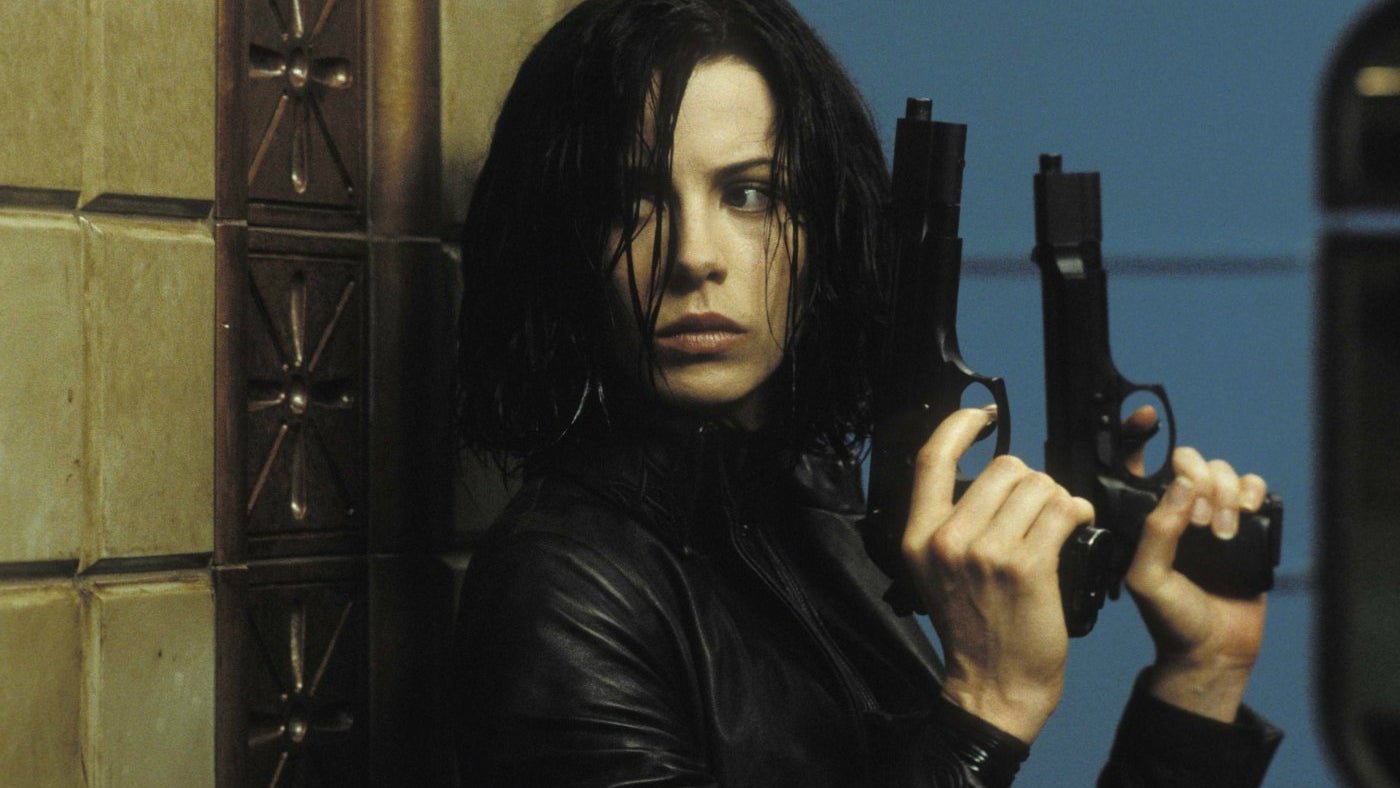
Kate Beckinsale in “Underworld”
It is playing camp without apologizing for the material and portraying a monster without begging us to forgive her. The best scream queens understand tone. They know when to whisper, run, when to bleed, laugh, fight, and when the scene requires them to walk into absolute madness as though somebody finally invited them somewhere interesting. That is what we are ranking, the ability to take ghosts, gore, monsters, grief, camp, bad decisions, and worse boyfriends and leave fingerprints on the genre after the lights come back on.
The great ones survive, they fight, transform, or sometimes they become the reason nobody else survives until morning. The scream was never the interesting part, it was the woman making it, these women are here because they earned their seats, and I intend to make their cases with considerably more enthusiasm than most defense attorneys reserve for the innocent.
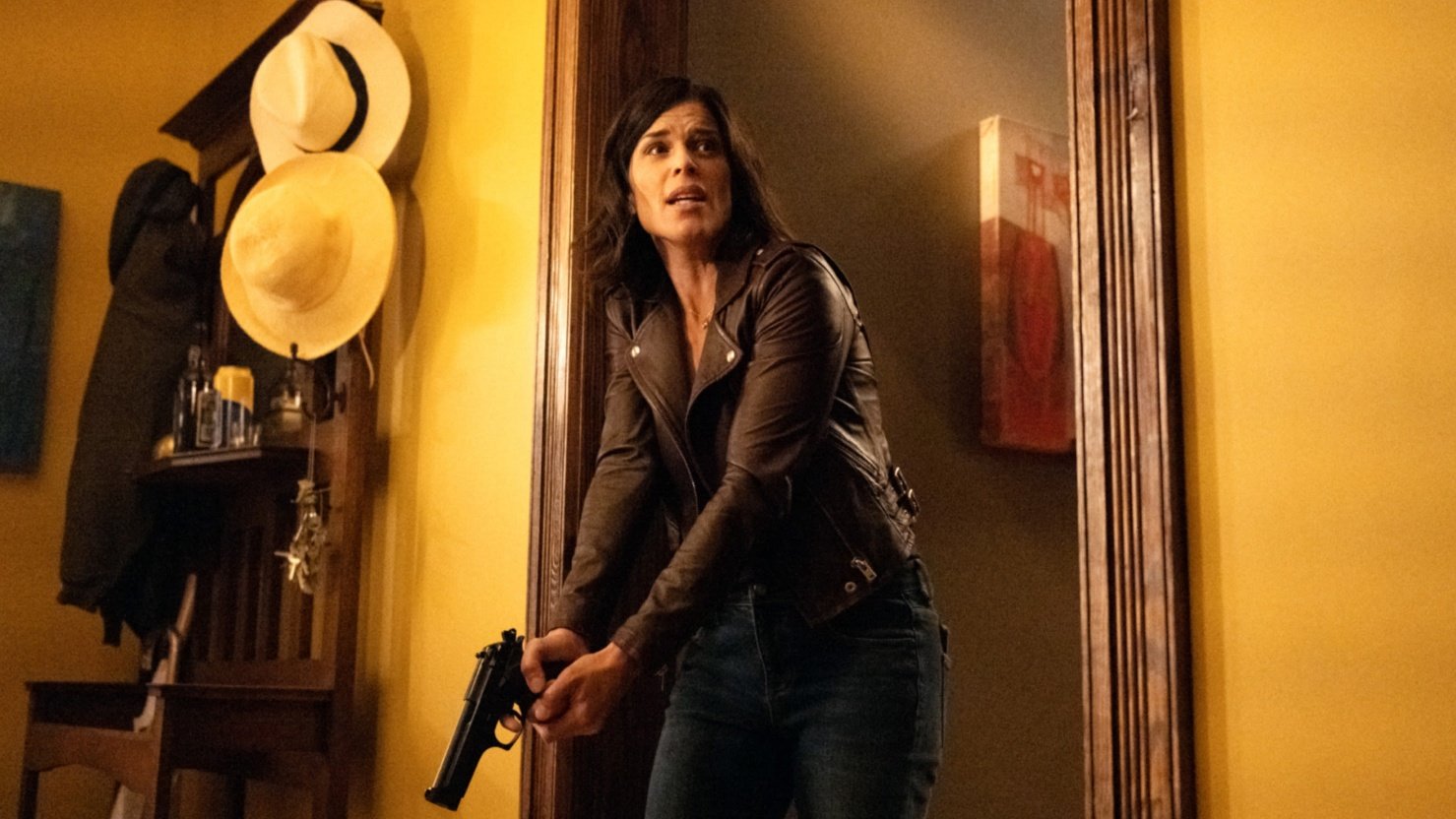
Neve Campbell in “Scream”
- Neve Campbell
The Final Girls: Neve Campbell, the woman who outlived the rules scream. Sidney Prescott ladies and gentlemen, our first appointment goes to a woman who has survived homicidal boyfriends, deranged relatives, celebrity-obsessed lunatics, and enough telephone harassment to bankrupt a telecommunications company.
Neve Campbell, now, I can already hear the objections, Jamie Lee Curtis came first. Sigourney Weaver fought an alien, and Heather Langenkamp dragged Freddy Krueger out of his own nightmares, all perfectly valid arguments. Yet, Sidney Prescott gets the first chair, why, because Campbell accomplished something, horror has historically regarded as a rather inconvenient development. She allowed her victim to become a person, when Scream arrived in 1996, the slasher film had become a familiar little ritual.
Teenagers made poor decisions, masked lunatics punished them, audiences waited for the surviving girl to discover a previously unsuspected talent for improvised violence. Wes Craven and Kevin Williamson understood those conventions well enough to dissect them. But a clever screenplay does not automatically produce a compelling heroine, that required Campbell, as Sidney Prescott, who is grieving before Ghostface ever calls her.
Her mother’s murder has already made her a subject of gossip, suspicion, and public curiosity. Her friends discuss horror movies as entertainment while she is living inside something considerably less amusing, and Campbell makes that distinction hurt. Sidney isn’t simply frightened of dying, she’s frightened of betrayal, and of discovering that the people closest to her have been performing affection while quietly arranging her funeral. Which, I must say, is a spectacularly unhealthy foundation for a romantic relationship, but here’s where Campbell earns the crown.
She doesn’t play Sidney as the same frightened teenager indefinitely, across the sequels, Sidney learns and she becomes guarded without becoming hollow or capable without becoming invulnerable.
She is increasingly unwilling to participate in somebody else’s elaborate murder mystery, and she is growing older. She builds a life, and she learns that surviving a tragedy does not obligate her to spend eternity performing it for an audience. Whenever the nightmare returns, Campbell allows us to recognize the woman who endured the previous one, and that’s the continuity of character.
Not merely the continuity of employment, but Campbell’s career gives us more evidence than Ghostface alone. In The Craft, she played Bonnie, a scarred and painfully insecure young woman whose discovery of supernatural power becomes an opportunity for cruelty. A fascinating inversion, the vulnerable girl discovers that becoming dangerous is considerably more entertaining than remaining vulnerable.
Then there’s Wild Things, where Campbell demonstrates that apparent innocence can be a useful disguise, particularly when the people around you are foolish enough to believe in it. Party of Five established her dramatic credentials, and Scream made her a horror institution. Those other performances matter because they demonstrate how well Campbell understands wounded, complicated women whose outward appearances conceal considerably more than the audience initially suspects.
Sidney Prescott is not her only accomplishment. She is the accomplishment that brought those abilities into perfect alignment, Jamie Lee Curtis helped establish the modern Final Girl. Neve Campbell demonstrated that the Final Girl could have an adulthood, a past, future, and a personality that survived the franchise’s repeated attempts to murder everyone she knew.
First place, Ghostface may own a mask, but Sidney Prescott owns the mythology, and Neve Campbell, owns the crown.
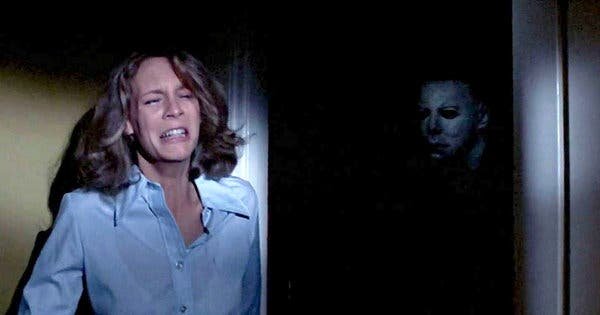
Jamie Lee Curtis in “Halloween”
- Jamie Lee Curtis
Jamie Lee Curtis, the woman who taught horror to scream Halloween. Laurie Strode our second appointment presents a small difficulty. How does one introduce a woman whose name has become practically synonymous with the profession, Jamie Lee Curtis, the original modern scream queen, depending upon which historian you’ve invited to dinner and how much wine you’ve allowed them, now, I adore history.
I simply refuse to confuse it with a legal entitlement. Miss Curtis is not receiving second place because Halloween arrived in 1978. She’s receiving second place because, nearly half a century later, we can still watch that original performance and understand precisely why everybody wanted her back. Laurie Strode is not particularly glamorous, she isn’t rebellious, or she doesn’t possess a collection of weapons. No tragic supernatural inheritance, or the remarkable ability to discover exactly where the killer is hiding whenever the soundtrack becomes suspicious.
She’s a babysitter, an intelligent, responsible young woman who notices something is wrong long before anyone else takes her seriously. Curtis makes that ordinary intelligence compelling, watch how Laurie responds to danger. Hesitation, growing certainty, and the moment when suspicion becomes, the terrible necessity of acting because the adults who should be helping have apparently taken the evening off. Curtis gives us a young woman who doesn’t want to be brave, she wants the children to be safe.
She wants the nightmare to be over, and she would very much appreciate it if the enormous gentleman in the mask stopped returning from the dead. Reasonable requests, all three, but Curtis’s claim to the throne doesn’t end in Haddonfield. In The Fog, she entered John Carpenter’s supernatural coastal nightmare, demonstrating that the director hadn’t exhausted her usefulness by placing her opposite Michael Myers. In Prom Night, she carried another slasher through its adolescent secrets and murderous consequences.
In Terror Train, she discovered that apparently the safest way to travel was neither by automobile nor by rail, particularly when somebody had invited a killer to the party. Three major horror appearances in 1980 alone. Astonishing productivity, most actresses would have requested a vacation, but Curtis apparently requested another murderer, and then there is Halloween H20.
Twenty years after the original, Laurie returned as a woman who had survived physically but had never entirely escaped psychologically. She had a new identity, a son, and a life built around the knowledge that the past might eventually find her. The later Halloween films offered yet another interpretation, an older Laurie whose preparations and obsessions had consumed much of her existence. Not every creative decision in those sequels deserves applause.
Curtis’s willingness to revisit Laurie, at different stages of life, gave the character a dimension, the original film could never have supplied by itself. She could be frightened at seventeen, damaged in middle age. She was angry, exhausted, and dangerous decades later, still recognizably Laurie Strode. Outside horror, A Fish Called Wanda, True Lies, Freaky Friday, Knives Out, and Everything Everywhere All at Once, demonstrate an actress whose comedic timing, physicality, and dramatic range extend far beyond the genre that made her famous. That matters, because the best scream queens aren’t simply women who can scream.
They’re actresses who can make us care what happens before the screaming begins. Jamie Lee Curtis helped establish the modern Final Girl, built a substantial early horror career, escaped the genre’s limitations, and returned repeatedly to prove that Laurie Strode had more than one story to tell. Second place, not because she’s the oldest queen in the room, because after all these years, she can still make the room go quiet. That is considerably harder than making it scream.
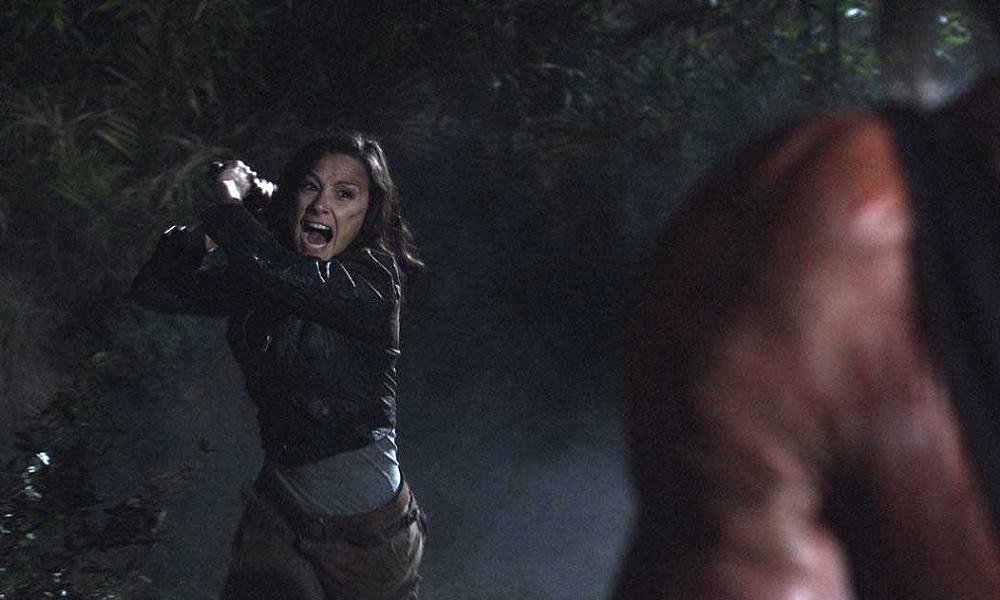
Danielle Harris in “Hatchet II”
3. Danielle Harris
Danielle Harris, The Little Girl Who Grew Up Dangerous: Halloween 4, Halloween 5, Hatchet II, Hatchet III. Our third appointment goes to a woman whose childhood involved an unusually demanding extracurricular activity. Being pursued by Michael Myers. Danielle Harris. Now, I don’t wish to criticize the entertainment industry unnecessarily. But when your eleven-year-old actress spends her working day fleeing a homicidal relative armed with a kitchen knife, one does begin to wonder whether the studio’s childcare arrangements are entirely satisfactory.
In Halloween 4: The Return of Michael Myers, Harris played Jamie Lloyd, the daughter of Laurie Strode and niece of the aforementioned family embarrassment. A role that could easily have been reduced to crying, screaming, and waiting for the adults to rescue her. Instead, Harris became the emotional center of the film. That’s a remarkable responsibility for a child performer. The audience already knows that Michael Myers is dangerous. The franchise has spent years establishing that fact. The difficult part is making us care about his latest intended victim.
Harris does. Jamie is frightened, lonely, vulnerable, and increasingly aware that being related to Laurie Strode is not quite the inheritance one might have hoped for. She is a child trying to understand a nightmare that the adults around her can barely survive. And Harris gives her emotional credibility that makes the danger personal. Then came Halloween 5, in which Jamie returned traumatized and struggling to communicate. Because apparently one encounter with Michael Myers wasn’t enough to satisfy the family reunion committee.
Now, the Halloween sequels have not always demonstrated impeccable judgment. One might charitably describe certain installments as ambitious experiments in audience patience, but Harris’s performances were never a problem. Then she grew up. This is where her appointment becomes particularly interesting. Most child stars spend adulthood trying to escape whatever made them famous, Danielle Harris returned to horror repeatedly.
She appeared in Urban Legend, later returned to the Halloween mythology as Annie Brackett in Rob Zombie’s films, and continued building a genre résumé that includes Stake Land, See No Evil 2, and Among Friends, which she directed. That last credit is worth remembering, it’s one thing to spend your career being menaced by horror filmmakers. It’s another way to decide you might enjoy being the person arranging the menace. But her strongest adult Final Girl credentials come from Hatchet II and Hatchet III.
Enter Marybeth Dunston, and Victor Crowley, now, Michael Myers is a dreadful houseguest, but at least his preferred method of murder demonstrates a certain economy of equipment. Victor Crowley approaches the human body as though he’s been hired to demolish a condemned building. As Marybeth, Harris confronted a different sort of slasher nightmare, louder, bloodier, more grotesque, and considerably less interested in subtlety.
This time, she wasn’t a helpless child, she was the woman returning to confront the monster, and that’s the achievement that earns her this chair. Harris successfully carried a childhood survivor through two Halloween films, then established herself as an adult survivor in another slasher franchise. Not merely a cameo, or merely a familiar face appearing at a horror convention.
Two substantial Final Girl identities, separated by decades of professional experience, and unlike actresses who treat horror as an unfortunate early-career necessity, Harris made the genre a central part of her professional identity. Of course, appearing in a great many horror films does not automatically make them all great, some are excellent, others are entertaining, and yet some, probably should have been buried in the woods and left there.
But Harris kept finding ways to make herself worth watching, that takes commitment. That takes craft, and occasionally, I suspect, an exceptionally forgiving attitude toward fake blood. Thirdly, the little girl survived Michael Myers. The grown woman went looking for Victor Crowley. And somewhere along the way, Danielle Harris stopped being a child star who appeared in horror movies. She became one of horror’s own.
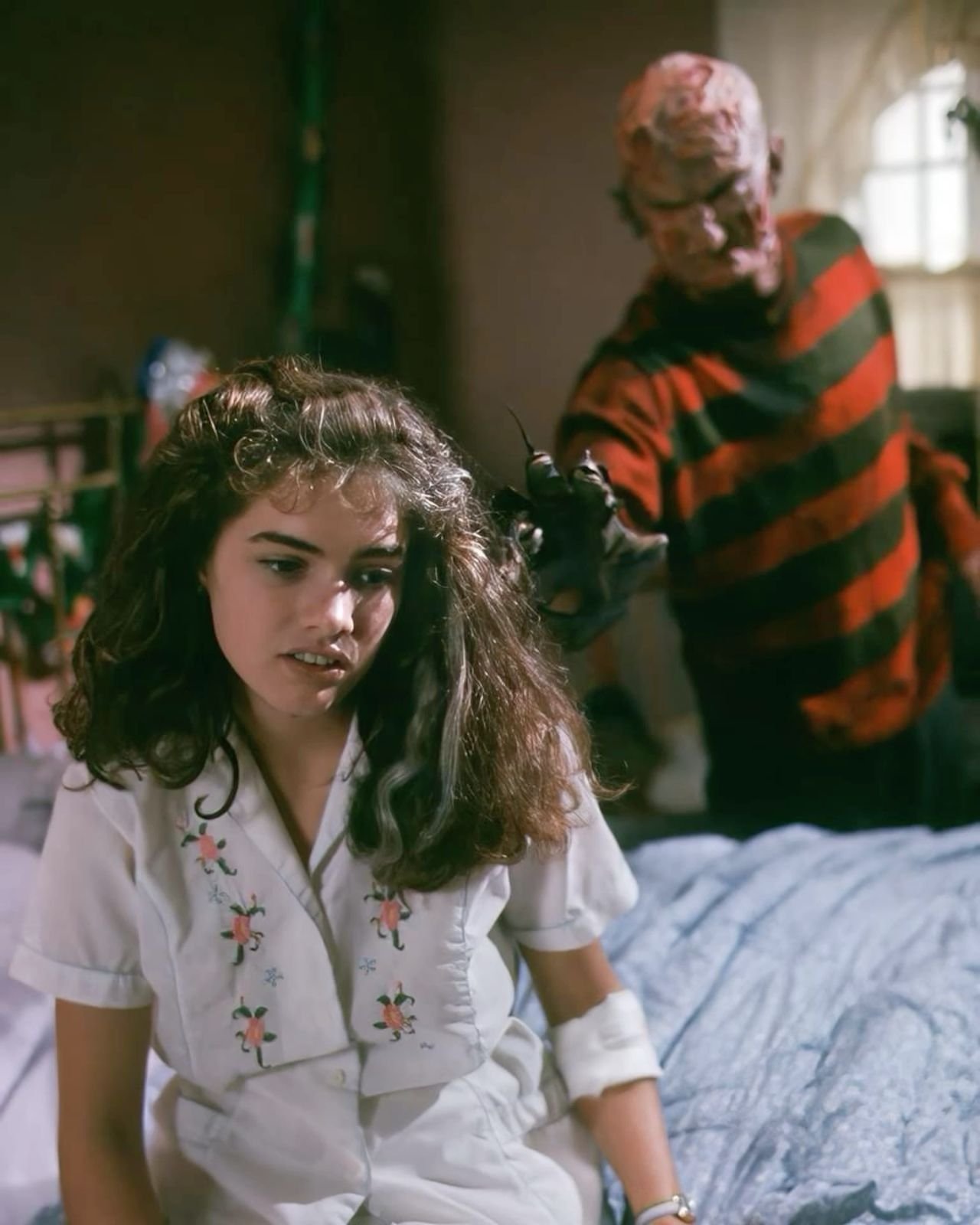
Heather Langenkamp in “Nightmare On Elm Street”
- Heather Langenkamp
Heather Langenkamp, the woman who made Freddy do his homework, A Nightmare on Elm Street, Dream Warriors, New Nightmare. Our fourth appointment is for an actress who discovered something rather inconvenient about supernatural murderers. They don’t particularly enjoy intelligent women, but Heather Langenkamp is. Now, Freddy Krueger is an interesting fellow, he has claws, a dreadful complexion, a fondness for theatrical murder, and the remarkable ability to turn sleeping into an extreme sport.
One might reasonably assume that defeating such a creature would require divine intervention. Or perhaps a very large industrial furnace, but Nancy Thompson had another idea. Research, preparation, and the willingness to drag the bastard into the real world. How practical, in Wes Craven’s A Nightmare on Elm Street, Langenkamp begins as an ordinary teenager confronted with something her parents cannot, or will not, adequately explain.
Her friends are dying, dreams are becoming more dangerous, and the adults appear determined to maintain the comforting fiction that everything will be fine provided everyone gets a good night’s sleep. Which, under the circumstances, seems like a spectacularly poor recommendation. Nancy investigates, she tests what she knows, makes plans, and adapts.
Langenkamp gives that intelligence a personality, she isn’t an emotionless strategist, frightened, exhausted, increasingly isolated, and desperate to make somebody believe her. Her resourcefulness matters because it grows out of those conditions. She’s not handed competence by the third act. She earns it through the ordeal.
Then A Nightmare on Elm Street 3, Dream Warriors brought Nancy back, older, more knowledgeable, and now helping another generation of endangered teenagers understand what they’re facing. That transformation matters enormously, the former victim becomes a guide, she cannot erase the nightmare, but she can teach others how to confront it, and then Wes Craven did something.
He made New Nightmare, not simply another Nancy Thompson adventure, but a film in which Heather Langenkamp plays a fictionalized version of herself, confronting an evil that has begun crossing the boundary between cinema and reality. Think about that for a moment, an actress becomes famous playing a survivor. Returns as that survivor, then stars in a film about the cultural consequences of having played that survivor.
It’s practically a doctoral thesis with claws, and Langenkamp makes the entire conceit work because she understands both the fictional character and the actress who became associated with her. Her later horror appearances, including The Butterfly Room and Hellraiser, Judgment, further demonstrate that she didn’t abandon the genre after Freddy.
But the great accomplishment remains with Nancy Thompson, an intelligent Final Girl who studies the monster rather than merely fleeing him. A returning survivor who becomes a mentor. And an actress willing to confront the strange relationship between herself, her character, and the audience that made both famous. Freddy Krueger could invade dreams. Heather Langenkamp made him confront a woman who had done her homework, and I have always considered an educated woman a particularly dangerous opponent.
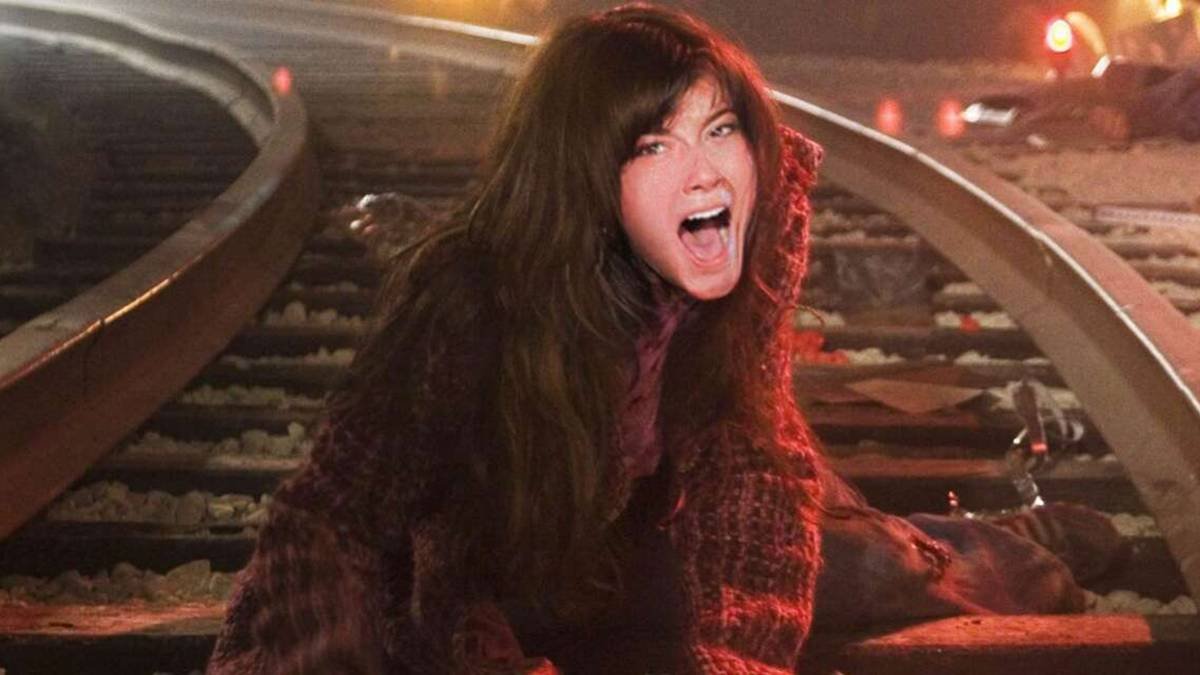
Mary Elizabeth Winstead in “Final Destination 3”, cut scene
- Mary Elizabeth Winstead
Mary Elizabeth Winstead, the woman who knows something is wrong in the film, Final Destination 3, 10 Cloverfield Lane, our fifth appointment goes to an actress who has demonstrated a rather unusual professional talent. She can make paranoia look like common sense, Mary Elizabeth Winstead, now, paranoia is a difficult thing to perform convincingly.
Too little, and the audience wonders why the character hasn’t noticed the enormous warning signs. Too much, and she becomes the sort of person who calls the police because her toaster made a suspicious noise. Winstead understands the difference, in Final Destination 3, she plays Wendy Christensen, a young woman who experiences a premonition of disaster aboard an amusement-park roller coaster.
An unfortunate revelation, personally, I’ve always regarded roller coasters as mechanical devices designed to demonstrate that humanity has become insufficiently afraid of gravity. Wendy survives the initial catastrophe, which, in the Final Destination universe, is rather like informing the tax authorities that you’ve discovered a clever way to avoid paying.
Death takes it personally, and Winstead must carry a film in which the antagonist cannot be seen, confronted, reasoned with, or conveniently pushed into a woodchipper. She makes Wendy’s growing obsession with patterns, photographs, and impending disasters believable because the character is desperately trying to impose logic on something that refuses to obey it.
Then came 10 Cloverfield Lane, and suddenly Winstead was facing a very different nightmare. Michelle awakens in an underground bunker with a man who insists the outside world has become uninhabitable. He may be telling the truth, he may be a dangerous captor, and the most frightening possibility is that both things could be true. John Goodman gives Howard a terrifying combination of paternal concern, emotional volatility, and absolute control.
Winstead must perform against that uncertainty without allowing Michelle to become merely the frightened woman sitting opposite a more flamboyant actor. She succeeds magnificently, Michelle watches, listens, tests boundaries, and conceals what she’s thinking. She searches for opportunities without knowing whether escape will save her or kill her. It’s a different kind of survival from Wendy’s, one woman is trying to outthink an invisible design, the other is trying to outthink a very visible man.
Winstead makes both compelling, and the rest of her career strengthens the argument. In Death Proof, she appears as Lee, part of Quentin Tarantino’s ensemble of women navigating a story built around a predatory stuntman. In The Thing prequel, she plays Kate Lloyd, a paleontologist confronting an organism that makes the workplace trust an extremely dangerous proposition.
Black Christmas gave her an earlier slasher appearance, while Scott Pilgrim vs. the World demonstrated her ability to command the screen in a very different register. In the role of Kate, she became an assassin racing against her own poisoning. Not a Final Girl performance, certainly, but another example of Winstead making a woman under extraordinary physical pressure compelling without surrendering her intelligence. That’s what distinguishes her, she doesn’t rely on one beloved character.
She doesn’t require a franchise mythology to carry her reputation. She can enter a different story, confront a different kind of danger, and convince us that this particular woman has the resources to survive it. Fifth place. Mary Elizabeth Winstead doesn’t need to be the loudest woman in the room. She’s usually the one who notices that the room has no windows. And that, darlings, is precisely the sort of woman I prefer to have beside me when somebody locks the door. Give the opening list its own voice Cut repeated career-summary passages and now, darlings, the next five appointments. We’ve crowned the women who helped define the archetype. Now we turn to the actresses who proved that survival could be an entirely different profession depending upon the monster, the circumstances, and the unfortunate quality of one’s companions.
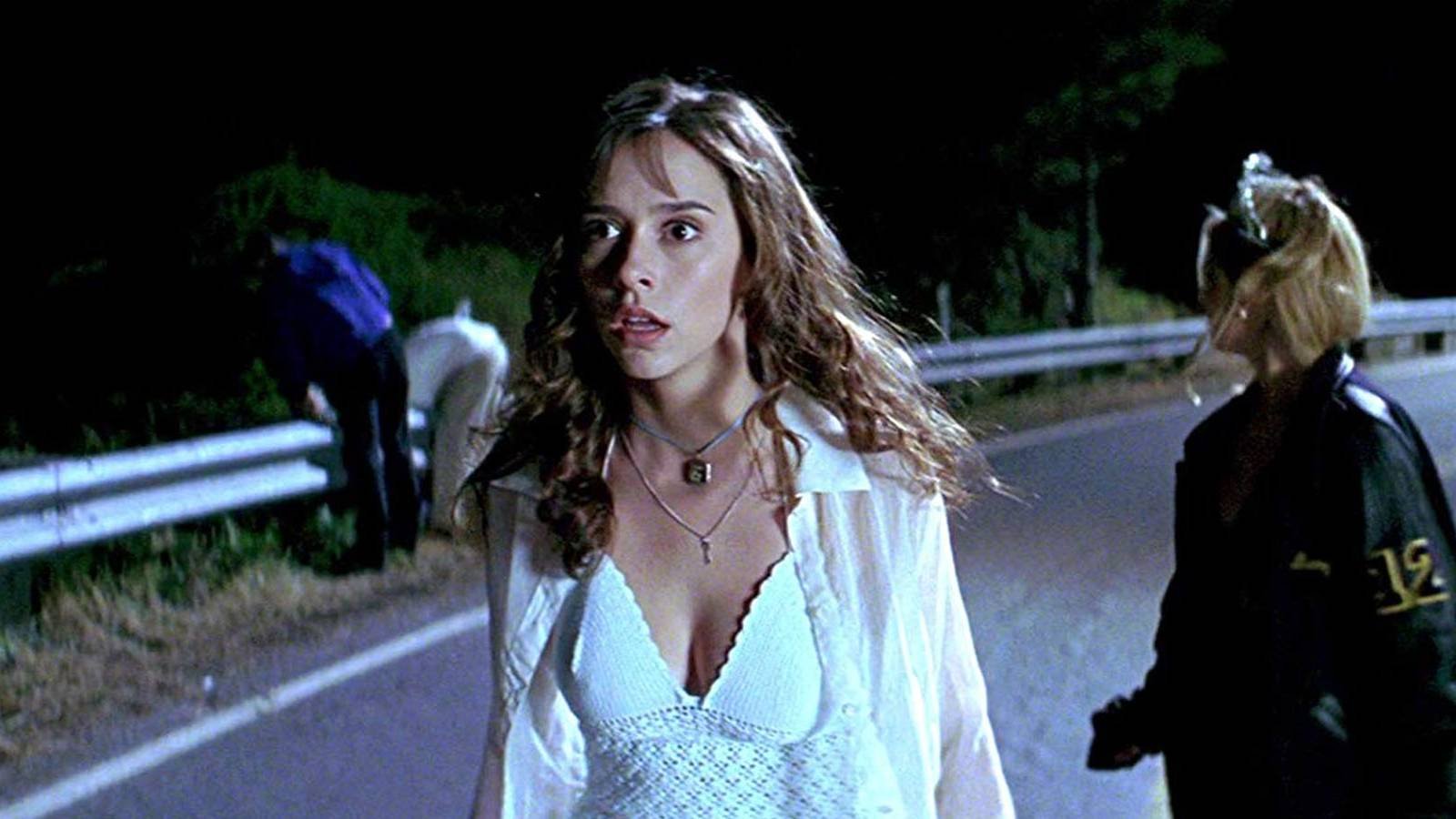
Jennifer Love Hewitt in “I Know What You Did Last Summer”
- Jennifer Love Hewitt
Jennifer Love Hewitt — The Girl Who Knew What You Did, I Know What You Did Last Summer, I Still Know What You Did Last Summer. Our sixth appointment goes to a woman who discovered that youthful indiscretion can have rather unpleasant consequences. Jennifer Love Hewitt. Now, I realize that most people have something from their adolescence they’d prefer to forget. An unfortunate romance. A regrettable hairstyle. Perhaps a photograph involving excessive eyeliner and a boy who played guitar badly. Julie James had a considerably more serious problem. She and her friends accidentally struck a pedestrian, disposed of the body, and agreed never to discuss the matter again. A charming little summer memory. Most teenagers bring home seashells. Julie brought home a conspiracy to conceal a possible homicide. And then, one year later, somebody began sending letters. This is why, darlings, I recommend postcards. They’re much less threatening.
In I Know What You Did Last Summer, Hewitt had to make Julie more than the obligatory sensible girl in a group of attractive young people making increasingly disastrous decisions. She had to carry guilt. And guilt is an interesting foundation for a Final Girl, because the audience cannot simply regard her as an innocent victim. Julie participated in something terrible. She knows it. She regrets it. And now someone intends to collect payment. Hewitt gives that guilt a nervous, increasingly desperate physicality. Julie is not merely frightened of the fisherman with the hook. She’s frightened that the past has finally found a way to punish her. Which, considering the quality of the group’s original decision-making, was practically inevitable.
Then came I Still Know What You Did Last Summer. A sequel in which Julie travels to an island resort, apparently having concluded that isolated locations with limited escape routes are an excellent way to recover from a previous massacre. One does wonder whether anybody in this family has ever considered a quiet weekend at home. But Hewitt makes Julie’s continuing fear convincing. She’s suspicious. She’s traumatized. She understands that survival doesn’t necessarily mean the danger has ended. And importantly, Julie remains recognizable as the same woman. The sequel doesn’t simply replace her personality with an action heroine because the audience already knows the killer. Hewitt maintains the emotional continuity. Her broader career makes this appointment more interesting.
For five seasons of Ghost Whisperer, she played Melinda Gordon, a woman whose daily responsibilities involved communicating with the dead and helping them resolve unfinished business. Now, Ghost Whisperer is a supernatural drama rather than a succession of slasher nightmares. But consider the professional range involved. Hewitt went from being pursued by death to negotiating with it.