
There was no moment, there was only becoming, let’s begin with polite fiction, the bedtime story of humanity. That once upon a time, some grubby, knuckle-dragging proto-ape woke up, invented a noun, painted a bison, and earned the keys to the kingdom of humanity. One day you’re nature, the next day you’re history. Clean, convenient, and flattering. It’s nonsense, of course. But elite nonsense, the kind wrapped in Latin and peer review, so it feels safe to believe. The truth is that evolution doesn’t cause coronations. There was no ribbon-cutting ceremony for man.
No metaphysical finish line. No single spark. Just variation, pressure, inheritance, and luck. A slow-motion avalanche of small adaptations tested by fire, famine, predators, and time. What we call “human” is not a category bestowed, it’s a label we retroactively slap on the surviving branch. Ours, the idea that there was a moment, we became human implies that we were once something less. Something is waiting, something is not quite real.
It’s a theological hangover wearing a lab coat, evolution as progress, as destiny, as a climb toward us, the allegedly rational, tool-wielding, museum-building apex. But that’s not biology. That’s branding, and the real danger. It turns ancient lives into rough drafts, makes them worth less, mean less, matter less. It tells a story where our success is the only success that counts. Everyone else, just warm-up acts. The tragedy is, many of them outlasted us by millennia and left no genocide in their wake. Take Sahelanthropus tchadensis. Take Ardipithecus.

Early Homo Sapiens, modern humans, estimate 400/300,000 years ago to present
Take every bipedal genius who walked the earth without Wi-Fi, without a wheel, without an ego crisis. These beings weren’t stumbling toward enlightenment, they were solving the hardest puzzle in the universe, how to survive in a world that does not care if you live. They weren’t primitive, they were adapted, not in transition in context. Bipedalism wasn’t a vertical step on a monkey-to-man staircase, it was a lateral move. A biomechanical innovation for moving through forests and grasslands while keeping your hands free to carry food, children, or sharp sticks. It was elegant, it was effective.
It was brilliant and it worked for millions of years. So no, there was no moment we became human, because humans aren’t an upgrade. It’s not a badge or a prize, it’s a pattern of survival. Of connection, memory passed from mouth to mouth. If you really want to sound smart at parties, evolution isn’t a ladder, it’s thick, a tangled, ancient, glorious mess of branching and dead ends, of cousins and hybrids and rerouted lineages. We, Homo sapiens, are not the final answer, we are just the version that hasn’t failed.
So, let’s end the fantasy, let’s stop asking when they became human and start asking why we’re still pretending we were ever something more. If stone tools are the test, you’re not measuring humanity, you’re measuring what survives. Ah yes, the stone tool, the anthropologist’s holy relic, the museum darling, the one object we keep mistaking for a personality trait. We’ve built entire origin stories around sharp rocks, as if chipping flakes off basalt was the moment the lights came on.
Behold, we say, this is where humanity began, not with care, not with a song. Not with a shared fear in the dark. But with something sharp enough to crack a femur. Stone survives, it photographs well, you can catalog it, label it, and arrange it in a glass case with lighting. Meanwhile, the actual engines of early human success, cooperation, memory, shared strategy, leave no artifact. No one finds a fossilized rule of thumb, or the first bedtime story, or the instinct to comfort a frightened child.

Homo Erectus, 2.0 million to 100,000 years ago
So, we ignored them, they’re too soft, too social. Too female-coded, if we’re being honest. What we call the dawn of humanity is just the dawn of durable garbage. Ardipithecus and Australopithecus didn’t litter the landscape with stone souvenirs, but they thrived for millions of years. They weren’t waiting for a chisel to make their lives meaningful. They had each other, they had a strategy, they had systems of trust and learning and caution that don’t show up in stratigraphy.
If your measure of mind is what lasts forever in the ground, then termites are better engineers than us. And they don’t even have a genus Homo. Let’s name the real problem, this fixation on tools didn’t emerge in a vacuum. It came from the same imperial playbook that looked at Indigenous cultures without metallurgy and declared them primitive. Colonial logic in khakis and gloves, if I don’t recognize it, it will not be real. But survival isn’t about what you leave behind for archaeologists to find.
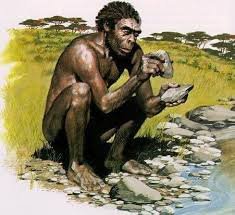
It’s about what you pass forward. The Homo erectus didn’t leave the cathedral. They left the fire, left footprints across continents, they left knowledge embedded in bodies, in rituals and instincts. Endurance hunting, chasing prey for hours across the savanna, requires complex planning, hydration strategies, and shared effort. That’s not a brute force, that’s logistics and a social mind.
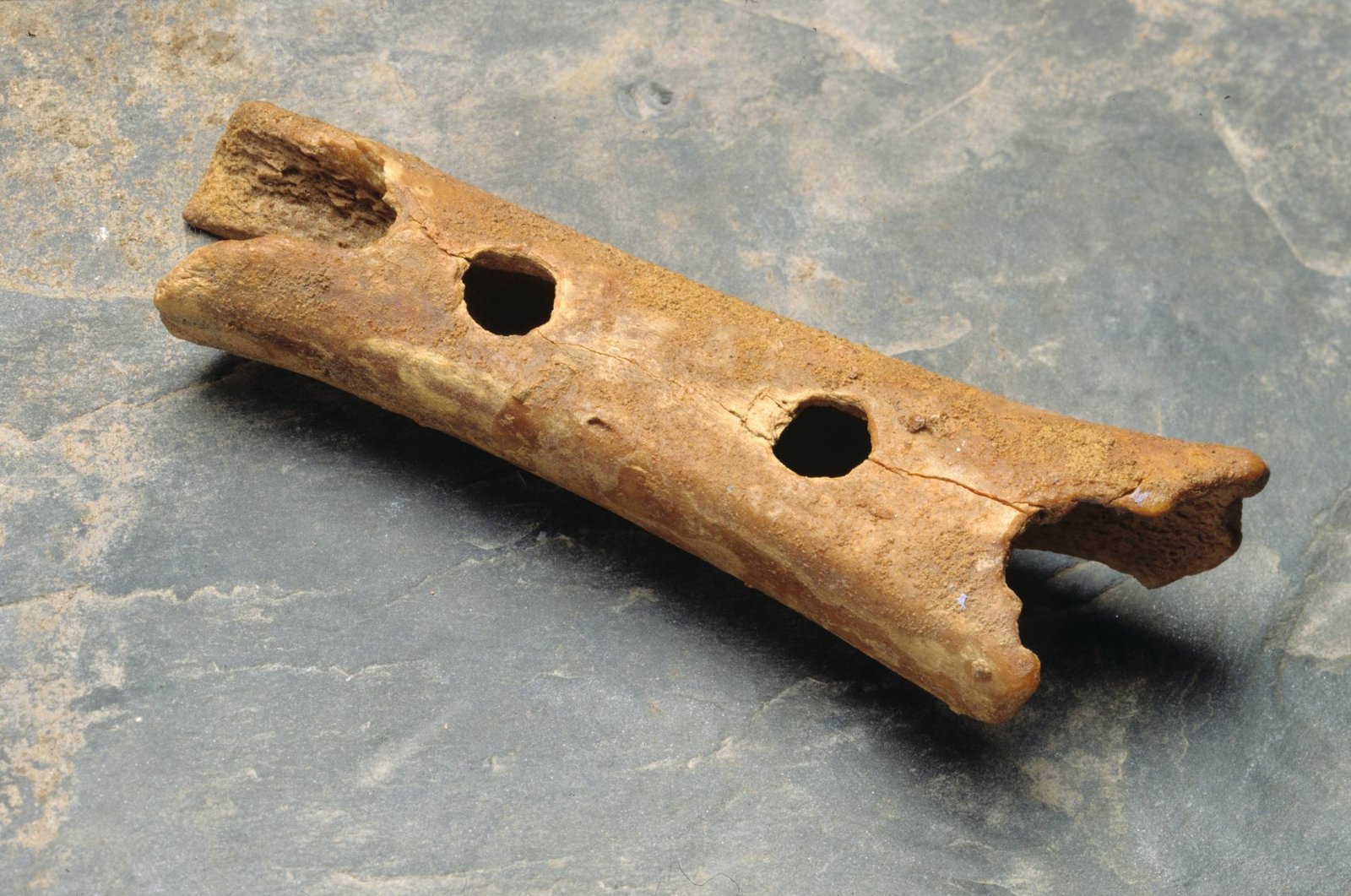
Primitive flute
So, let’s retire from the fantasy that tools define us. Plenty of species use tools, crows do, chimps do, sea otters do, with rocks. So, unless you’re ready to call an otter nearly human, it’s time to let the fetish go. Humanity isn’t proved by what we do, it’s proved by how we stay alive, together, across generations, through scarcity, threat, and change. That’s what real intelligence looks like. Not the axe, but the hands that taught it. Not the artifact, but the bond that made its making possible.
So no, the tool didn’t make the man, the bond did, the memory did, the tribe did. They didn’t fossilize, but they left everything behind. She didn’t look like you, she birthed to you. There’s quiet violence in the word ape-like. A kind of anthropological eyeroll that says, close, but not quite. It’s always applied the same way, to ancestors who don’t conform to our bone-deep vanity. Take Lucy.
Australopithecus afarensis. The one fossil even laypeople know by name, because we’ve made her our favorite almost. Too small, curved, and ancient. She walked upright, they admit, but then rushed to remind us of her brain wasn’t big, as if brain volume is how you weigh a soul. But Lucy didn’t need a neocortex for the size of your ego. She needed adaptability. She needed efficiency, awareness, and resilience. And she had it.
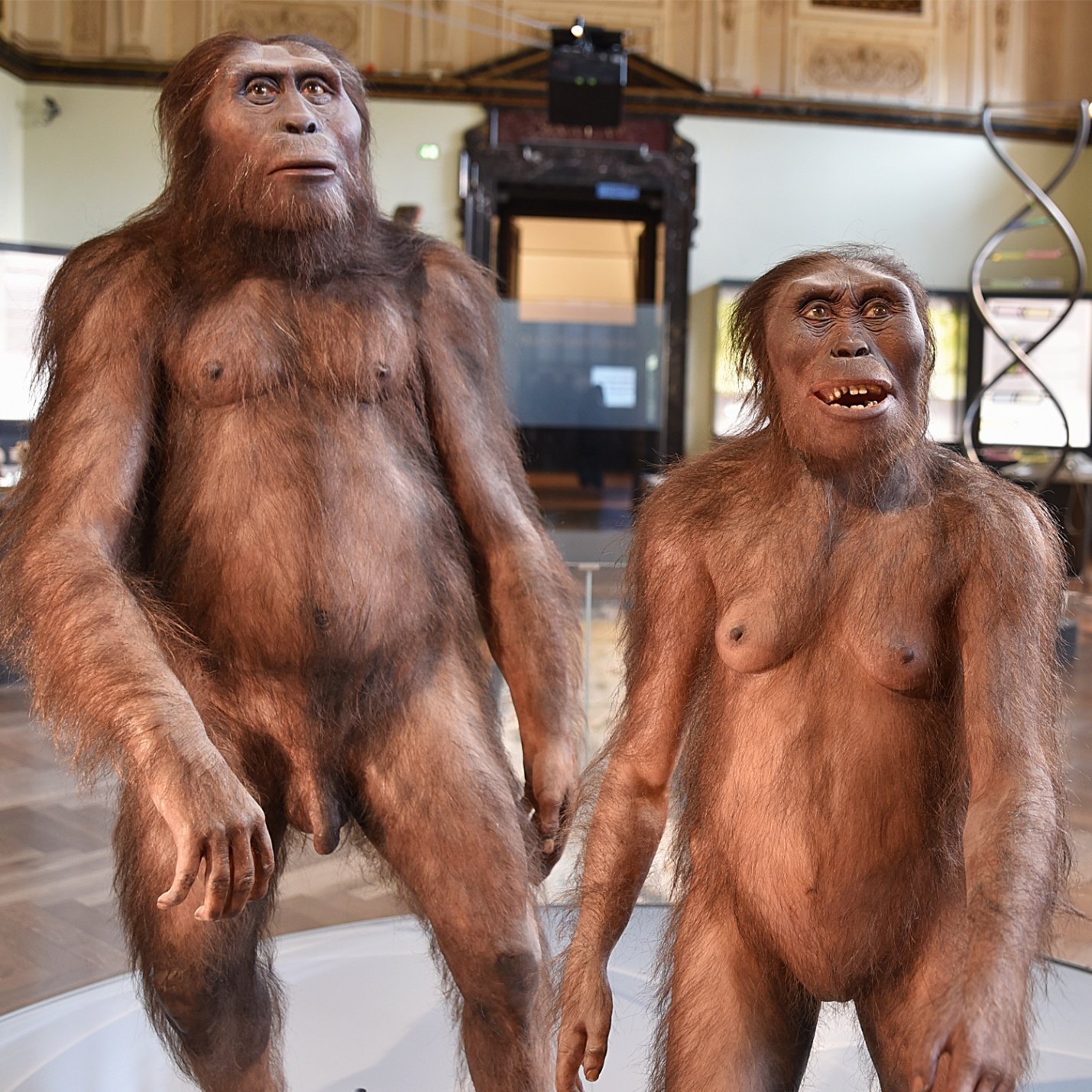
Australopithecus, 4,3 million to 1,2 million years ago
For over a million years, her kind endured in volatile environments that would pulp most modern humans in a week. That’s not in progress, that’s in command. You want evidence of humanity? Look at Laetoli. Fossilized footprints, three individuals, walking in parallel, two smaller than the third. Maybe a mother and her children. Maybe siblings. They weren’t just surviving. They were moving together. That’s kinship. That’s caregiving. That’s early humanity written in ash and time. No, classification prefers bones over bonds. It wants to measure, rank, and file. To say: these count, that one doesn’t.
It’s the same instinct that once looked at non-European faces and found them “less evolved.” That turned skull shapes into science and bias into taxonomy. Let’s be brutally honest: The habit of dehumanizing beings based on morphology has a long, colonial history, and it didn’t stop at Homo erectus. So, flip the metrics. Don’t ask if she looked like you. Ask what she passed on. Did she raise the young? Yes.
Did she form alliances? Likely. Did she teach, warn, remember? The fossil record can’t say, but the longevity of her lineage does. Long childhoods (indicated by dental development) tell us something more valuable than cranial capacity: they learned slowly, together. Which means knowledge had time to accumulate. To spread. To evolve. That’s not an instinct. That’s a culture. So no, Lucy wasn’t a rough draft. She wasn’t the warm-up act for the sapiens’ big finale. She was a matriarch in the longest-running dynasty on Earth.
She didn’t need to look like us. We look like her, diluted by comfort. Let the anatomists fret over zygomatic arches. We’ll take kinship over classification. Because you don’t need a mirror to see your ancestors. You need respect. The first human might have been the first to mourn. If you want to find the beginning of humanity, don’t look for the first tool. Look for the first grave. Anatomy tells you what a body could do. Burial tells you what a mind could not ignore.
At Shanidar Cave, Neanderthal remains lie arranged in ways that resist the language of accident. Bodies placed deliberately. Care in positioning. A space set apart from ordinary life. The famous pollen traces, once waved away as rodent noise, later reconsidered, sparked decades of argument not because of botany, but because of what they threaten to prove. We argue so fiercely about the flowers because flowers imply intention. And intention implies meaning, and that implies a mind we recognize. Not a brute. Not rehearsal.
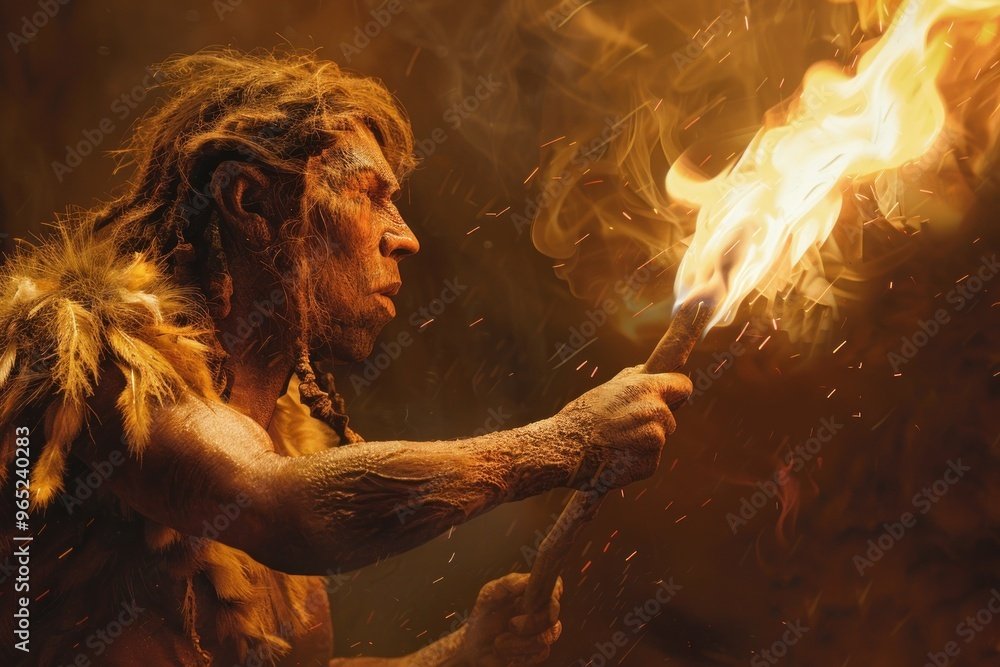
A mourner, the resistance isn’t evidence, it’s about comfort. If Neanderthals buried their dead with care, then the wall between us and them gets uncomfortably thin. The category we’ve been guarding starts to look like a mirror. Blombos Cave complicates the story even further. Engraved ochre, deliberate markings, patterns repeated enough to suggest memory and convention. This isn’t survival in a narrow sense. You don’t engrave pigment because it helps you outrun a predator. You engrave because the world inside your head demands expression.
Making it is expensive, it takes time, and it takes a shared understanding. It requires a social agreement that symbolizes matter. And once you admit that ancient populations invested energy in symbols, you admit they lived in worlds layered with significance, worlds where objects could stand for ideas, and death could stand for more than absence. That’s not a cognitive upgrade patch.
That’s a community negotiating the unbearable fact of loss. Even earlier hints of caregiving, healed injuries, individuals surviving long past what raw efficiency would predict, whisper the same story. A body that cannot hunt but still eats is a social statement. It means someone carried food. Someone waited. Someone adjusted the calculus of survival to include compassion.
Tenderness is inefficient, yet it keeps appearing. Which is why burial matters so much. A grave is the ultimate inefficient act. The dead do not repay the labor, they do not contribute to calories.
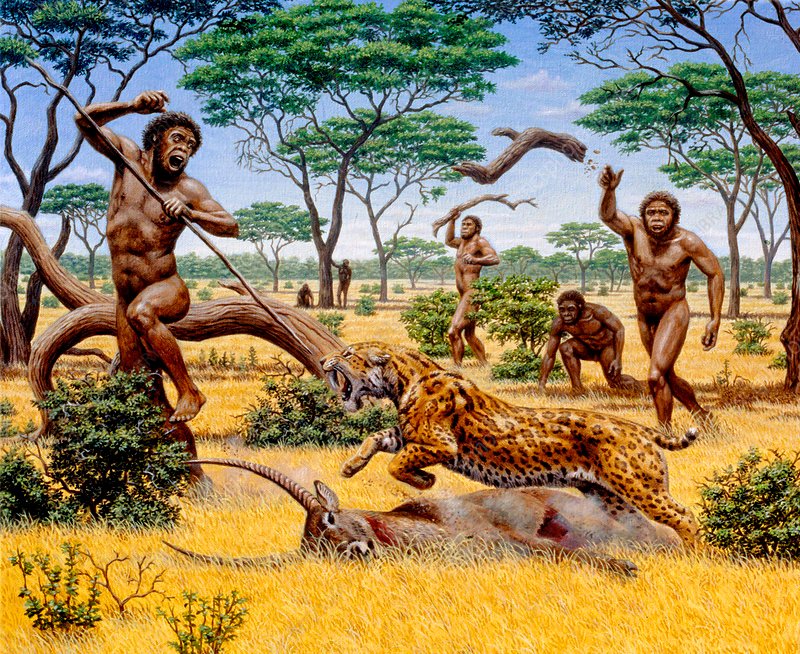
Every minute spent arranging a body is a minute stolen from pure survival. Yet hominins across deep time appear to have spent those minutes anyway. That decision is a thesis about value. It says, this individual does not stop mattering when they stop moving. Strip away the poetry and that is the root of every human ethic. The idea that is worth it is not identical to utility. That a body can command respect even in stillness. That memory is a form of continuation.
Deny that to ancient hominins and you rehearse a very old habit: declaring that beings who do not meet your preferred criteria occupy a lower moral tier. History has run that experiment on living with catastrophic enthusiasm. It always begins the same way, with a definition of not quite. So maybe the first human wasn’t the first toolmaker. Maybe it was the first creature who refused to treat a corpse as garbage. The first to pause. The first to arrange. The first thing to feel is the wrongness of walking away.
In that pause lives the blueprint of every funeral, every monument, every name carved into stone, so the dead won’t dissolve quietly into statistics. Grief is not an accessory to humanity. It is one of its foundations. And once you see that, the distance between us and them collapses. We are not separated by a miracle. We are connected by a habit, the refusal to let each other vanish without witness. We were making art in Africa while Europe still slept in the snow.
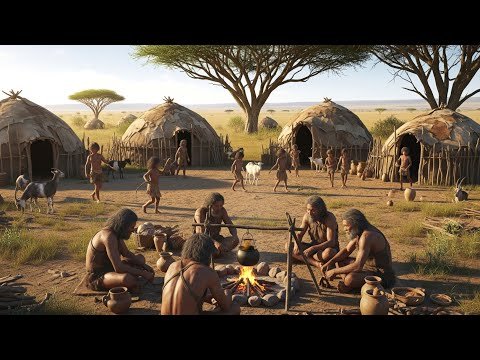
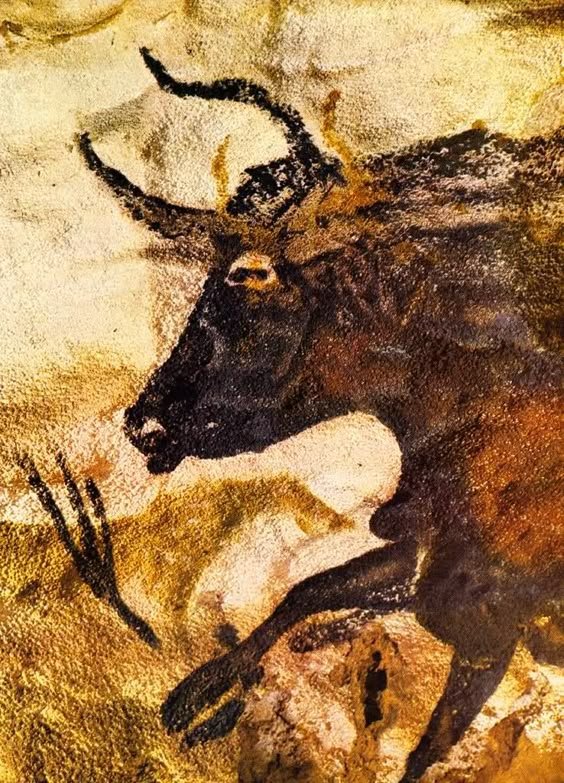
You’ve heard this one, that humanity truly arrived in a glorious burst of cave art and culture, somewhere in Ice Age Europe, around 50,000 years ago. The so-called Human Revolution, as if evolution hit the upgrade button, and we suddenly became worthy of self-awareness, poetry, and gods, It’s a lovely story. Elegant. Cinematic. And completely wrong. That narrative isn’t science. It’s fan fiction with a passport stamp. A Eurocentric bedtime story, written to position one region, and let’s be blunt, one lineage, as the birthplace of real intelligence.
The facts refuse to cooperate. Blombos Cave in South Africa, twice as old as Lascaux, holds engraved ochre with geometric patterns, shell beads, and pigment mixing kits that scream symbolic thought. This isn’t random doodling. This is conceptual consistency, the marks of minds who remembered, taught, refined. These aren’t outliers. They’re just inconvenient. You find symbolic material earlier and elsewhere: in the Kapthurin formation, in Pinnacle Point, in Sibudu Cave.
In tools shaped with care long before a bison ever graced a French wall. Even Neanderthals, once painted as stumbling primitives, left behind hand stencils, shell jewelry, and careful burials. So much for behavioral exclusivity. But because these revelations don’t fit the European-centered crescendo narrative, they were sidelined. Minimized. Treated as noise, not signal. And that’s not just scientific laziness. That’s an ideological inertia. The Human Revolution myth emerged when anthropology was still married to imperial logic.

Civilization means writing, metallurgy, and pyramids, never mind whose pyramids. When Africa appeared on the timeline, it was a launchpad, not a laboratory. An origin without innovation. A place our ancestors left to become great. This framing wasn’t accidental. It justified colonization. It retrofitted racial hierarchy into prehistory. And it’s still echoing how we teach the timeline today. But behavior doesn’t explode. It accumulates. Symbolism didn’t arrive in a single spark. It flickered, flared, dimmed, moved.
It rode on the backs of migrating groups, expanded in response to pressure, and hybridized through contact. Culture doesn’t obey neat narratives, it emerges in mosaics. So, what was called a revolution was really a reveal. A shift in what survives, in what gets preserved, in what’s been found so far.
And the real tragedy, by clinging to the myth of sudden enlightenment, we’ve flattened thousands of years of experimentation, meaning making, and adaptation. We’ve erased the slow, complex pulse of behavioral modernity in Africa, and replaced it with a fireworks show in France. It’s not just wrong. It’s dishonest. It’s an insult to every ancestor whose brilliance didn’t fossilize as well as a horse on a cave wall. Let’s be clear, Africa wasn’t waiting. It was innovative.
Europe didn’t crown humanity. It caught up. And the only reason this still feels controversial is because we haven’t finished confronting what our original stories were really designed to protect. “He crossed continents. He built fire. He taught his children. What more do you want?” You want to know what arrogance looks like. It’s a species that’s only been around 400,000 to 300,000 years calling a species that lasted for two million primitives. Homo erectus didn’t just show up and die off.
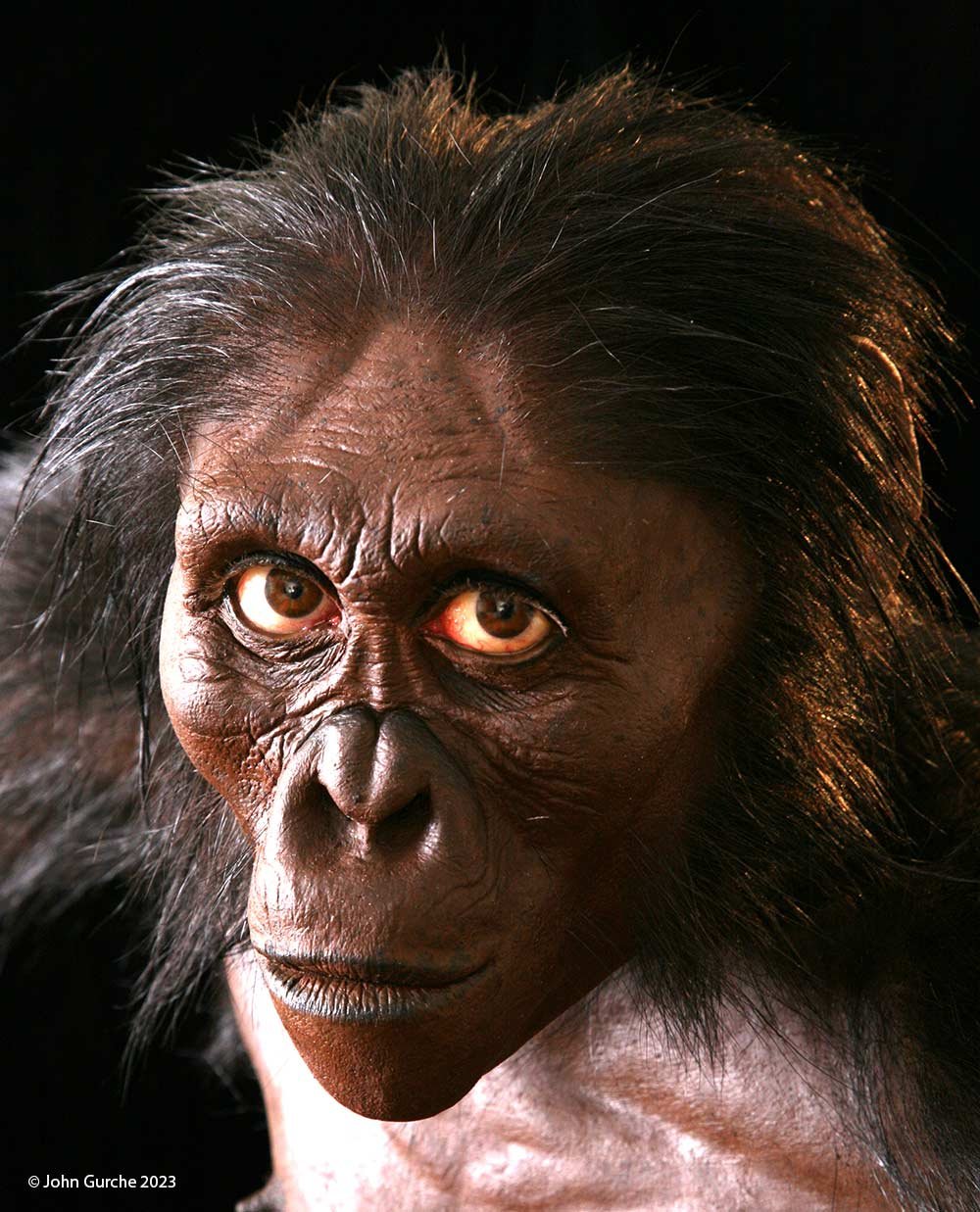
Lucy – Ardipithecus, 5.7 million to 4.4 million years ago
He conquered climates. He migrated out of Africa before it was cool. He traversed vast terrains without maps, built fires without matches, passed on skills without books, and hunted without drones, GPS, or crucial protein bars. He wasn’t a beta test for sapiens. He was an empire without monuments. Fire 1.5 million years ago. Acheulean tools are shaped with precision. Complex planning for endurance hunting, the art of chasing prey until it collapses from heat. That’s not savagery.
That’s biothermal warfare. And it requires forethought, timing, communication, and group coordination. Otherwise, you just get trampled by wildebeest and rot. We have fossil evidence of Homo erectus individuals who lived long after injuries that would’ve left them vulnerable, meaning others must have helped. They didn’t leave behind operas or oil paintings, but they left something more useful: each other. And yet… he’s still treated as a steppingstone. A pre-modern prototype.
A rough draft waiting for the magic of sapiens to happen. Why? Because he didn’t make beads. Because his tools weren’t cute. Because his skull wasn’t symmetrical enough for a museum diorama? Let’s call it what it is, the homo sapiens supremacy complex. The idea is that unless you walk like us, speak like us, paint like us, you’re not really human. That thinking doesn’t come from fossils.
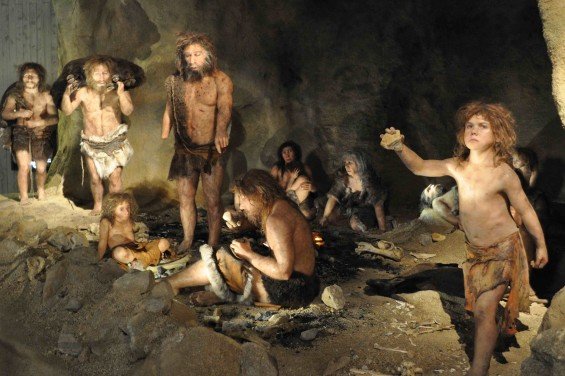
Neanderthals, 500,000/400,000 to 30,000 years ago
It comes from the same place that built empires on hierarchies of worth, where difference equals inferiority, and ancestry equals irrelevance. But Homo erectus left a legacy encoded in more than DNA. He left us the template for survival under pressure. He left us the fire, literally and metaphorically. He left us the knowledge that intelligence doesn’t always write poetry, it sometimes just stays alive longer than anyone else.
If Homo erectus isn’t human, then humanity isn’t defined by culture, it’s defined by narcissism. Because here’s math. Erectus lasted ten times longer than we’ve been around. He spread farther, adapted more widely, and left footprints across continents. He endured, if endurance doesn’t count, what does it mean?
So, the next time someone says Homo erectus wasn’t quite human. What’s more human than passing the torch through a thousand generations and never letting it go out. They spoke. We just don’t know how. Words don’t fossilize. That’s the great frustration, and the great loophole. There is no jawbone that whispers a story. No vocal cord that calcifies mid-sentence. What language leaves behind is absence, and in that void, we’ve built myths.
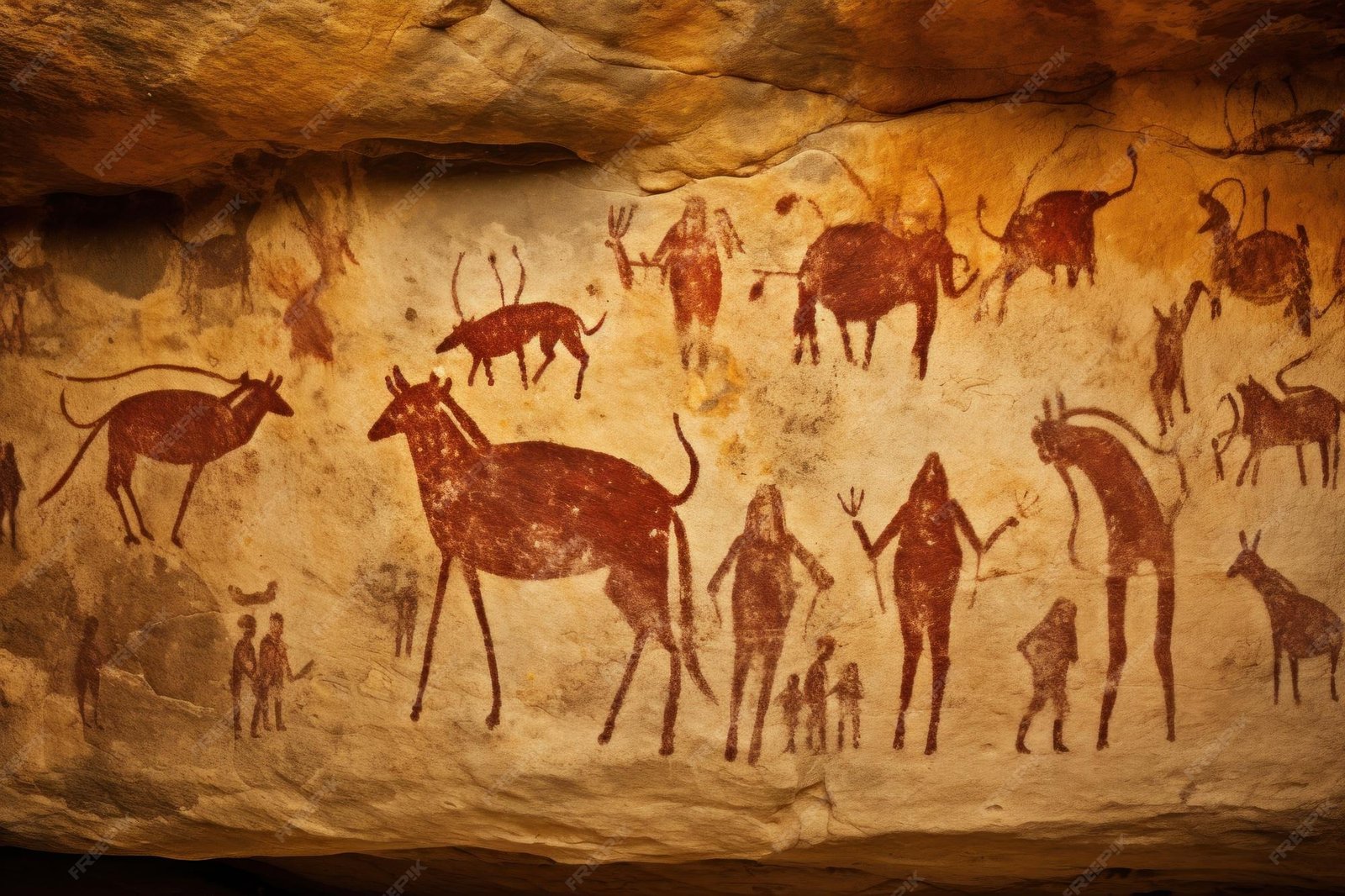
The myth says speech appeared with us, Homo sapiens, around 70,000 years ago, because, of course, it had to. It flatters the idea that words belong to the “modern” mind. That syntax was a revelation. Before we named the world, it was silent. But listen closer. Neanderthals and Denisovans share the FOXP2 gene variant linked to speech. Their skulls show the wiring for language, architecture, if not poetry.
Homo erectus, even earlier, had a reshaped thorax, an expanded Broca’s area, and the behavioral toolkit of someone who had to explain things, fire-making, tool-knapping, coordinated hunting. Those are not solo acts. They are shared rituals, passed down through voice, gesture, and rhythm. Language likely arrived as life demands, gradually. Gesture first. Then grunts. Then the melody.
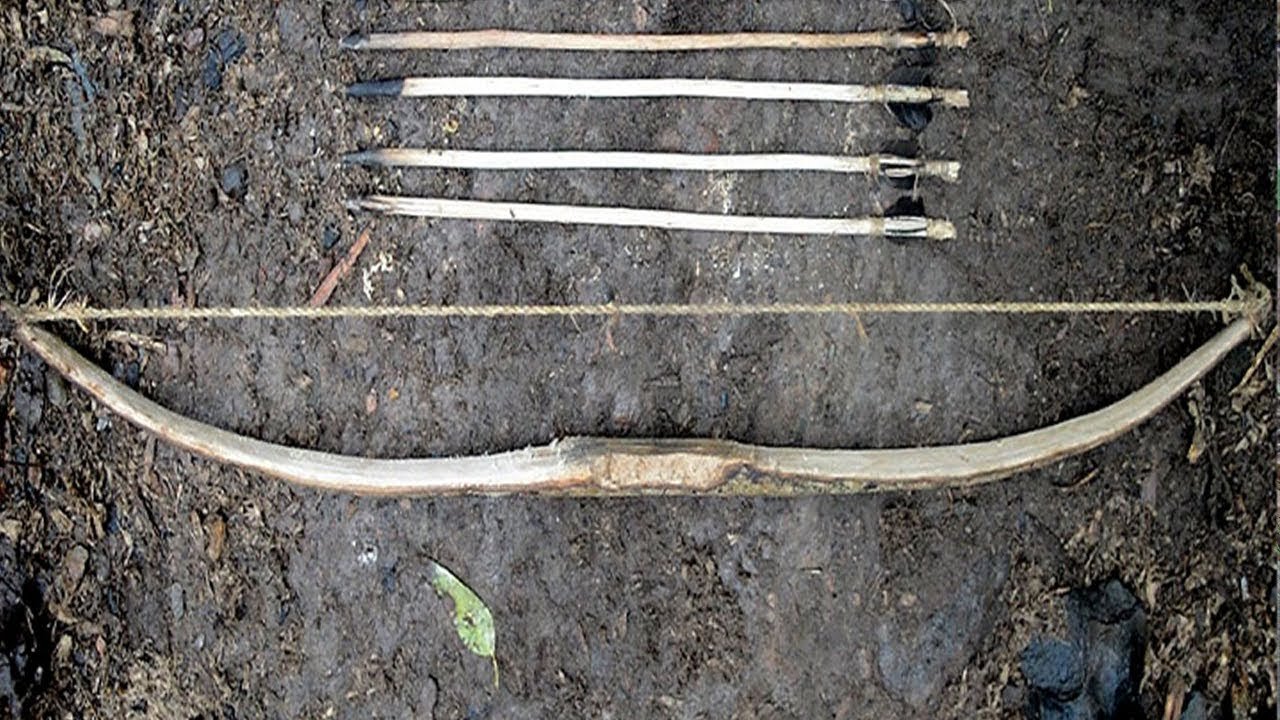
Then the meaning. A song before grammar. A warning before a word. To deny non-sapiens this capacity isn’t skepticism, it’s ego. It’s the same old fallback: if they didn’t do it like us, they didn’t do it at all. But we already know better. We’ve seen what it takes to teach a child to make a fire. We’ve seen what it takes to hunt in silence. We’ve seen cultures survive without writing but with stories strong enough to last 50,000 years. If language is what carried memory across generations, then language existed wherever memory did. So yes, they spoke. Not like us. Not in our grammar.
But with enough meaning to keep each other alive. Which is all language ever really does. Taxonomy is politics in Latin. Classification wears a lab coat. But beneath it, the seams are stitched with power. Who gets to define “human”? Who names the bones? Who draws the line between ancestor and animal? Science likes to pretend it’s above that fight. But the fossil record doesn’t classify itself. People do. People bring their baggage. Neanderthals were once mocked as gorilla-men, stooped, stupid, failed.
Why? Because early reconstructions were made by men comparing skeletons to themselves. The more different the bones looked, the more primitive they must have been. That wasn’t biology. That was a projection. Meanwhile, African fossils were often treated as archaic even when they showed signs of advanced cognition. Why? Because the dominant voices in 19th- and 20th-century anthropology came from Europe, and the colonial slave empire prefers its own image at the center of the story.
They say in science, they have a small brain, they are primitive, they tend to have a robust jaw, or they act like animals. This is not evidence of culture, just behavior. This isn’t science, this is a calibration for comfort. A system built to confirm what the classifier already believes. Even today, those who fund a dig, whose interpretations make it into textbooks. Whose museums tell the narrative, they are the western institutions that still dominate the discourse. Fossils pulled from the global south are still flown north, tagged, and entered into a taxonomy that was never neutral to begin with. Objectivity isn’t the absence of bias. It’s the illusion that only your bias counts as a reason.
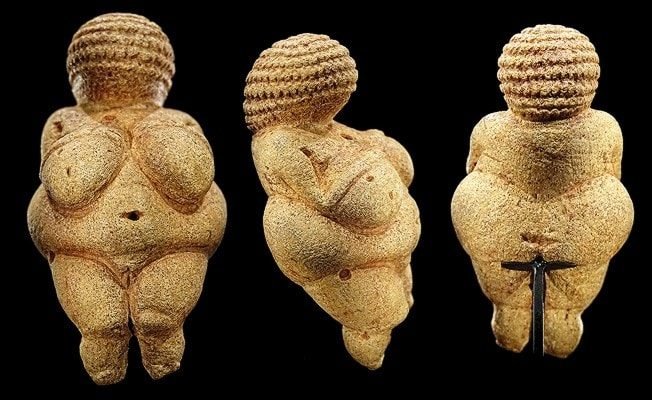
The truth is, Lucy was once just another ape. Then a star. Then reclassified again. She hasn’t changed. We have. That’s the game. Which means the question isn’t what the fossils say. It’s who we let speak for them. To call something not human, is always the first excuse to harm it. This isn’t just about ancient bones. This is about what it gets to live. And what we’ve trained ourselves not to miss when it dies. The habit of drawing humanity like a border, inside is sacred, outside is expendable, and didn’t start with anthropology. But science learned to launder it beautifully.
The moment you say, this creature is not fully human, you’re no longer making a taxonomic note. You’re writing a permission slip, dismiss, disregard, and dominate it. To destroy history, it is bloated with examples, indigenous peoples declared savages, so their land could be taken. Enslaved Africans deemed 3/5ths of a person to balance economic math. Holocaust victims dehumanized to justify their industrial murder. All of it built on the idea that personhood is conditional granted by those in power, withheld when inconvenient.
So, when we say Neanderthals weren’t human, or that Homo erectus doesn’t count, we’re not making a neutral observation. We’re rehearsing the logic of exclusion. Again.
What happens when we find evidence of Neanderthal art, Neanderthal graves, Neanderthal empathy, and we still hesitate to call them people. What’s really being protected there. It’s not scientific rigor, it’s a story where we remain unique, entitled, and unquestioned. That story is lethal, because it seeps forward, it trickles into how we treat migrants, the disabled, the poor, the imprisoned, oppressed slave societies, victims of the sex trade and illegal drugs, different races and religions. It shapes who gets seen as a full moral being and who becomes just another statistic.
It justifies why some children are mourned, and others are buried without names. Why some lives are protected, and others are explained away with paperwork. The stakes aren’t theoretical. Deny personhood to the past, and you’re practicing how to deny it in the present. Do it often enough, and the future becomes a repetition you can’t quite defend but have learned not to notice. So no, this isn’t about fossils. It’s about the ethics we build on the backs of those we pretend didn’t matter.
If we want to be anything better than the myths we inherited, we have to start with the courage to say: If they grieved, if they cared, if they remembered, then they were us. Even if they never spoke our name. We were human when we endured not when we painted, not when we invented it. When we remember, if you want to know where humanity begins, don’t look for the first artifact.
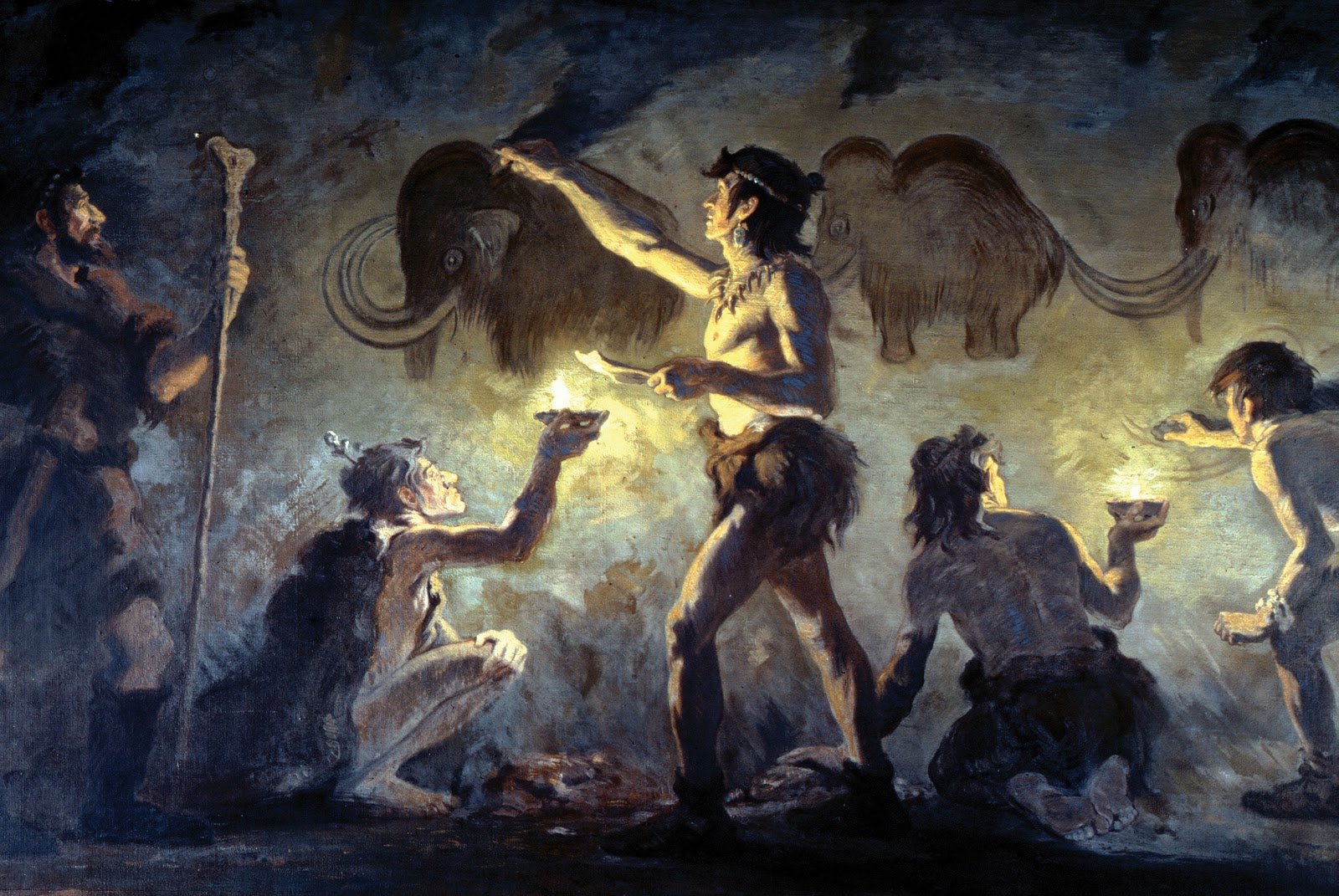
Look for the first memory passed hand to hand like fire. It wasn’t an invention that made us want to. It was continuation, threaded through fear, through loss, through seasons that did not forgive mistakes. From Sahelanthropus wandering the shaded mosaic between forest and plain, to erectus crossing unknown continents with only persistence and fire, what kept our line alive was not dominance.
It was a connection. Before syntax, before beads, before names carved into stone, there were the soft things, care, caution, grief, patience, mimicry, trust. These don’t fossilize. But they are the scaffolding of every tool. No handaxe was ever made without someone watching someone else. No fire was ever kept without someone staying awake while others slept. The timeline tells us Homo sapiens won.
But even if that is vanity, we didn’t replace Neanderthals, we intertwined. Their DNA is folded into ours, they are not extinct, they are present, in blood, in bone and in whispered genetic echoes. We’ve never been pure, we’ve only ever been possible, because we merged, mingled, and remembered. The myth says we became human when we achieved it. The truth is we were human when we endured together.
This isn’t a sentiment. This is survival math. A species that relies only on strength dies. A species that relies on memory life. Because the only thing harder than inventing something new is remembering what can kill you and teaching someone else how to survive it. That’s the origin of culture. Of lineage, of story, not innovation for its own sake, but innovation in service of continuation.
So, let’s say it clearly, early hominins weren’t primitive. They weren’t waiting to become us. They were us, in essence, in pattern, in fire. And the line we keep trying to draw between them and us. It doesn’t hold. It never did. It’s not an evolutionary boundary. It’s an emotional defense. Because if we admit they were human, we also must admit that we’ve been misreading our original story since the first time we told it.
References Books and Scientific Studies
McBrearty & Brooks 2000. The revolution that wasn’t, critiques the “human revolution” as Eurocentric, arguing behavioral complexity emerged gradually in Africa, not a sudden threshold. Supports rejecting progress myths and teleological views. Link: https://www.sciencedirect.com/science/article/abs/pii/S004724840090435X (or full PDF often available via academic search). This view of events stems from a profound Eurocentric bias and a failure to appreciate the depth and breadth of the African archaeological record. Consensus from Smithsonian Human Origins and recent reviews. Evolution as a “bush” (branching, not ladder) is standard; no single “moment” for humanity.
Tools Don’t Make the Mind. Lithic bias, soft technologies, and endurance hunting. Evidence for early fire and complex behaviors without heavy tool reliance: Wrangham’s cooking hypothesis ties to Homo erectus ~1.5–1.8 Ma, with fire enabling better nutrition/social bonds over artifacts. From Wikipedia/PMC reviews: Fire control evidence from ~1.5 Ma (Koobi Fora, reddened sediment); endurance hunting inferred from skeletal adaptations. Acheulean tools and migrations: Erectus spread widely ~1.8 Ma, with planning implied beyond stones.
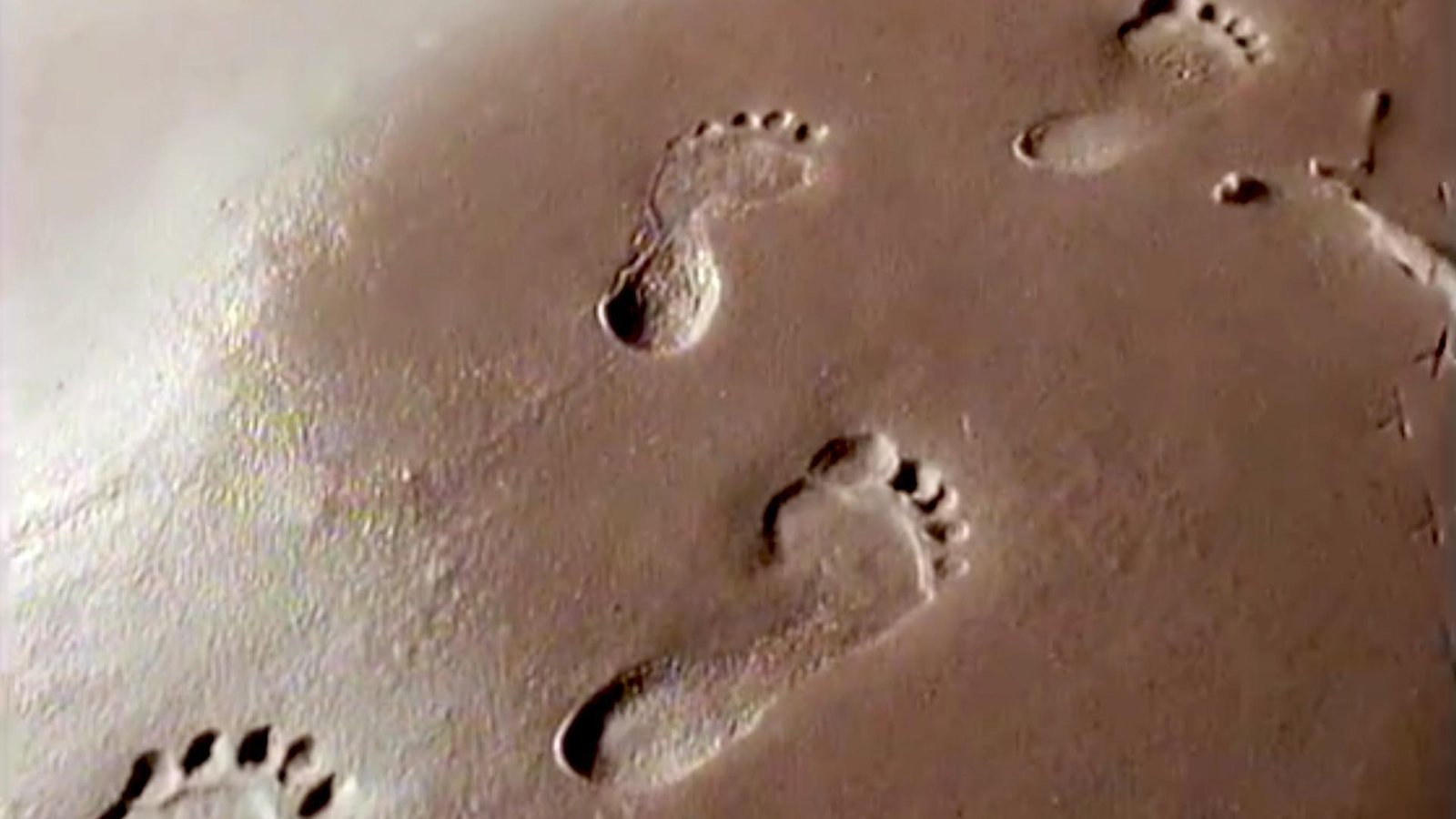
Laetoli footprints
Laetoli footprints as family/kinship evidence. Lucy/Au. afarensis caregiving) Laetoli footprints (3.66 Ma): Attributed to Australopithecus afarensis; trails show parallel walking (possibly mother + child or family group). The Laetoli footprints were most likely made by Australopithecus afarensis… three individuals walking in parallel. Link: https://humanorigins.si.edu/evidence/behavior/footprints/laetoli-footprint-trails
Newer finds Site S. Larger stature variation, implying social groups with dimorphism/caregiving. Long childhood/dental evidence: Indicates prolonged learning/social transmission in early hominins.
Burials, Grief, and the Soul. Shanidar pollen/debate, Blombos symbolism, caregiving) Shanidar Cave Neanderthal burials: Intentional placement, healed injuries implying care; pollen debate ongoing (possible flowers vs. bees/rodents), but recent studies support deliberate burial. 2020 Antiquity paper: New remains near “flower burial” support intentional interment ~70 ka.
2023 critique. Pollen possibly from burrowing bees, but burial itself affirmed. Blombos Cave: Engraved ochre ~75–100 ka, shell beads, symbolic use. Hinshelwood et al. (2009): 13+ incised ochre pieces; geometric patterns as tradition.
Link: https://www.sciencedirect.com/science/article/abs/pii/S0047248409000207
Key, Symbolic intent and tradition were present… at an earlier date than previously thought. Caregiving: Healed injuries in Neanderthals/erectus indicate social support.
The Myth of Behavioral Modernity. Eurocentrism critique, African origins pre-50 ka. McBrearty & Brooks 2000. Directly calls out Eurocentric bias in “human revolution” model; MSA innovations in Africa (ochre, beads, tools) push back complexity. Link: As above. Recent reviews: Asynchronous emergence across Africa, no single “package” or sudden revolution; gradual. African, 2023 Journal of Human Evolution
Challenges modern human packages is obsolete. Homo Erectus Was Human Enough (fire ~1.5 Ma, migrations, caregiving, longevity ~1.5–2 Ma span) Fire: Earliest controlled use ~1.5 Ma (Koobi Fora); widespread by ~0.8–1 Ma.
Wikipedia/PMC: Daughters of Jacob Bridge ~790 ka cooking evidence. Longevity: ~1.9 Ma to ~0.1 Ma; global migrations, endurance hunting.
FOXP2. Healed fossils imply social support. Part VII: Language Without Fossils (FOXP2 in Neanderthals/Denisovans, Broca’s area in erectus). FOXP2. Shared human-like variants in Neanderthals/Denisovans; implies proto-language capacity. Recent studies: No recent sapiens sweep; shared with archaics ~600 ka+. 2018
Broca’s/endocasts. Expansion in erectus hints at communication for tools/hunting coordination.
When Scientists Decide Who Counts (bias in taxonomy, Neanderthal reconstructions, colonial legacies), Neanderthal “brutish” stereotype: Early 20th-century errors (Boule reconstruction); now overturned by art/burials/DNA. Colonial ties: Anthropology’s history in justifying hierarchies via morphology. Shifting classifications: Lucy’s status evolved with evidence
Personhood is Power. Dehumanization links to history. Historical parallelsWell-established in anthropology critiques (e.g., “primitive” labels justifying colonialism/slavery). Ties to modern ethics: Expanding personhood via evidence (e.g., Neanderthal DNA/interbreeding).
We Were Human When We Endured. Hybridity, continuation over achievement Interbreeding: 1–4% Neanderthal DNA in non-Africans; sapiens as hybrids. Endurance: Erectus longest span; social bonds as core survival.


